“This most beautiful ‘flower of the root of Jesse,’ which had blossomed in the incarnation and withered in the passion, thus blossomed again in the resurrection so as to become the beauty of all.”
St. Bonaventure, Lignum Vitae (Tree of Life) (ca. 1260 AD)
Welcome! Whether you’re a longtime friend or a new kindred spirit here (I recommend visiting the Village Green to get your bearings), I’m delighted to be a companion to you through the liturgical year.
For more resources & reflections drawn from Easter, visit my archive…
…and, if you’d like to continue thinking about ways to build your Book of Hours, I have a few helpful posts for you.
If keeping all twelve days of Christmastide can feel challenging in our modern context, keeping all fifty days of Eastertide bends our creativity even further. As a Recovering Nostalgist™, it’s easy for me to pine for some idyllic daydream of ‘the good ol’ days,’ imagining Easter celebrations saturating every meal, every gathering throughout the season…supporting and continuing the Eastertide liturgies.
And while we have indeed lost so many of this season’s cultural traditions, I think there’s an invitation in the dissonance we feel: Eastertide, in so many ways, is a joyful defiance.
Easter is an ongoing, active choice to cling to joy in all its dimensions…even though. Even though the diagnoses roll in. Even though violence rages, abuse persists, fear pervades.
Over the years of joys and losses, I’ve found that ‘keeping Eastertide’ is the ongoing challenge (and inexplicable reward) of my days. Practicing the Eastertide posture, rehearsing in part the fullness that we anticipate, is the habit to which I’ve clung & aspired throughout deaths, trauma, suffocating anxiety.
So, I find myself filled with surprising gratitude to meet the challenge of celebrating Easter as a season…here at a time when our cultural rhythms don’t support that liturgical way of timekeeping as they once did.
True to the compassion of our incarnational spirituality, we get to take our faith’s daily posture - cleaving to the truth and joy of Eastertide - and apply it to a cultural moment that has forgotten its practice. We get to take the core mystery of our theology and imprint it into timekeeping, even though our cultural calendars have moved on. As students of the even though of Jesus, we’re uniquely equipped to give this a whirl.
It’s a joyful rebellion on many fronts - and not a joy based on circumstance, but a joy borne from everlasting, tearful, whole hope.
Put your faith in the two inches of humus that will build under the trees every thousand years. Listen to carrion – put your ear close, and hear the faint chattering of the songs that are to come. Expect the end of the world. Laugh. Laughter is immeasurable. Be joyful though you have considered all the facts.
Wendell Berry, excerpt from Manifesto: The Mad Farmer Liberation Front
Printable resources for savoring Eastertide:
BOOK OF HOURS: COVER PAGE
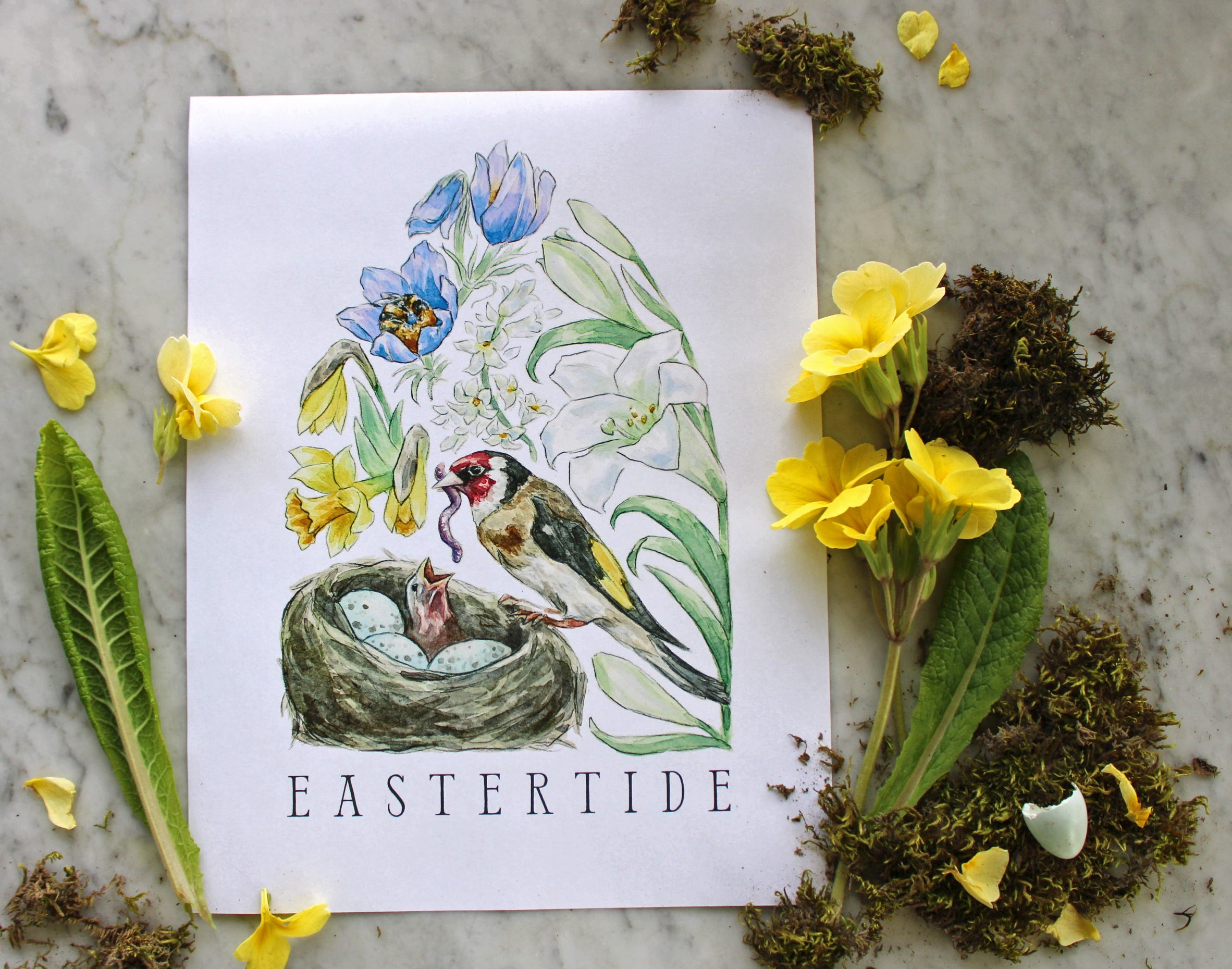
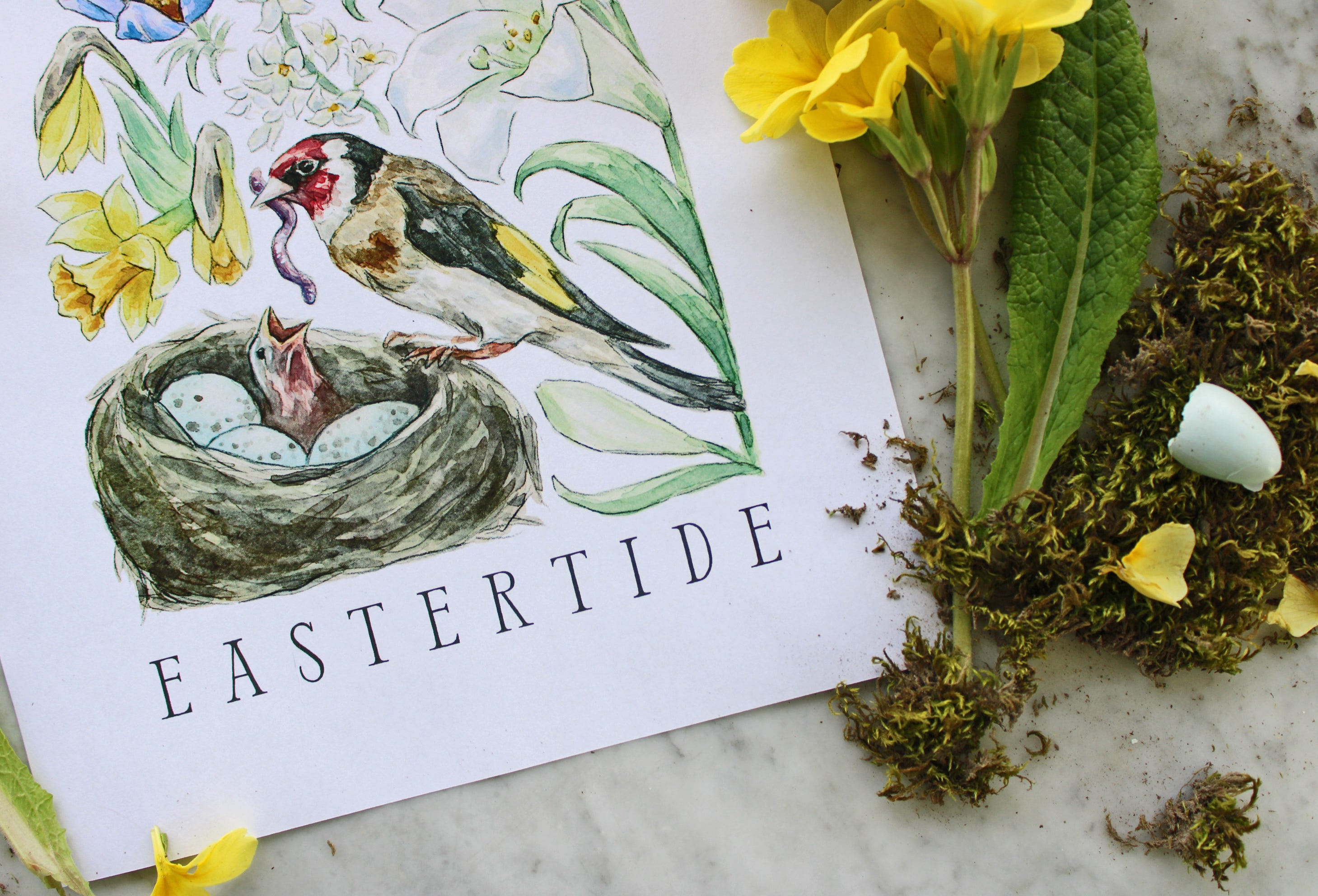
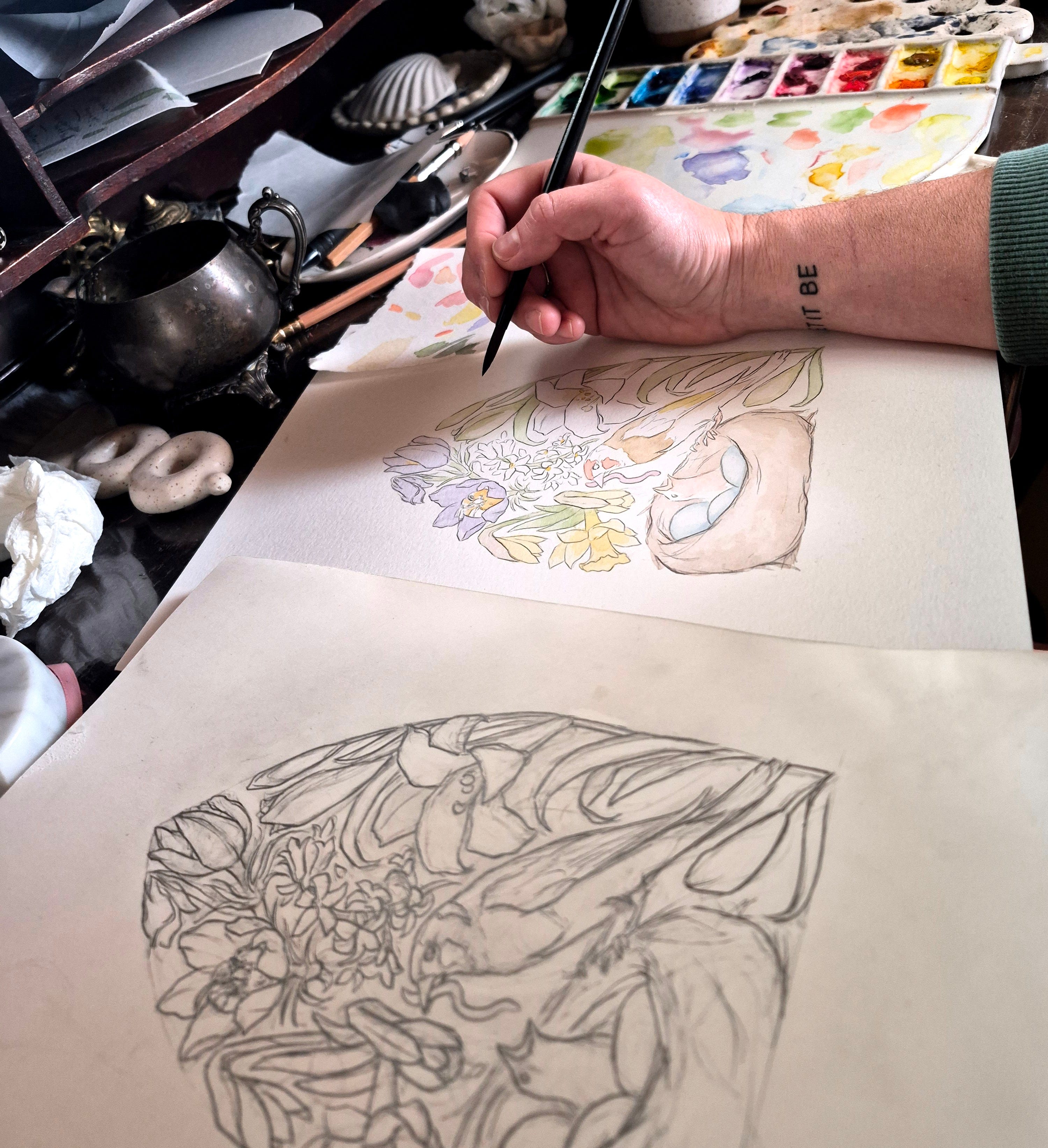
Friends, it’s been a DELIGHT getting to reflect on all the flora & fauna of Eastertide to tell this season’s story through a handful of their images. Your printable will include little snippets on why I chose each element for this arch, but I wanted to take a moment to highlight one in particular: the European Goldfinch, a multilayered emblem of salvation.
As the story goes, a fluttering springtime Goldfinch saw the suffering Christ…and wanting to relieve his pain, she flew to his brow, attempting to remove the thorns from his crown. In her attempt, she was stained red with his blood.
Part of this symbolism comes from the Goldfinch’s vibrant red cheeks, but there’s more: she loves a thistle snack, deftly pulling the seeds out from this prickly plant. She also carefully removes thistledown to pad her own nest…taking the spiky thistle plant - reminiscent of the crown of thorns - and transforming it into the new life she’s bringing forth in her nest.
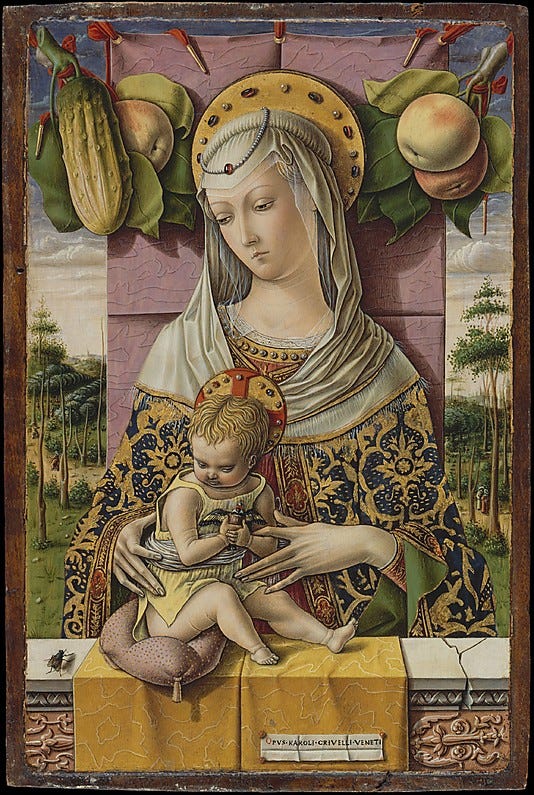
Carlo Crivelli, Madonna and Child; tempera and gold on wood (1480); collection of the MET
Especially in Medieval and Renaissance art, you’ll find the European Goldfinch near the Christ child, emblematic of the salvation he bears and the redemption we receive. (In Crivelli’s painting, the infant Jesus is holding the Goldfinch in his hands. Also near this bird, you’ll often find the Fly: symbolic of sin and death, which the rest of the visual language shows to be conquered).
Without further ado, here’s a bit more on your new Book of Hours addition for this glorious season:
Inspired by Medieval books of hours, these cover pages feature pollinators and plant life emblematic of the liturgical seasons. (They also complement the printables for all of the feast days that you may have already collected!) The design itself is an homage to gothic stained glass windows, their arch reminding us of the soul’s journey toward God.
Alongside the Eastertide cover page is a quick guide to the symbolism embedded in all of the natural elements featured in this arch…a starting-off point for your own reflection and research, if your curiosity gets piqued!
I hope that these pollinators and their plants will remind us of our work as co-creators with Christ.
These Easter printables - as well as more resources for the holidays historically within Easter - are available in the Scriptorium:
Lovely and right on time! Only this week I put up my Easter decorations, repeating to myself “Easter is a season, not a day!” Also, included part of that Berry poem in my Resurrection Sunday sermon.





Memorable quote: "Easter is an ongoing, active choice to cling to joy in all its dimensions."
Lovely and right on time! Only this week I put up my Easter decorations, repeating to myself “Easter is a season, not a day!” Also, included part of that Berry poem in my Resurrection Sunday sermon.