

Under the wanton Rose agen, / that blushes for penitent Magdalen
July 22: Maudeleyn Day

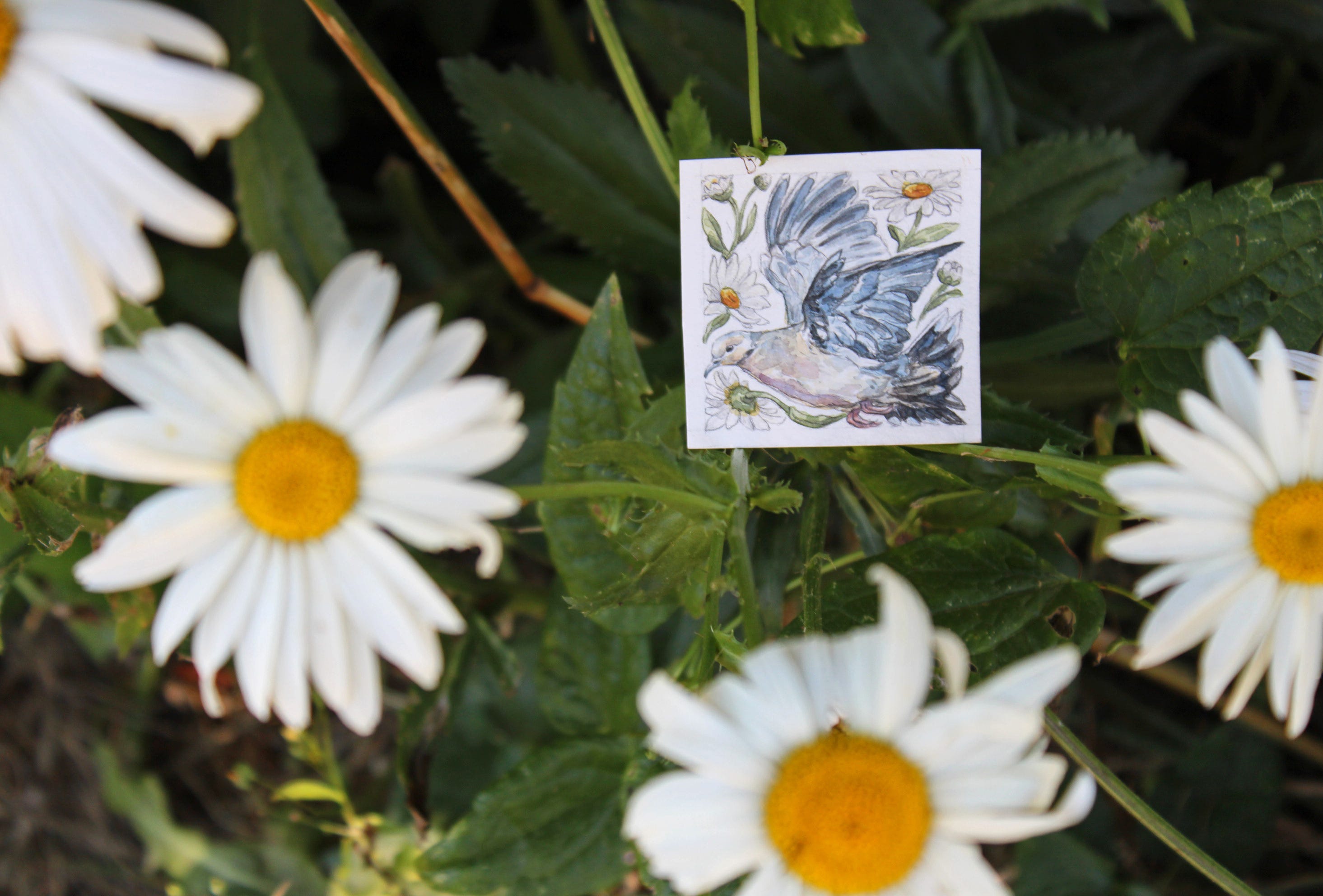
Under the wanton Rose agen,
That blushes for penitent Magdalen…Flower calendar, quoted in Richard Folkard’s Plant Lore, Legends, & Lyrics

Wander & wonder…
find this month’s schedule of events in the Village Green
peruse the July Almanac
explore more posts for the month of July
send me a note!
MAUDELEYN DAY PRINTABLES
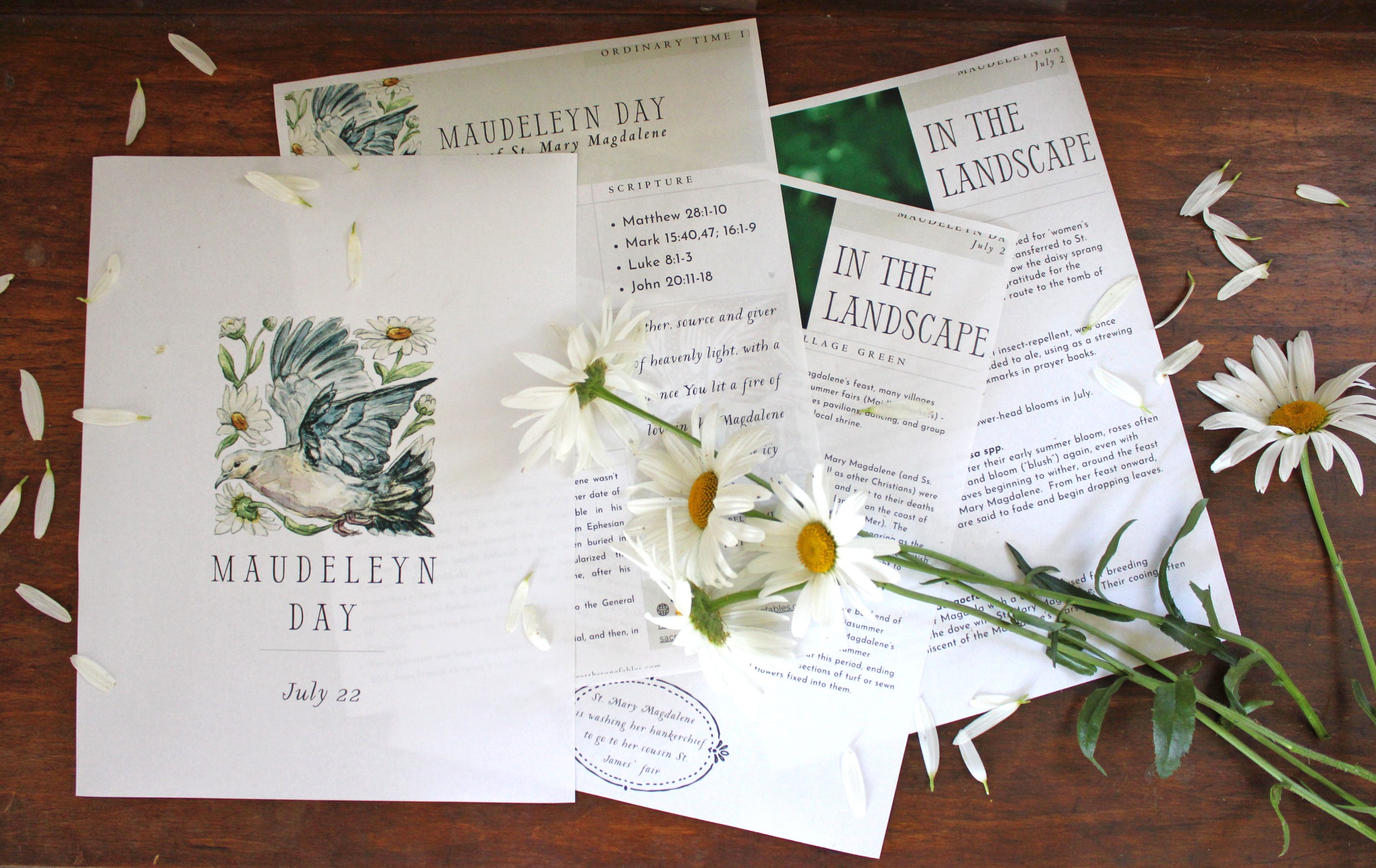
A Book of Hours helps us to graft liturgical traditions into our own sacred days - and each month, I offer some additions intended to spark curiosity as we re-discover these seasonal patterns together.
This month, you’ll find:
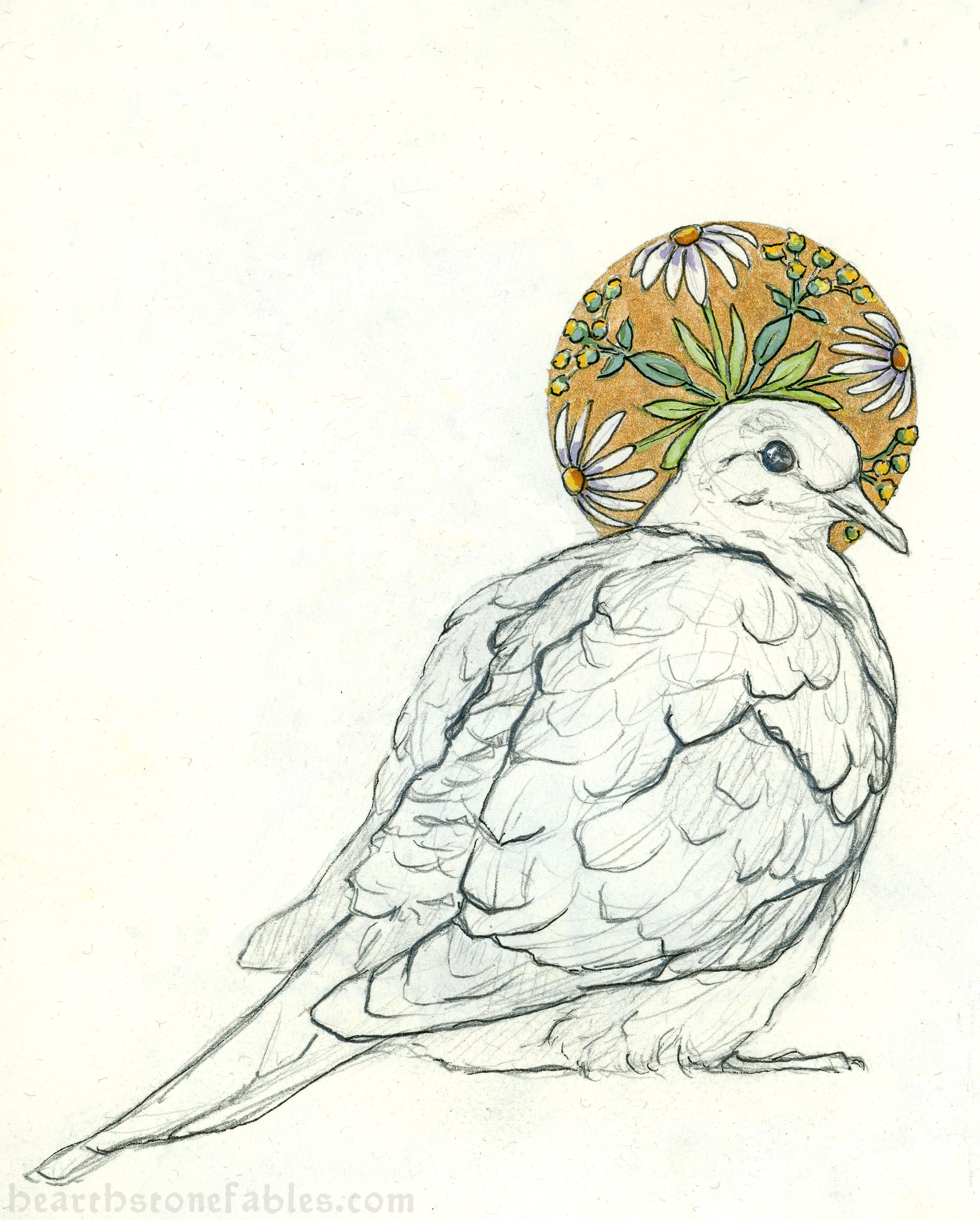
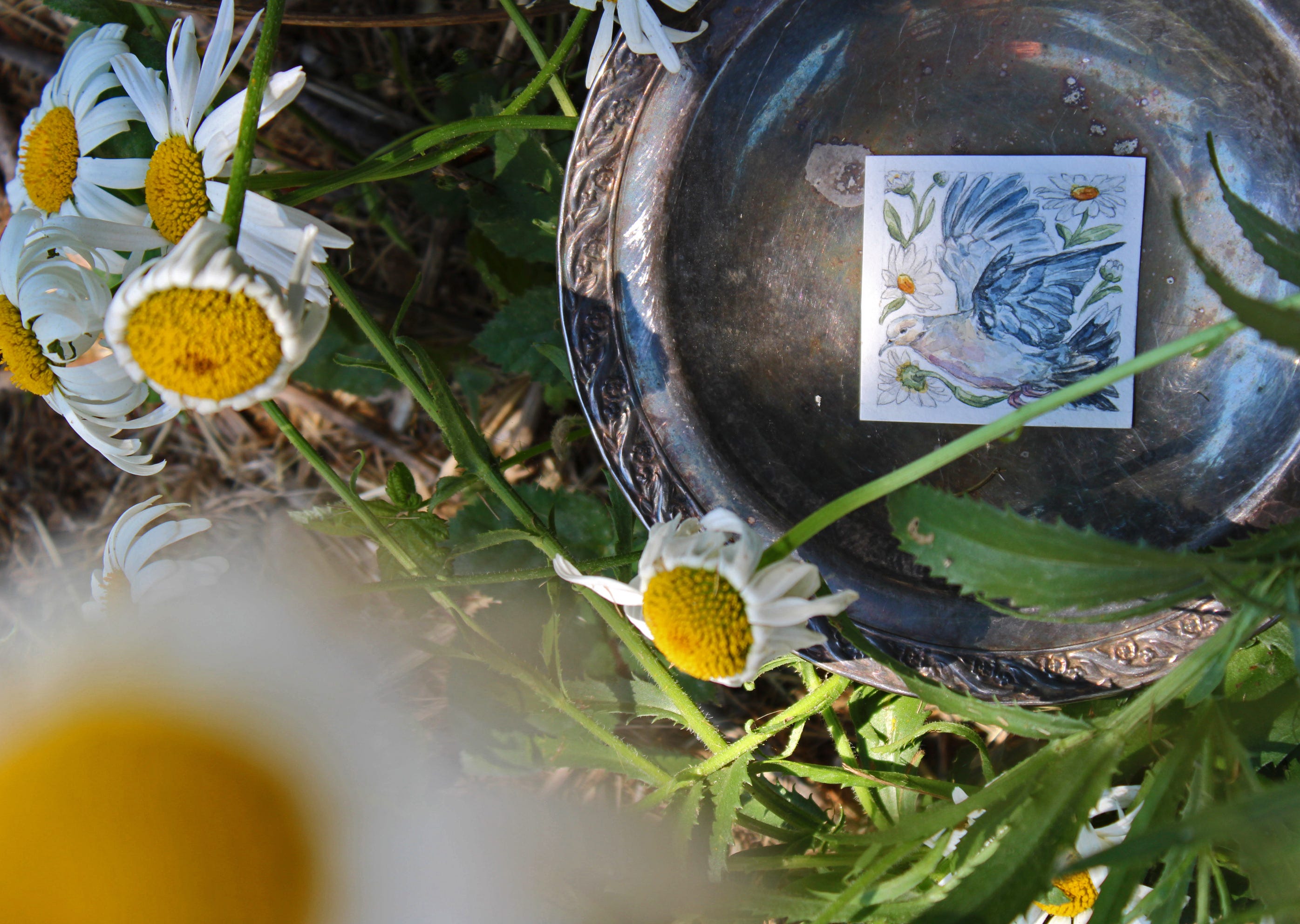
a cover page (with original art featuring the Collared Dove and Maudlin Daisy - more details about their symbolism are in the printable!)
a summary (with artwork) of history, traditions, flora, & fauna that give shape to the holiday
Paid members can find Maudlintide art & resources (as well as my whole archive of printables) in the Scriptorium:
One that lives by other’s breath
Seely stars must needs leave shining
When the sun is shadowed,
Borrow’d streams refrain their running
When head springs are hindered:
One that lives by other’s breath,
Dieth also by his death.Robert Southwell, excerpt from Mary Magdalen’s Complaint at Christ’s Death (16th c.)
Of the many gifts we receive in St. Mary Magdalene, the most fruitful may be - strangely - the uncertainty that veils her life story.
At the intersection of what we know about her & what we think we know about her, we find our own reflections starting back at us.
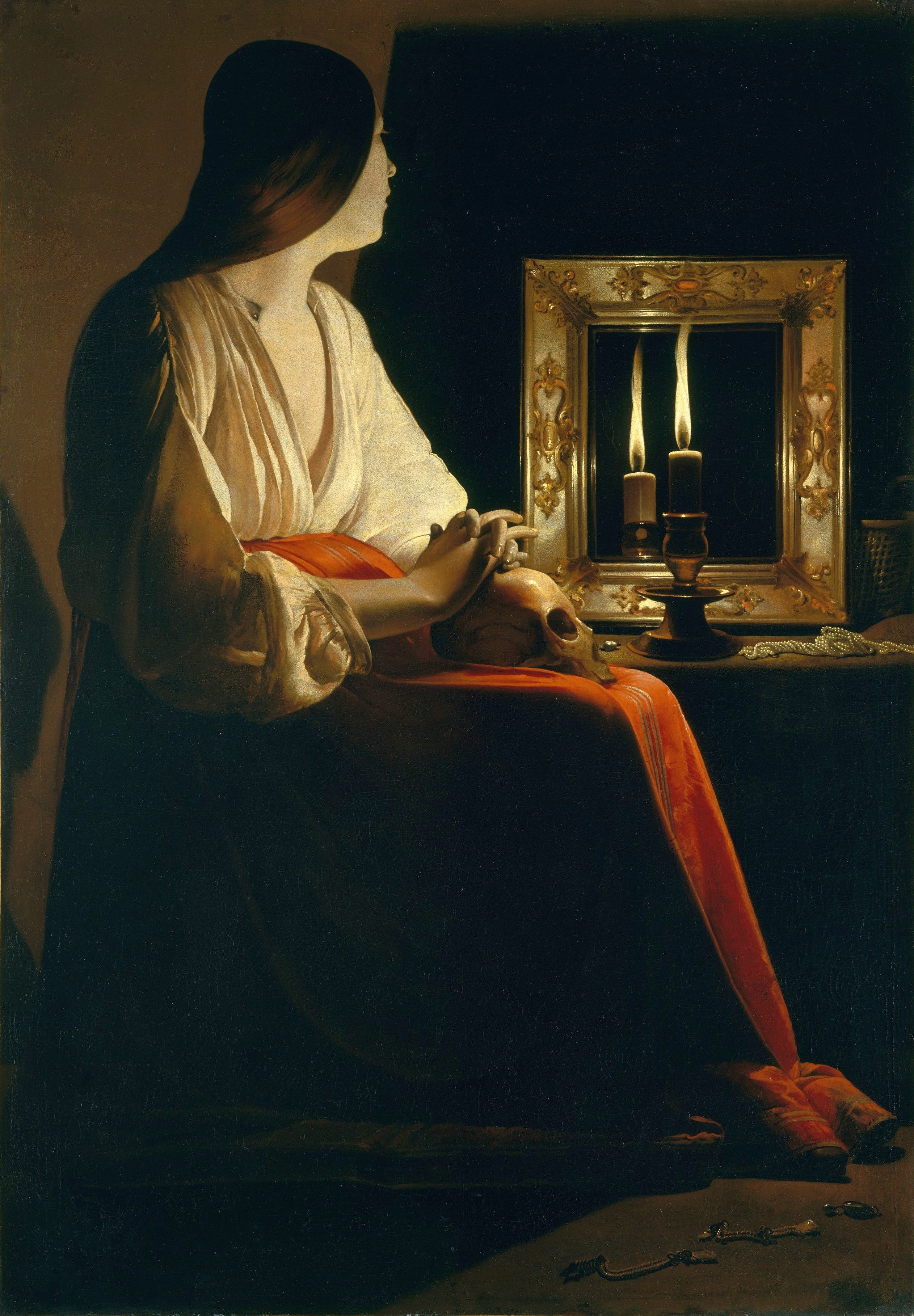
Mary’s geography seems to name her - given her title in Scripture, she probably hailed from Magdala, a fishing village on the Sea of Galilee. We know that when she encountered Jesus, she did so wholly - he banished seven demons from her1…a Scriptural number that always signals us to see completeness. In that encounter, she was entirely healed and transformed by Christ.
And with that gift of wholeness came a response of wholeness - complete devotion to Jesus, like a symptom of her total healing. In the miraculous banishment of her demons came a movement from total disintegration to thorough integration - with Jesus.
So, she abided with him. Mary followed him to the foot of the Cross, and, grief-stricken, pursued him even further - anointing spices in tow - after his death & burial in the tomb.2
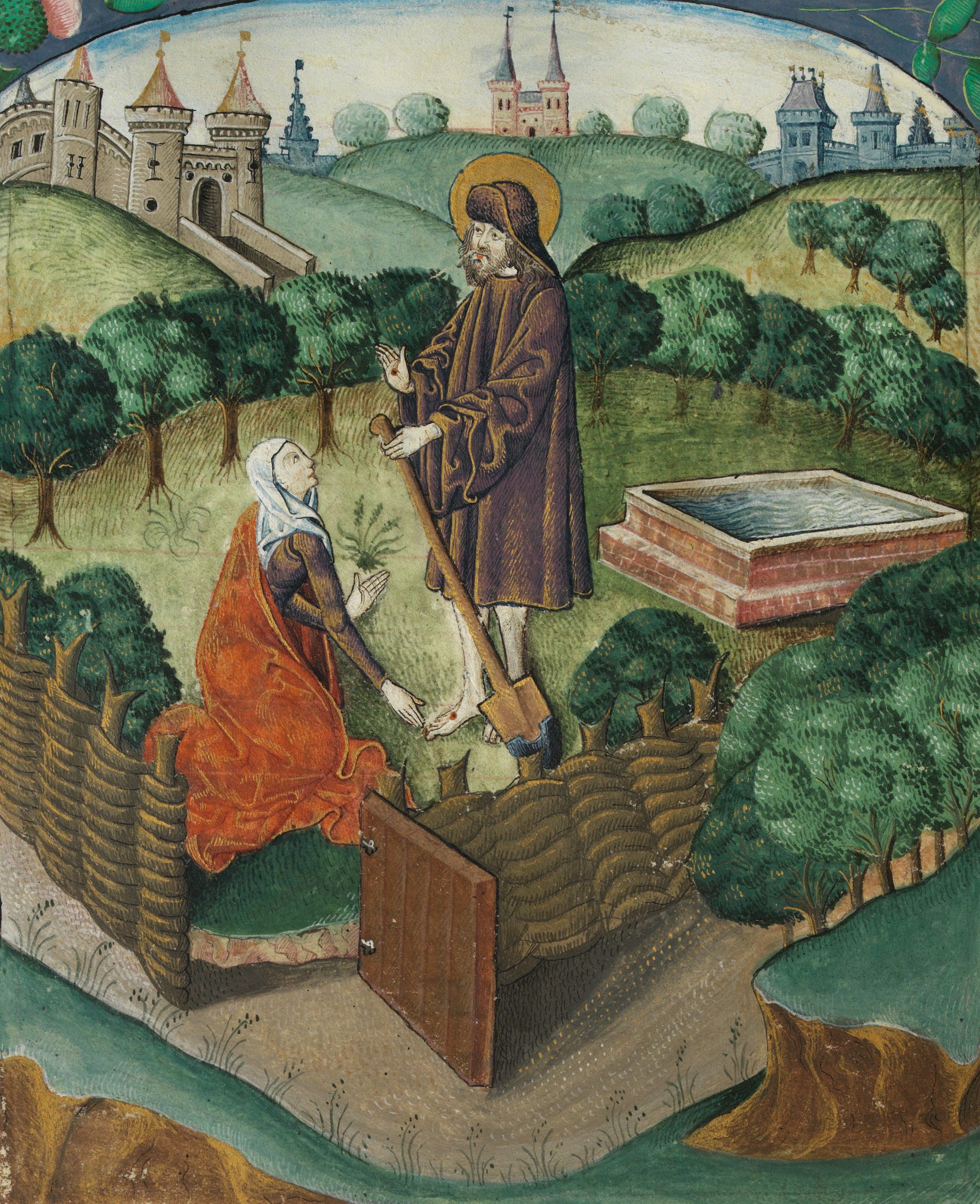
It was a devastated Magdalene, then, who brought her pain to Christ’s tomb, only to find it empty. And there, in the midst of her desolation, she was greeted by the Gardener - the risen Christ, at first obscured by her own surprise.3
Mary brought that encounter forward, running to tell the other disciples - Apostle to the Apostles. Bearer of the anointing spices of death, now bearer of the new era broken through…God risen here, gardening among us again.
But let’s call to mind what we assume of St. Mary Magdalene…all those assumptions that make her deliverance feel even more astonishing: we think of her former life as one of debauchery, prostitution, total moral depravity.4
Scripture never actually tells us what Mary’s seven demons are, though. Her connections with the unnamed ‘sinful woman’ or the woman ‘caught in the act of adultery’ were drawn in Western tradition, but Eastern tradition held that the Magdalene’s demons represented spiritual affliction.
In the Western Church, all sorts of connections were applied to the Magdalene - into her life, tradition grafted Mary, the sister of Martha & Lazarus…the sinful woman washing Jesus’ feet with her hair…the woman about to be stoned.
Here’s the thing, though: those conflations of St. Mary Magdalene are not devoid of value.
In the confusion - and in the immense popularity of the Magdalene & the murky details of her life story - we find the most desperate, pained, damaged parts of ourselves finding a home. Home in a woman who followed God to the grave and saw him walk away from it, leaving footprints of our own salvation in a new Garden.
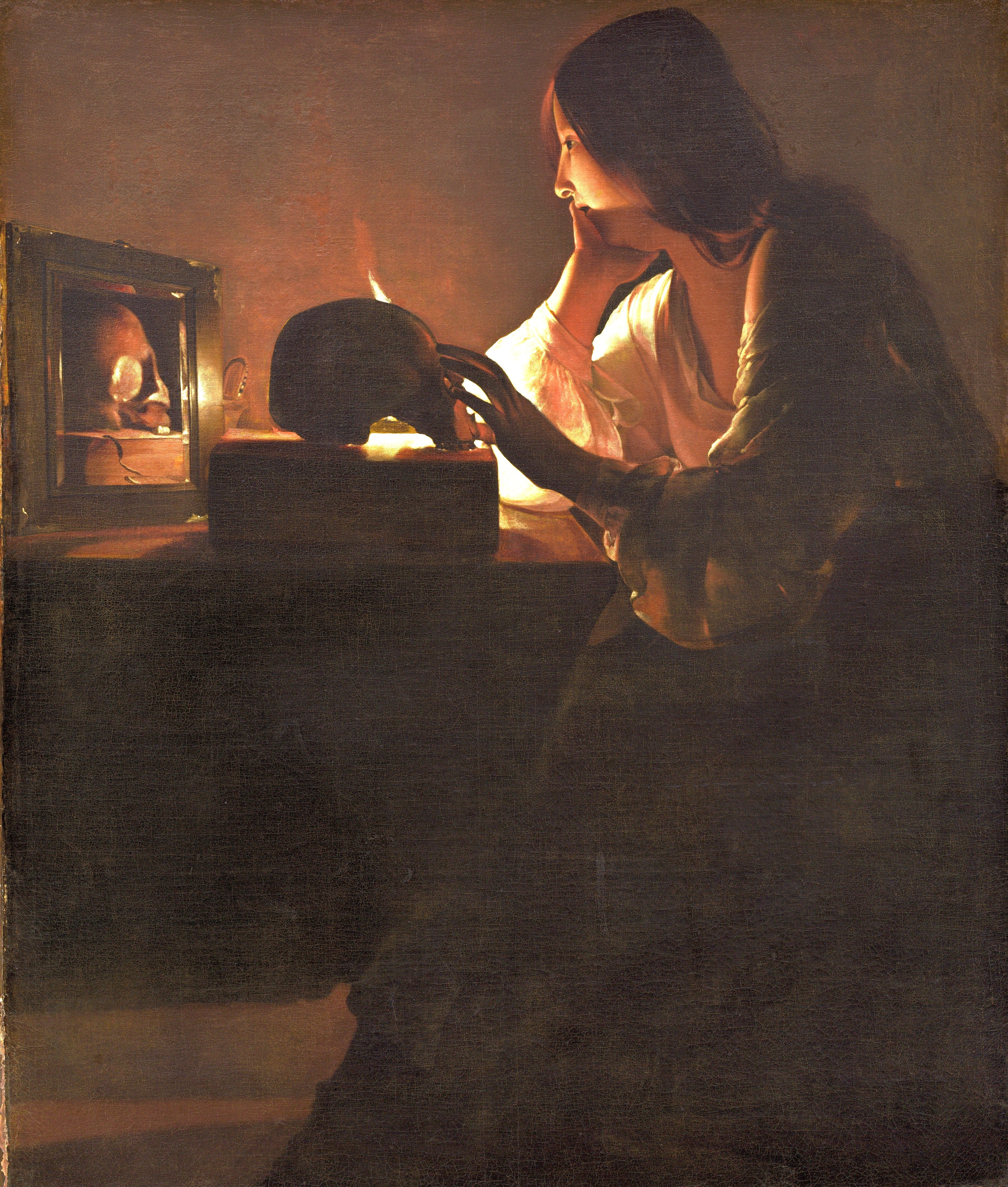
In her obscured story, we learn something…recognize the familiar, wrenching pain of our own stories. The broken relationships, the habits that we cling to, the failed attempts at change all find an envoy in the Magdalene, just as all those other named and unnamed women from the Bible found themselves in her story over the centuries.
Of course, we can lose our balance if we apply too much of ourselves to these real people…and yet, the story of our interaction - our ongoing dialogue - with Christ’s saints matters. It reveals our sharpest edges and most profound needs.
you came with springing tears to the spring of mercy
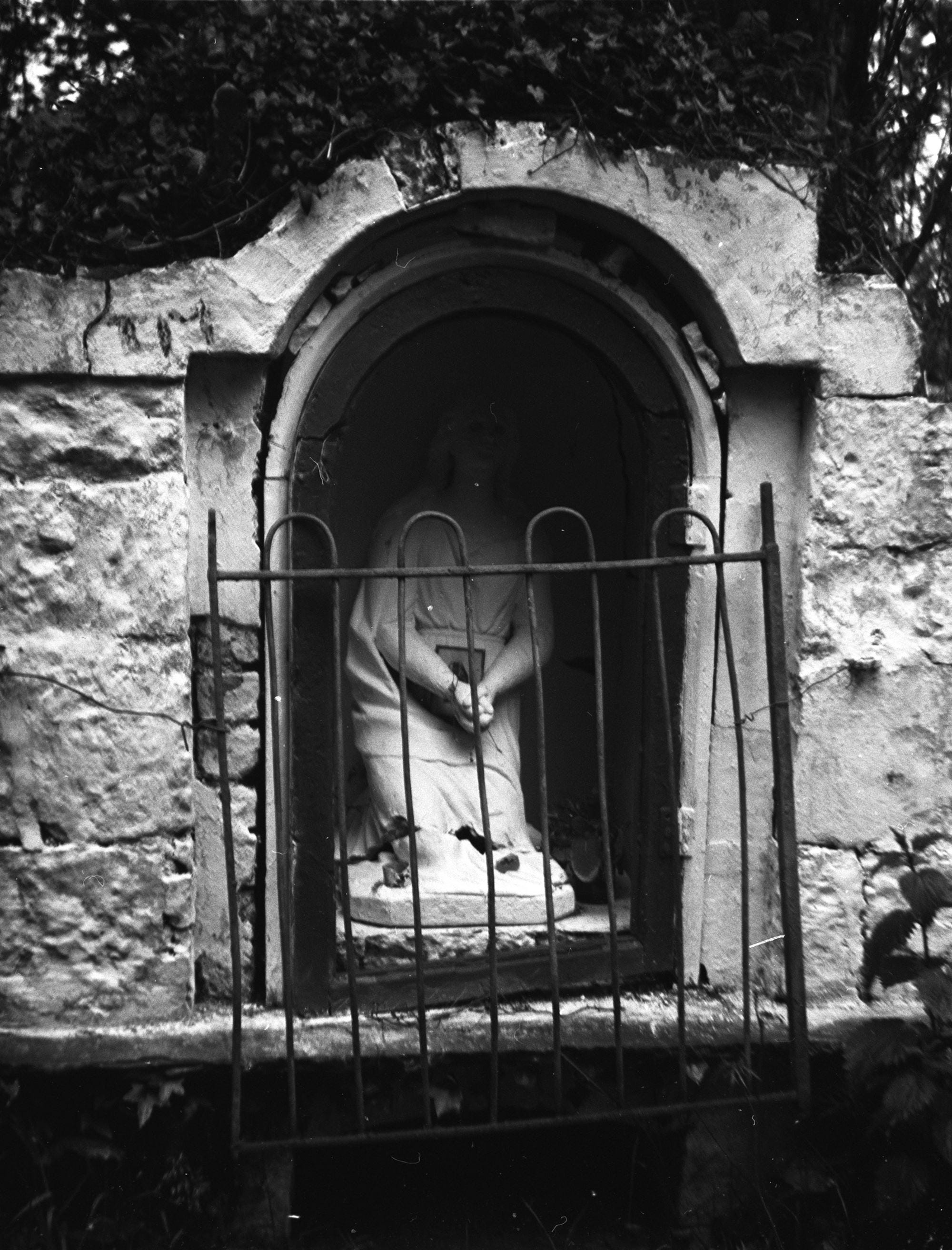
St Mary Magdalene, you came with springing tears to the spring of mercy, Christ; from him your burning thirst was abundantly refreshed through him your sins were forgiven; by him your bitter sorrow was consoled.
St. Anselm, excerpt from his Prayer to St. Mary Magdalene (11th c.)
The Magdalene’s popularity grew, and she became one of the most widely celebrated saints of the Middle Ages. She had moved from complete destitution to complete devotion - what all our souls long for - and even the name of her feast day came to represent that transformative devotion.
In Middle English, the final ‘e’ of her name was dropped, and its pronunciation continued to shorten; soon enough, her name slurred into “Maudelen”…giving rise to the English entries for her feast: Maudlintide, Maudeleyn day, and other similar variations. And this is where we get the modern word “maudlin” - an adoption of the Magdalene’s Middle English name, blended with the art from that period that emphasized her extreme penitence and her sorrow at the death of Jesus.
Among the legends from that time, one tells us that St. Mary Magdalene - accompanied by Ss. Martha, Lazarus, and other Christians - was sent aboard a rudderless boat to certain death at sea. Miraculously, though, they washed ashore at Provence.
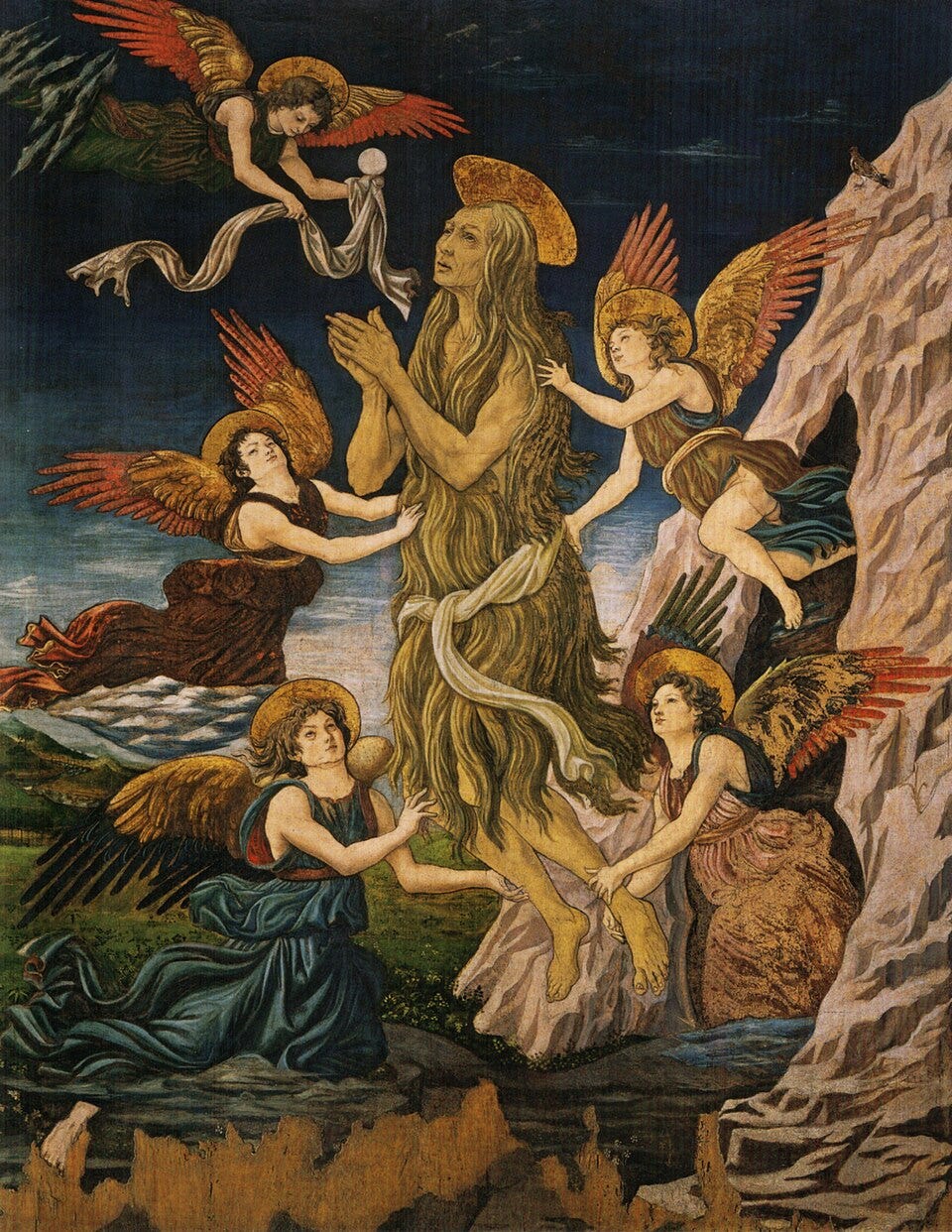
There, she preached, wrought miracles, and eventually retired to a secluded cave - living a life of solitude, fed only by angels.
There, this woman to whom we’ve assigned a ‘wild’ past lived, indeed, in the wild. We see images of her hair growing long to modestly cover her nakedness, some even portraying her whole body as covered in fur. In some accounts, wolves attend the Magdalene, helping to protect her from curious onlookers. (She even becomes conflated with Maid Marian, deep in Sherwood Forest).
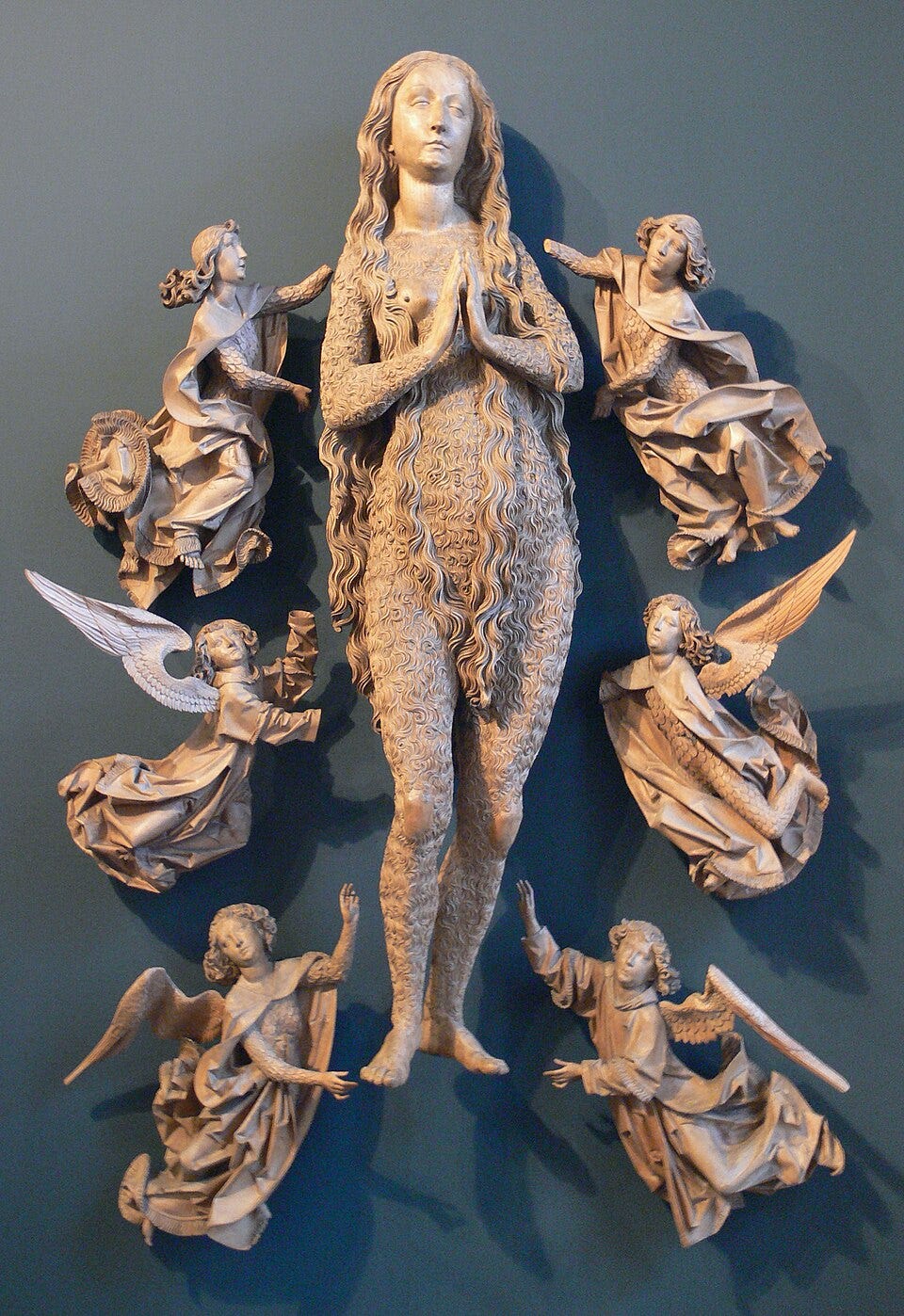
And so, we find her in those holy thresholds of the wild - sacred springs, wells dedicated to our nautical Magdalene. These spaces received local pilgrims on her feast…a day of liturgy and revelry behind them, people went to her holy wells to look for healing, comfort, inspiration. For a refreshing taste of wholeness from a woman whom Jesus had made whole.
Midsummer’s End

We also find that Midsummer - not just a day, but a season within summer - was closed by the Magdalene. Her feast bookended Midsummer traditions, with vibrant agricultural festivals finding a ritual home in Maudeleyn day.
This was the final day to make Midsummer cushions…those whimsical, poetic tributes to the height of summer:
“This was a custom, used some seventy years ago at many places in the North of England; but it, like almost every other of the innocent and pleasing customs and amusements of our fore-elders, is fast vanishing away, if it has not altogether done so. The young lads and lasses of the town or village having procured a cushion or, in accordance with local phraseology, a whishion, and covered it with calico, or silk of showy and attractive colour, proceeded to bedeck it with every variety of flower which they could procure out of their parents’ and more wealthy neighbors’ gardens, displaying them in such a manner so as to give it a most beautiful appearance. All this done, they placed themselves, with their cushion of Flora’s choicest gems, in the most public place they conveniently could, soliciting of every passer-by a trifling present of pence, which, in numerous cases, was liberally and cheerfully bestowed. A set form of words was made use of (in rhyme, I believe) when soliciting those gifts, the precise version of which I have never been able to obtain.
“This custom prevailed from Midsummer Day to Magdalene Day, which latter has long been corrupted to ‘Maudlin Day.’”
Michael Aislabie Denham, The Denham Tracts: A Collection of Folklore : Reprinted from the Original Tracts and Pamphlets Printed by Mr. Denham Between 1846 and 1859: Volume 2

This was a time for charter fairs - sometimes called “Maudlin Markets” - and processions, guild plays and gatherings, and seasonal celebrating incorporating all ages of the parish.
In a way, just as St. Mary Magdalene inhabits the threshold of the resurrection, her feast is a threshold for Midsummer and the turning toward the late-Summer Harvest season, when the pace of farm work and celebration alike shift.
Whole communities put their hope in this time…these last Summer weeks would determine their ability to last through the harsh winter months with food stores. And the Magdalene, too, is a bit like a lens for our spiritual hope in Christ: for centuries, we’ve grafted our pains, fears, and failures into her, trusting in that alchemy that turns desolation into devotion when we relent and offer our lives up to God.
A timeline of Maudlintide’s history, Scripture verses, details about the flora and fauna tied to this feast, tidbits about traditional meals and celebrations, & more can be found in this month’s printable:
BENEDICTION
Give me, O Lord, in this exile, the bread of tears and sorrow for which I hunger more than for any choice delights.
Hear me, for your love, and for the dear merits of your beloved Mary, and your blessed Mother, the greater Mary.
Redeemer, my good Jesus, do not despise the prayers of one who has sinned against you but strengthen the efforts of a weakling that loves you.
Shake my heart out of its indolence, Lord, and in the ardour of your love bring me to the everlasting sight of your glory where with the Father and the Holy Spirit you live and reign, God, for ever.
Amen.
St. Anselm, excerpt from his Prayer to St. Mary Magdalene (11th c.)
What has your perception of St. Mary Magdalene been? Have you celebrated her feast before?
We’ll be gathering this weekend to have a belated Maudeleyn Day at the river (and maybe some Midsummer Cushions, too!) More soon…
Pax et bonum,
Kristin
Luke 8:2, Mark 16:9
Mark 16:1, Luke 24:1-12
John 20:11-18
Luke 7:37 describes an unnamed ‘sinful woman,’ and John 8:4 describes the woman ‘caught in the act of adultery’ - these woman came to be conflated in Western tradition with St. Mary Magdalene, especially because of homilies by Pope St. Gregory the Great in the 6th c. Eastern tradition, though, does not conflate those unnamed women with the Magdalene.