

with blossoms fresh
Second Monday & Tuesday of Easter: Hocktide

The ancient market-place has heard
For half a thousand years,
The summons of the mighty horn,
Time-honoured Lancaster’s.
The Tuttimen have trimmed the poles
With blossoms fresh and gay,
And kissed the merry, bashful maids,
On Hock Day holiday.Hungerford Hocktide carol

As you wander…
find this month’s schedule of events in the Village Green
peruse the April 2026 Almanac
explore more posts for the month of April
send me a note!
HOCKTIDE PRINTABLES
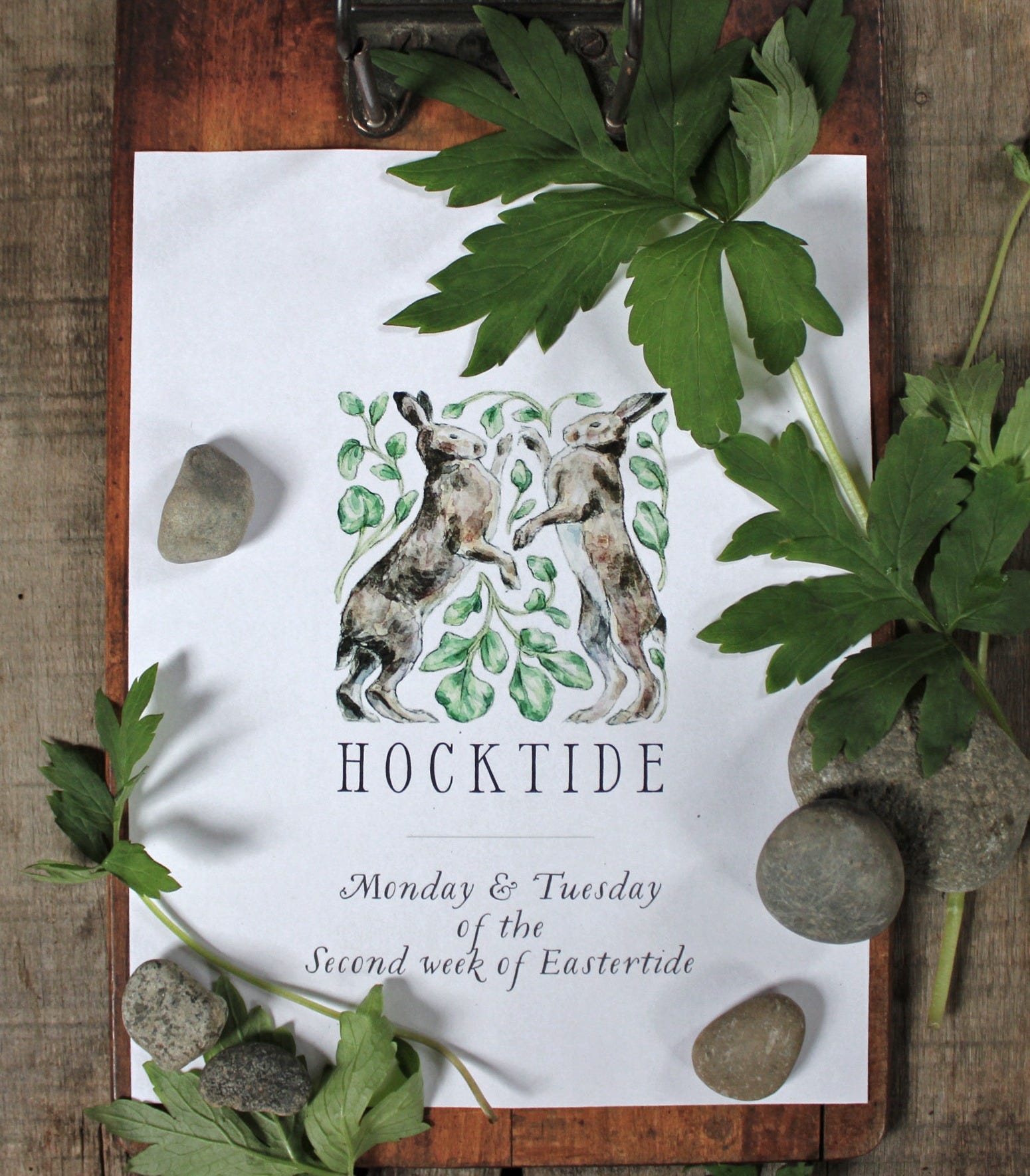
A Book of Hours helps us to graft liturgical traditions into our own sacred days - and each month, I offer some additions intended to spark curiosity as we re-discover these seasonal patterns together.
This month, you’ll find:
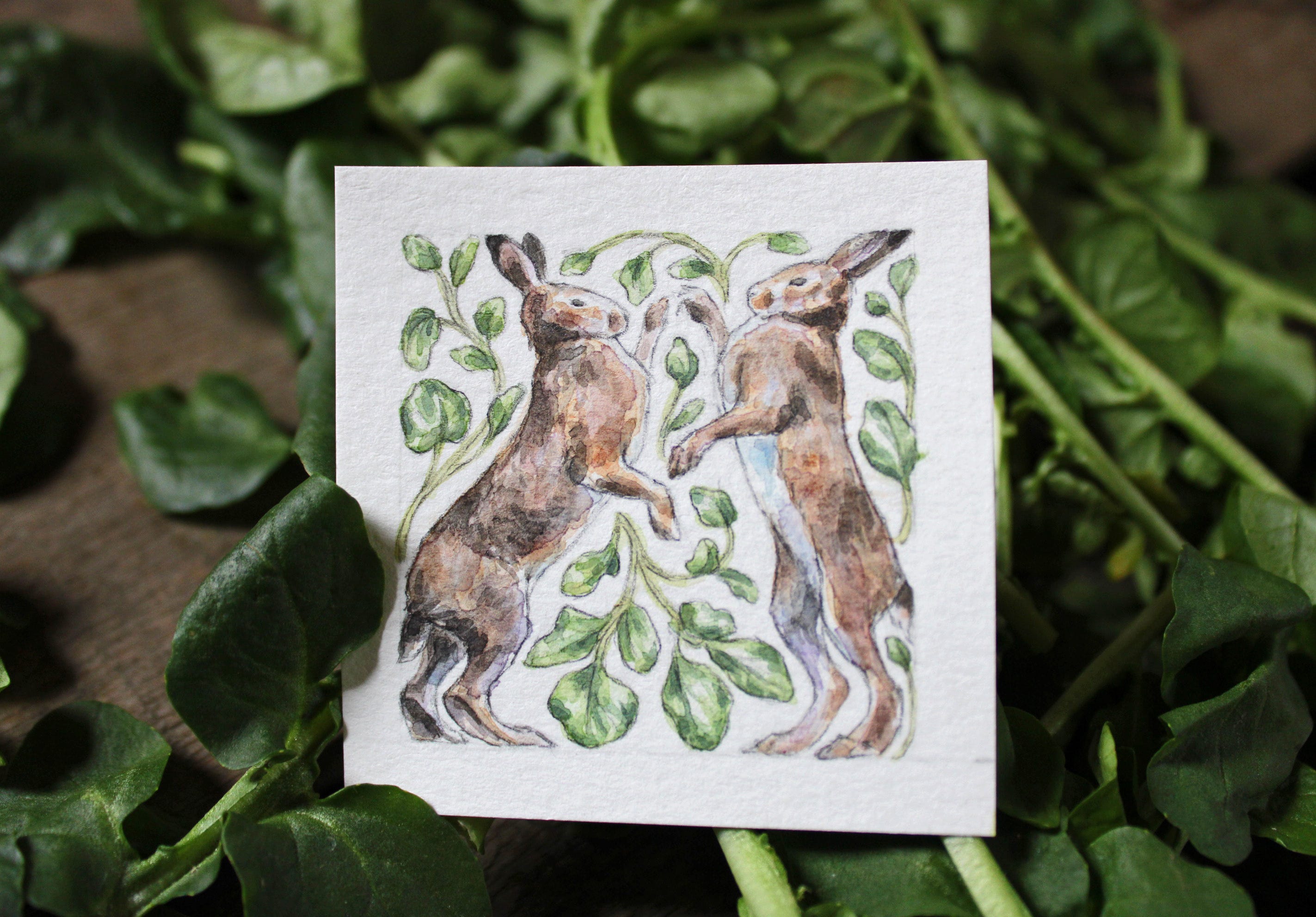
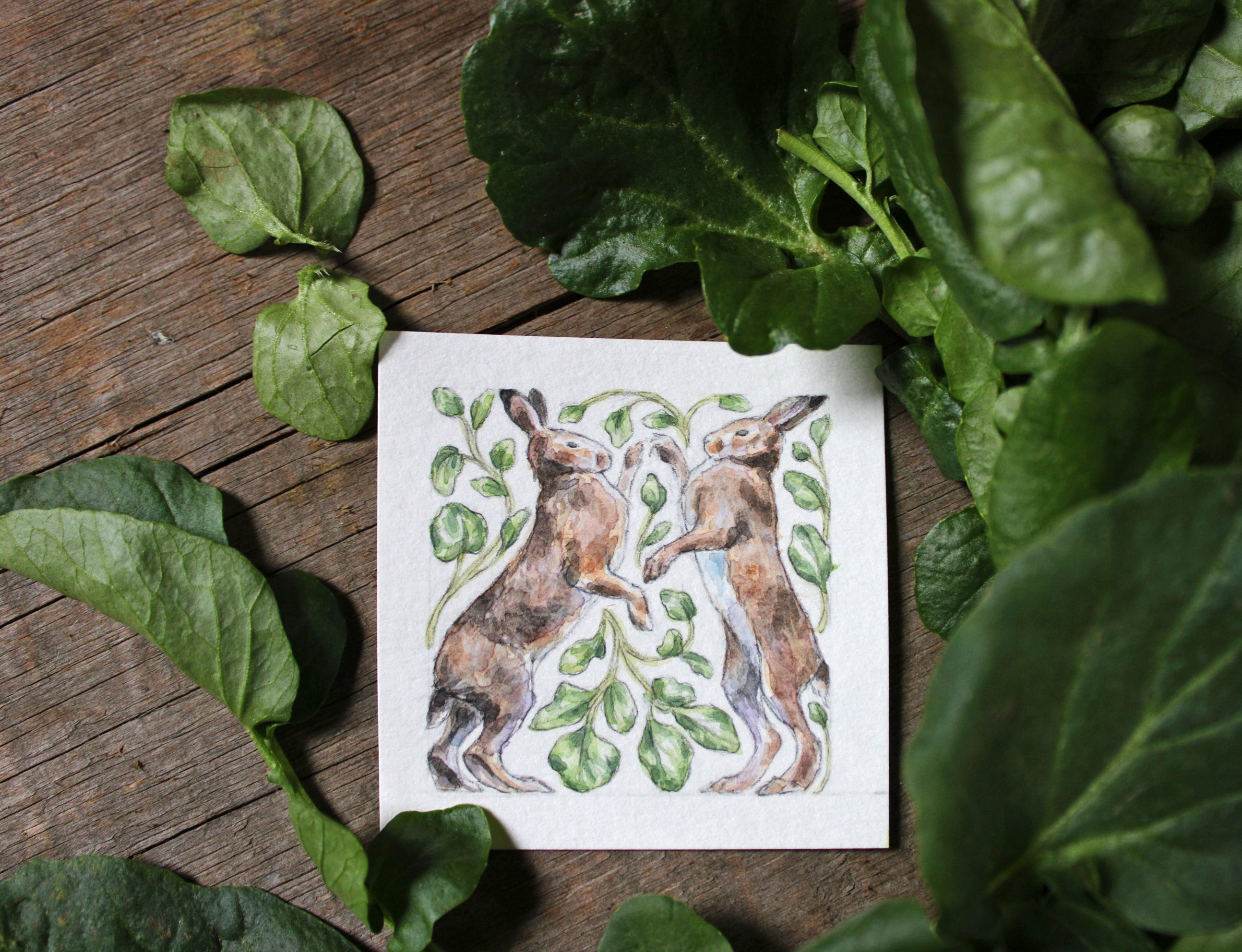
a cover page (with original art, featuring boxing hares and watercress - emblems to remind us of Hocktide)
a summary (with artwork) of history, traditions, flora, & fauna that give shape to the holiday
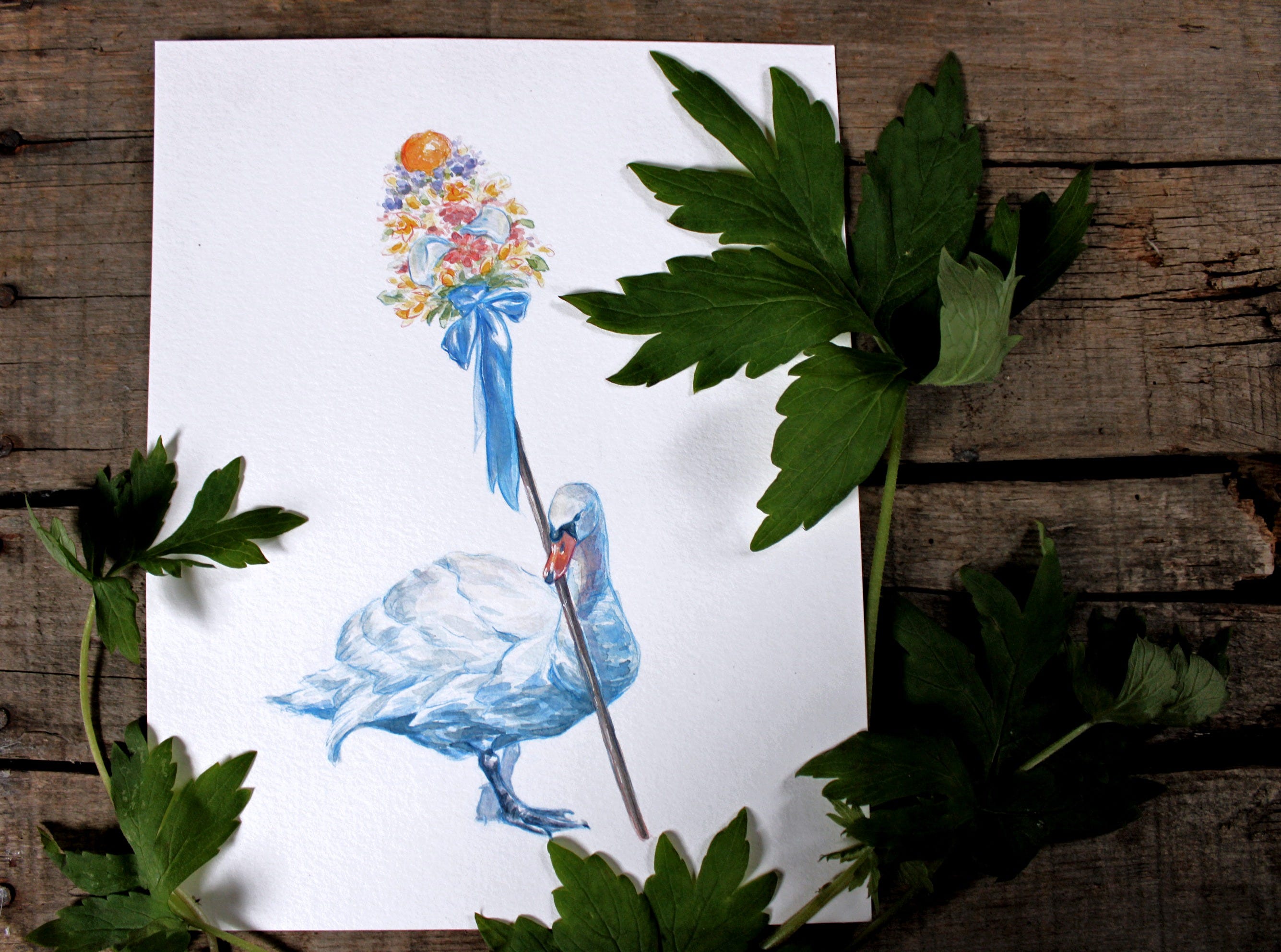
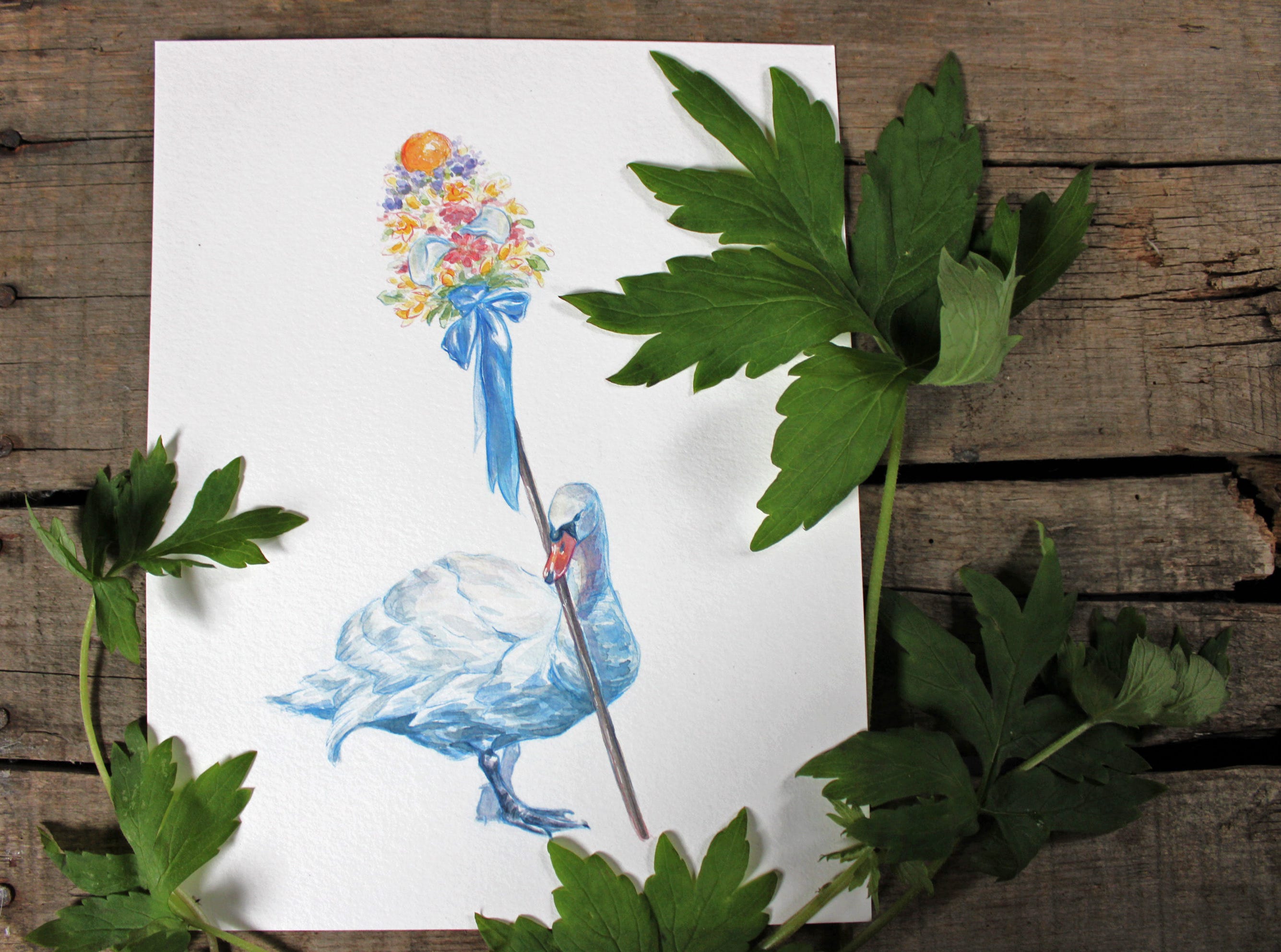
a whimsical art print (featuring a swan-Tuttiman! More on these chaps below…)
Paid members can find Hocktide art & resources (as well as my whole archive of printables) in the Scriptorium:
Eastertide’s edge

Thus they pass through the market-place,
Highly-fam’d for Hocktide games…From the counterfeit “second part” of Hudibras, Samuel Butler (17th c.)
After the great Lenten anticipation of Easter, I like to recite the often-forgotten reality that ‘Easter is a season.’ A whole fifty days of Eastertide celebration await us.
Can I be honest with you, though? The reality is that my heart & body haven’t grasped Eastertide’s liturgical pattern. Even as I find Eastertide in the liturgy & the lectionary, I simply don’t have a cultural memory of wisdom for Easter-ing through the whole Great Fifty Days in the context of my home and community.
We’ve retained that great preparatory time for Easter, but we’ve lost sight of the patterns of tradition that sustain this highest of Church holidays. We come to it through our worship, through the Eucharist, but we’ve forgotten so many of the traditions that tether our Sundays to the rest of our lives.
So, how does that Sunday Eastertide worship overflow into our home? Our neighborhood, our landscape?
Thankfully, the cloud of witnesses offers up a host of traditions to help us embrace this season wholly and sacramentally - reminding us of Easter’s extension into our everyday reality.
So here, flourishing right on the edge of Easter’s lifegiving waters, we find echoes of an ancient and once high-holiday: Hocktide.

Hocktide’s etymology and history are both mysterious.
We find Hocktide’s earliest mentions in the early 12th century, and its placement in the year - tethered to the Monday & Tuesday of the second week of Easter - was significant in many ways: it moved the parish from the Octave of Easter to the rest of this glorious season; and, more practically, it was seen as being the summer counterpart to winter’s Michaelmas (back in the days of two-season reckoning)…also, like Michaelmas, Hocktide was a quarter day for rent and debt collection. Crucially, it was a time for re-establishing fishing, hunting, and grazing rights in many regions as well.
By the 15th century, records show us that Hocktide was entrenched in the English calendar, with mentions often chastising how raucous celebrations had become…while also noting the immense amount of contributions raised for church funds during these days. Hocktide festivities came and went during the English reformation, with most revivals ultimately waning over the centuries until it became an all-but-forgotten memory in all but a few places.
Scholars aren’t really even sure what ‘Hocktide’ means - etymology linking it to older terms for indebtedness (“in hock”) tend to be anachronistic, and other attempts at linking it to terms for “binding” (often related to England’s freedom from Danish rule in the 11th c.) are also uncertain.
Through the haze of a thousand years worth of folklore, lost footnotes, and best-guesses, though, I think I see Eastertide glimmering in this enigmatic holiday.
Easter shows us the ultimate fulfillment of indebtedness through Christ’s crucifixion and resurrection (indeed, a practical reminder for parish debts to be re-balanced).
And, in Easter, we greet the ushering-in of the new era of God’s topsy-turvy economy: here, after tipping over the edge of Easter Sunday, we find that crucifixion is triumph, death is life, the meek shall inherit the earth, and the ‘usual order’ of what we’ve grown to expect has been turned inside-out.
Hocktide is here to help us cement that mystery into our bodies.
Most of the Hocktide festivities are concentrated on the Tuesday of the second week of Easter, with celebrations stretching back toward Monday (almost as if it were a vigil, with the revelry extending earlier & earlier in the day).
This placement sounds like a word scramble, but it’s a beautiful invitation for us: Eastertide begins with an Octave…an eight-day period of extended solemnity. This Octave ends on “Low Sunday”: the Sunday after Easter day. Hocktide, then, bridges that sustained height of solemnity & celebration with the patterns of life held by the remaining days of Eastertide.
And, just as Easter Sunday rattles our expectations and shakes us into a new way of thinking, Hocktide gives us a time to practice that resurrection-strangeness in a tangible, lively way.
These two days (often extending further beyond just Monday & Tuesday, too) were a time of misrule, when the social order was upset through parish-wide games.
On Monday, women would chase men, sometimes barring the road with a rope or binding them.1 When each man contributed a payment to the parish, he would be released to continue on in the day’s games. Over time, payment was accompanied by or replaced with a kiss. On Tuesday, the roles were reversed, with men collecting funds from women.
Churchwarden accounts show that the women brought in the lion’s share of money during these peculiar days:
“…in the London parish of St. Mary at Hill, the women regularly raised between two and three times as much money as the men, and in some years men failed to bring in any money at all.”2
Katherine L. French, The Good Women of the Parish: Gender and Religion After the Black Death
The significant funds raised from Hocktide games benefitted the parish in so many ways, with the women’s collection providing lasting support to countless churches: many sanctuaries received Hocktide funds toward the maintenance of the “damelight” (a light dedicated to the Blessed Virgin Mary). Furnishings were funded, and later, new windows were purchased. We see the altar at Westminster’s newly-built (1509) St. Margaret Church receiving a new banner with women’s Hocktide money, and fresh satin altar cloths and curtains abounded elsewhere.
At a time when women had few ‘official’ capacities within parish infrastructure, Hocktide interrupted social habits within the context of Church tradition (another example of the ongoing dialogue between popular piety, folk tradition, and Church hierarchy).
How very Eastertide-ish!
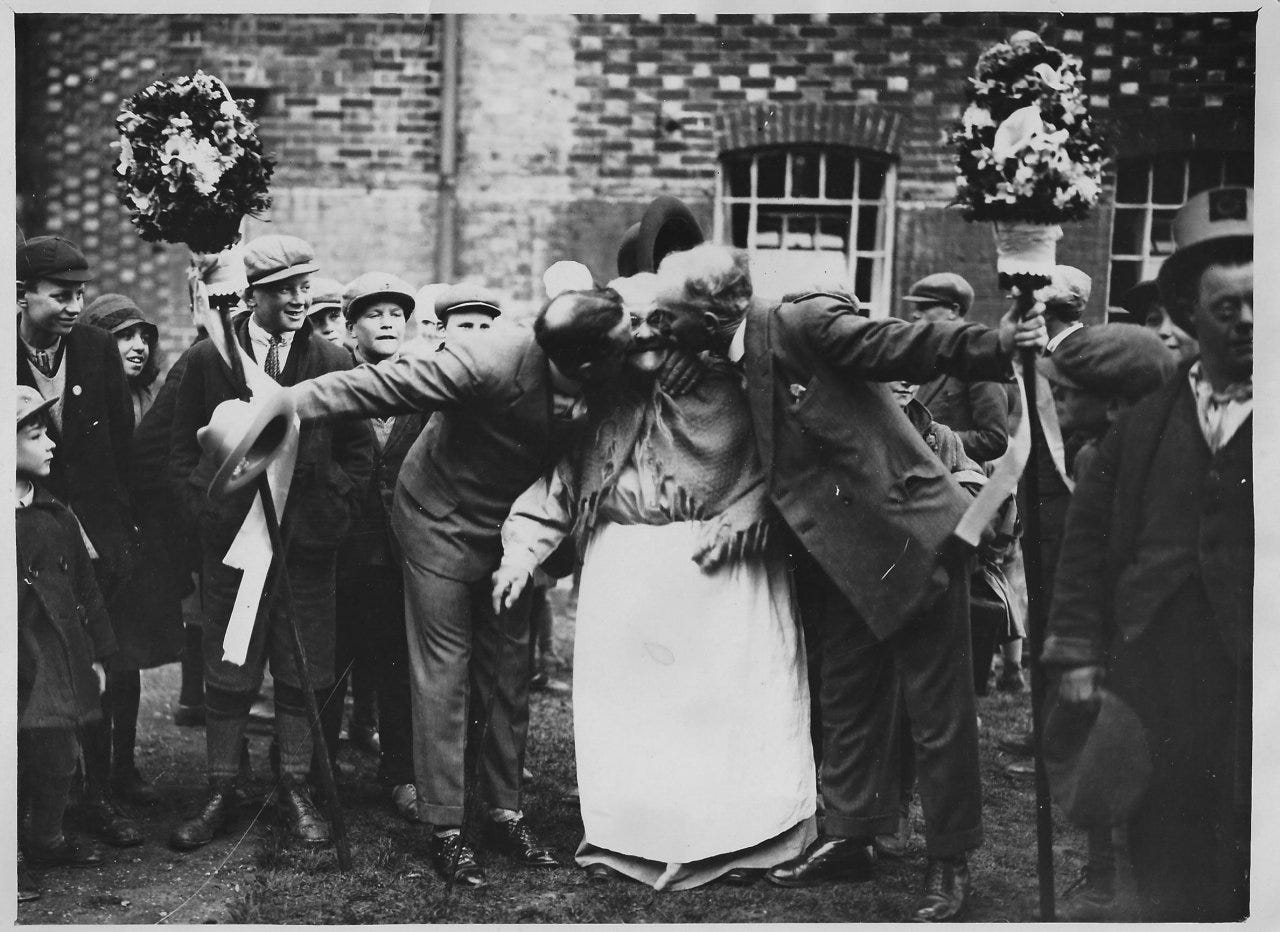
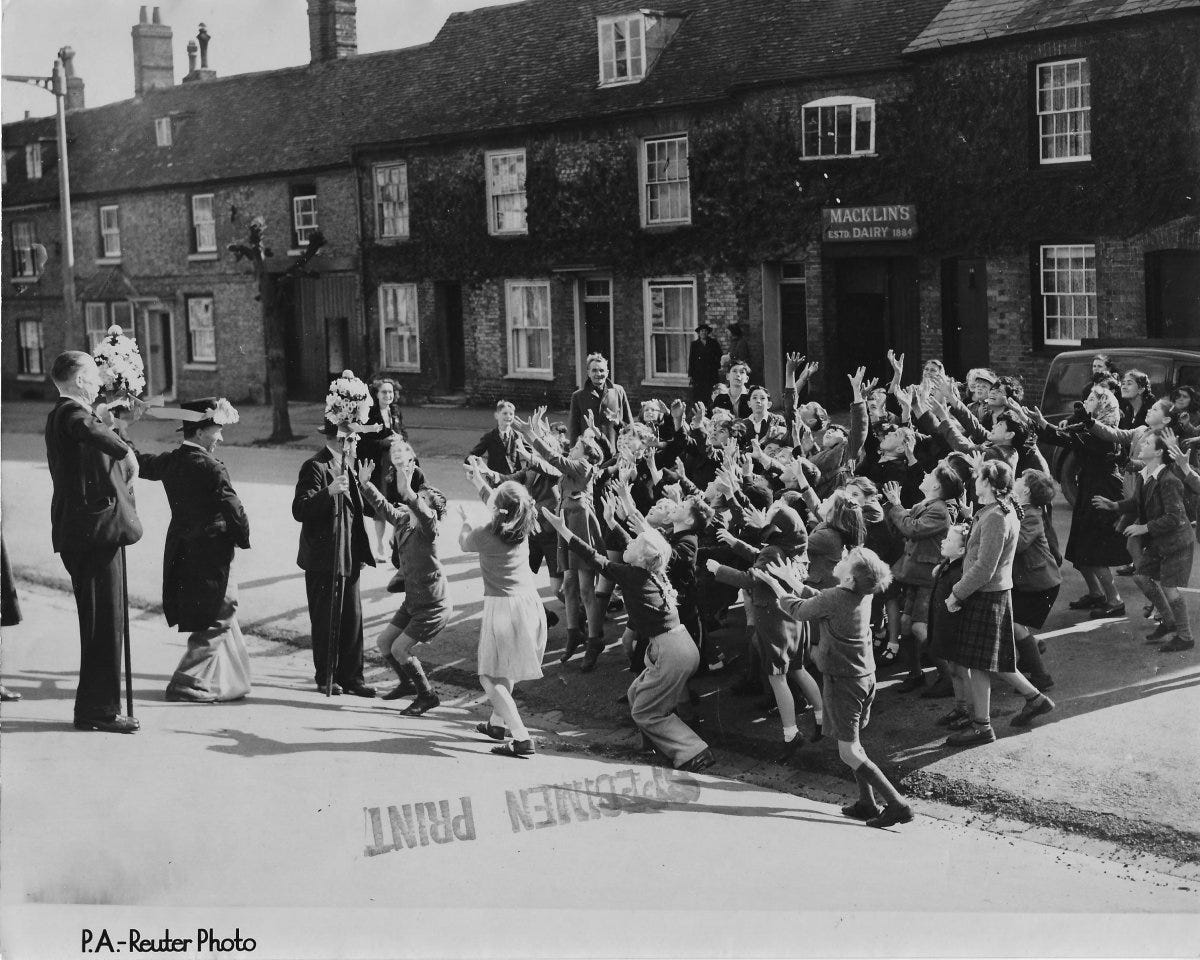
Hocktide festivities were overseen by “Tuttimen” bearing fragrant staffs:
“…two tithing men [parade] the town on Hock Tuesday, each carrying a staff ornamented with flowers, surmounted by an orange, and decked with blue ribbon. These are called ‘tuttimen,’ from a West Country word ‘tutty’ - a flower or nosegay, and they are entitled to demand a penny a head for every person in the town, for services rendered during the pats year…”
George Charles Williamson, Curious Survivals: Habits and Customs of the Past that Still Live in the Present (1923)
These Tuttimen were accompanied by the Orange Scrambler,3 who carried a bag of oranges to give to each person who gave a penny or a kiss, replenishing the orange that topped each staff. Tutti Women additionally carried baskets of oranges and sweet treats to toss to the crowd.
In some parishes, the custom of “lifting” was also part of the chasing and binding: the captured person would be lifted three times in a flower-bedecked chair - reminiscent of the raising-up of Christ on the cross.
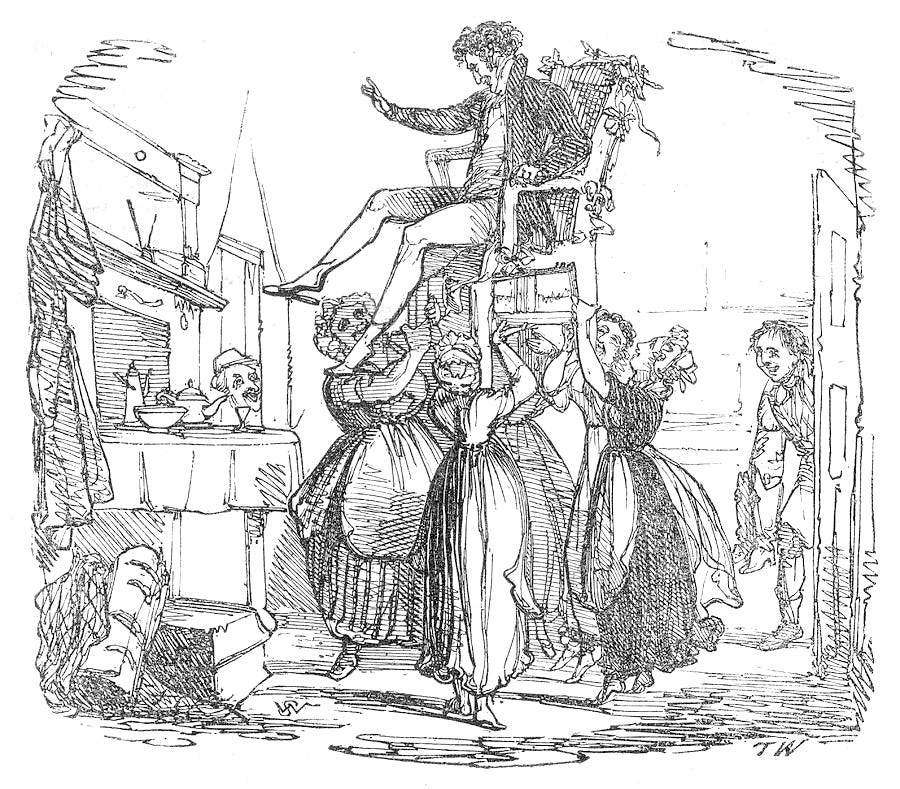
Lifters in some regions additionally brought with them a posy and a bowl of water, using the flowers to sprinkle water onto the feet of the captured person in the chair (Maundy Thursday comes to mind), singing the hymn Jesus Christ is risen again.4
Throughout all of this, the elected Hocktide Court would hold its proceedings: in this town council, the maintenance of fishing & grazing rights were maintained by “commoners” - literally, the villagers who had rights to graze their animals, collect firewood, forage for cress, etc. on common-held lands.
In a way, it was a way of refreshing the local memory and customs that revolved around crucial aspects of village life - and what better season that Eastertide and the turning of a new agricultural year to reestablish the shared use of community resources?
PASS OUR DAYS ON LOVE AND WATER-CRESSES

“Will you marry me and mistress be, fair lady, of all these?
And we’ll pass our days on love and Water-cresses.”Harry Clifton, Water-Cresses (1863)
While other strange customs abounded (like the election of Hocktide Courts and the “Shoeing the Colt”5), Hocktide’s antics of course led to celebratory meals: in particular, the Watercress Supper.
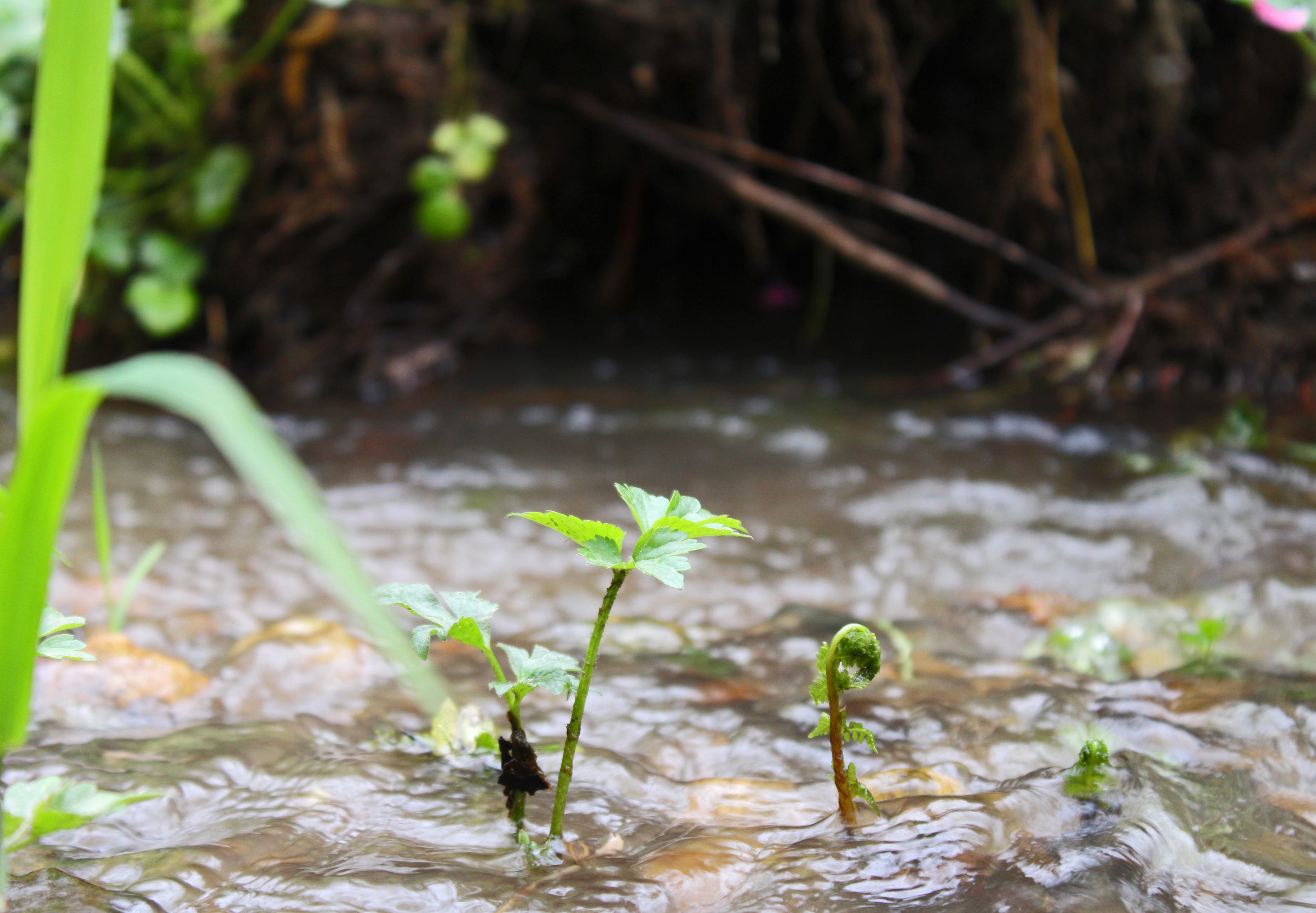
Watercress (also known as St. Patrick’s Cabbage) is a bright, fresh, peppery herb that grows alongside running water, just on the edge of the streambed.
This season’s Founder’s Box included some watercress seed for you to plant!
Because it flourished near pure, running water - and also owing to its cross-shaped flowers - Watercress gained a reputation as a symbol of protection, its use especially prevalent during Eastertide. It may have also been one of the bitter herbs used during Passover, alongside a handful of other greens.

And, as a semi-aquatic herb that grows alongside running water, Watercress is also a tangible reminder of the incarnational mystery of Jesus that we see come to fulfillment in Easter -a time when we celebrate the resurrection of the son of God who was (and is), mysteriously, both fully man and fully God.
This staple green was a fitting herald during Hocktide’s proceedings - both for its Eastertide connections and as a representative of the re-assertion of rights to common land here after Easter Sunday:
“This is the sort of thing we English have gone to war to protect,” said Andrew Sawyer, the local vicar, as he surveyed the horse-shoe shodding process proprietorially. “This and the right to gather water-cress from the marsh.”
Jim White, Independent article (1993)
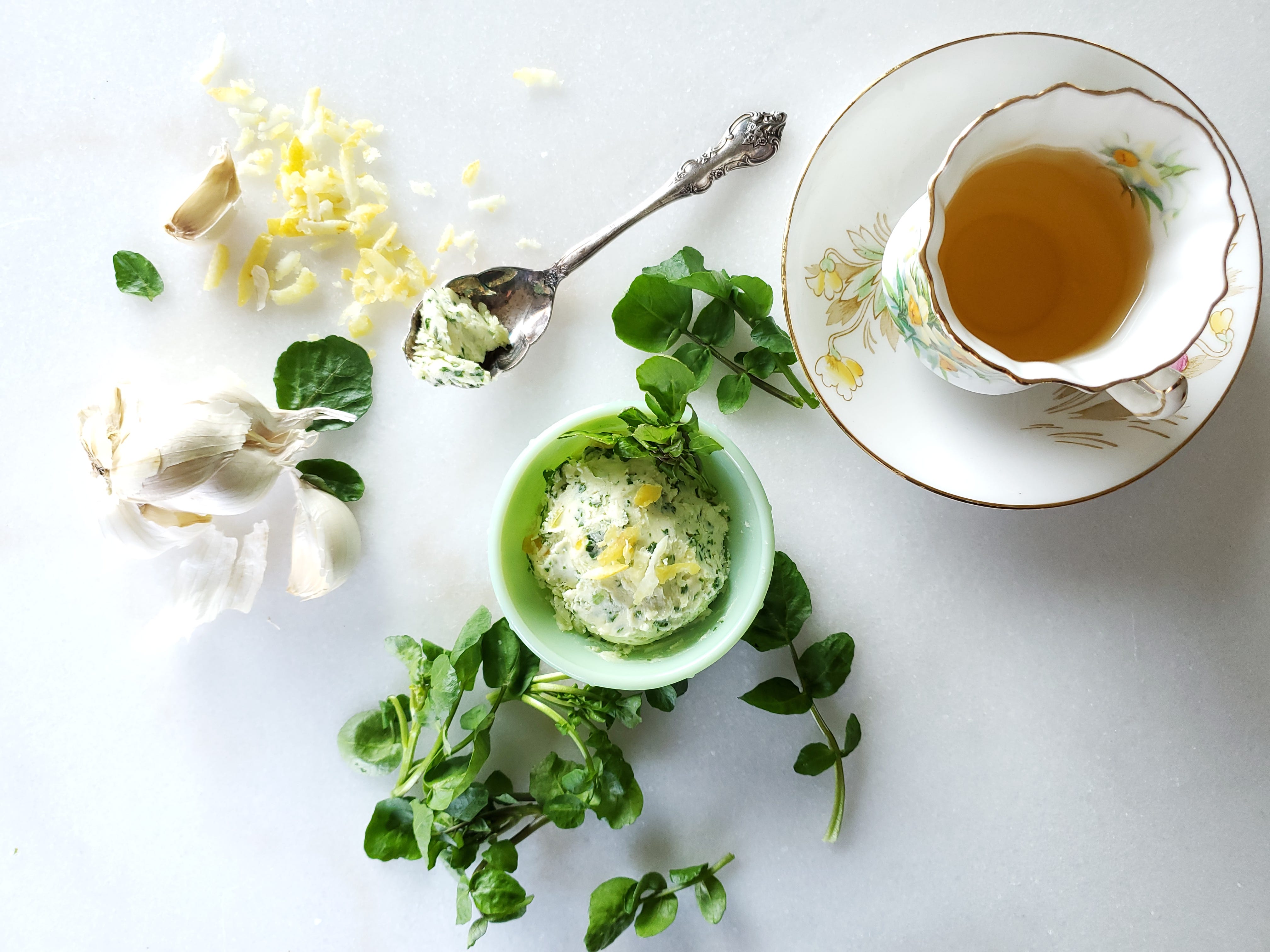
These Hocktide festivities, strange though they may seem, underscored the importance of both Eastertide’s ongoing celebration as well as land use rights by leaning on this popular foraged herb: a Watercress Supper would be held, featuring macaroni, Welsh rarebit (toast topped with a creamy cheese sauce), watercress salad, and punch.
A celebration of the water’s edge, that place where two worlds meet.
BENEDICTION
I bind my heart this tide
to the Galilean’s side,
to the wounds of Calvary,
to the Christ who died for me.I bind my soul this day
to the neighbor far away,
and the stranger near at hand,
in this town, and in this land.I bind my heart in thrall
to the God, the Lord of all,
to the Christ, the poor one’s friend,
and the Spirit he did send.I bind myself to peace,
to make strife and envy cease.
God! Knit secure the cord
of my thralldom to my Lord!
Amen.Lauchlan MacLean Watt, “I bind my heart this tide” (1907)
Our liturgical living group will be celebrating Hocktide later in the month (I’m never a stickler about timing with these things) - I’ll keep you posted on how it goes!
How is your Eastertide? Do you also struggle to find ways to incorporate this beautiful season into your daily routine?
Pax et bonum,
Kristin
The Monday-Tuesday division of men & women varies from region to region, with some places reserving the women’s collection to Tuesday.
As author Katherine French also notes, Medieval men had more available money to pay out, which could partly account for the higher sums brought in by women; the women’s collection was so successful, though, that there was surely additional energy and participation among women participating in the games, though.
The connection to oranges may be a tie to William of Orange.
In his wonderful book The Stations of the Sun, Ronald Hutton details and maps the regional differences of Hocktide games.
In this tradition, any ‘strangers’ at the local pub were dubbed the “Colt.” A farrier would tap a horseshoe nail into the sole of the Colt’s shoe, and when the Colt yelled “Punch!”, the tapping would cease and the stranger would buy a round of drinks for everyone. After this, the Colt was a stranger no longer, but a full-fledged neighbor.
Christina Hole, in British Folk Customs tells us: “This is an initiation rite, rather like the ‘shoeing’ customs that used to be observedon farms at harvest and occasionally at other times.”
Hocktide seems to have some similarities to Dyngus Day, which is celebrated in Poland (and in the Polish diaspora like Cleveland, Ohio!).
Wonderful Kristin and a lot of good work. And it is still Tuesday here. Where I come from in Surrey and Sussex the chalk streams fed from springs were still farming the finest watercress in my childhood. And the rural children of previous generations went to school with a hunk of bread and watercress. The cress was termed 'poor man's meat' in those days. It acgtually has valuable nutrient properties, not just the Vitamin C.
Your thought on the integration of Easter and customs ring bells. There was always a need to 'let the hair down'. These could be hard and indeed rough times and I imagine ordinary families could share, with care, the wilder side of life while relying on the faith that secured the turning year.
Thanks for the links by the way and your beautiful illustrations.