

And ever I pray, / "God speed the plough"
Monday after Epiphany: Plough Monday

And than I thanked this good husbond,
And prayed God the plough to spede,
And all tho that laboreth with the lande,
And them that helpeth them with worde or dede.
God give them grace such life to lede,
That in their consience maye be merry enough,
And heven blesse to be their mede,And ever I praye, “God spede the plough.”
Excerpt from The Farmer’s Toast, or Godspede the Plough (Middle English, ca. 15th c.; British Library MS Lansdowne 762, fols. 5r-6v)
Welcome! Whether you’re a longtime friend or a new kindred spirit here (I recommend visiting the Village Green to get your bearings), I’m delighted to be a companion to you through the liturgical year.
Please enjoy this month’s focus: a practice of attention that encourages us to deeply explore one holiday within the context of the season.
For more to supplement the rest of your January days, flip through the January Almanac.
Pax+bonum, Kristin.

» Printable Resources
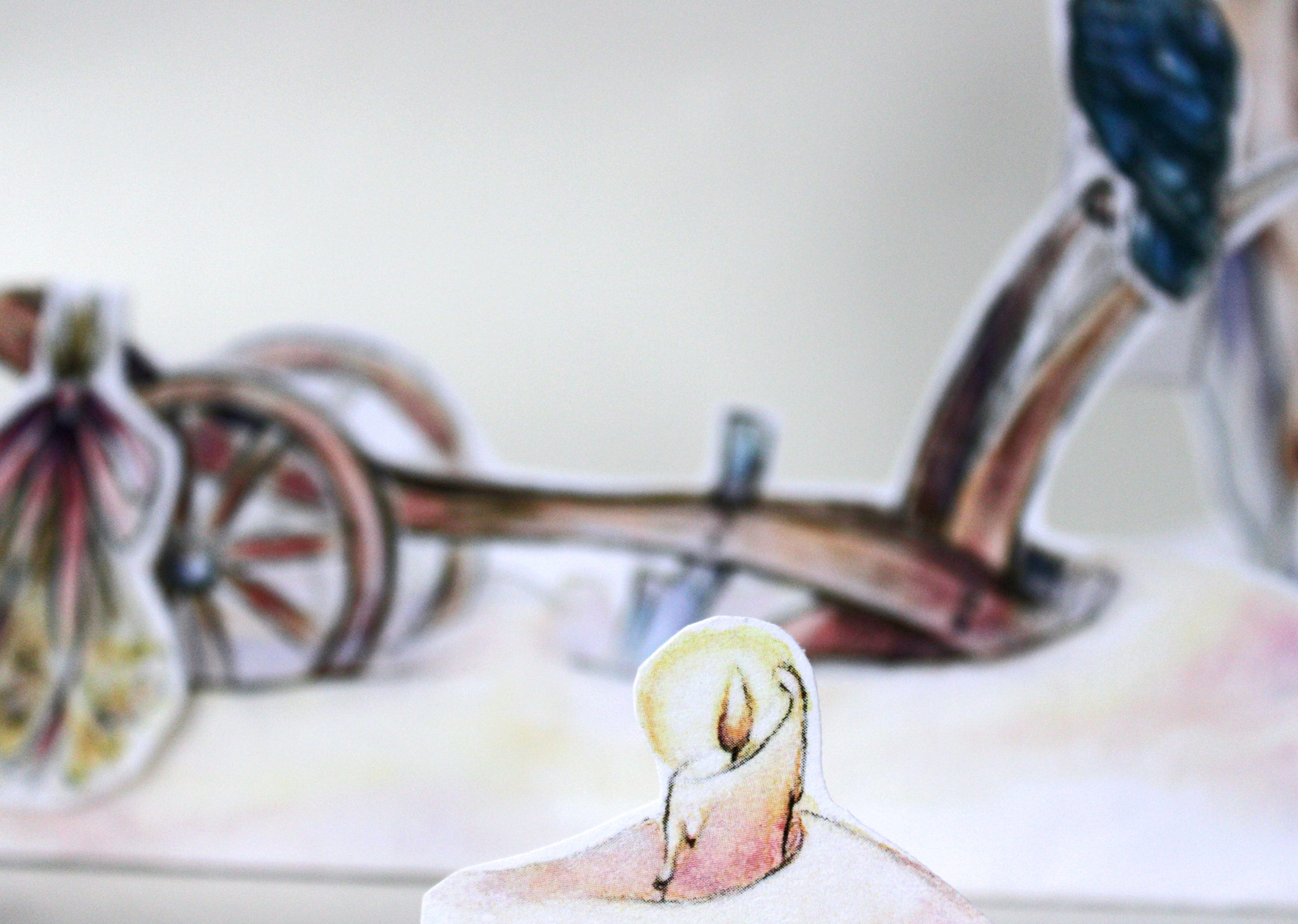
Plough Monday Paper Scene
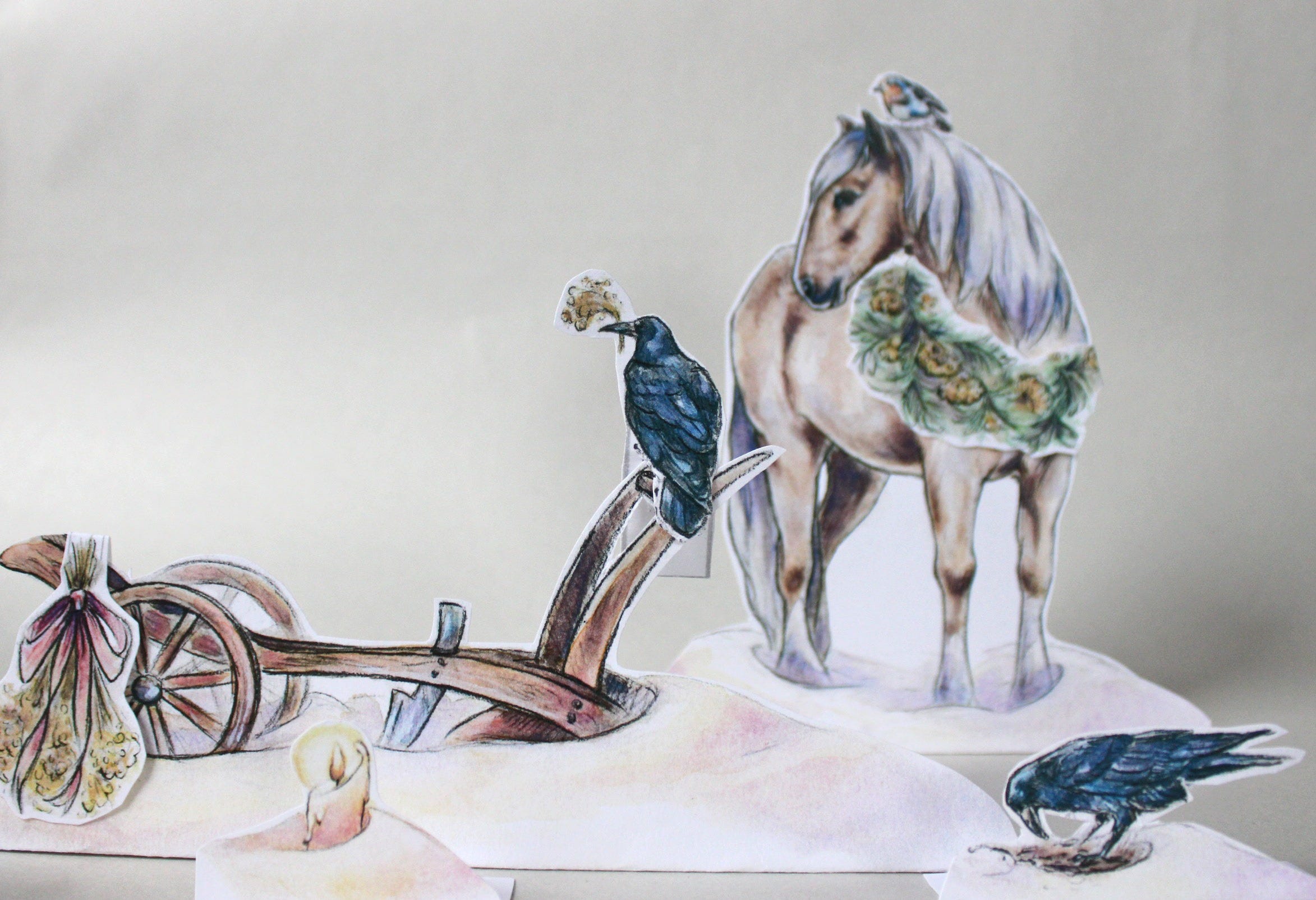
If you feel the itch for some old-fashioned paper dolls, may I suggest a winsome Plough Monday scene?


This interactive little scene can be fun for kids (and the young-at-heart!) to play with…I personally also enjoy just setting it up and arranging the picture. Whether young or grown, finding simple ways to interact with history - especially when it is still so formational in the present! - can also be fun & whimsical.
All of the creatures, plants, and other symbols in this set have been carefully chosen to represent the holiday (how sweet is that Rook digging in the dirt after the plough has gone by?)
Just cut out the elements, fold their bases, carefully cut any tabs or slits, and arrange to your heart’s content! And, if getting paper dolls to stand upright proves too frustrating, you can just arrange all the pieces into changing scenes as a flat-lay on a piece of paper.
Book of Hours Pages
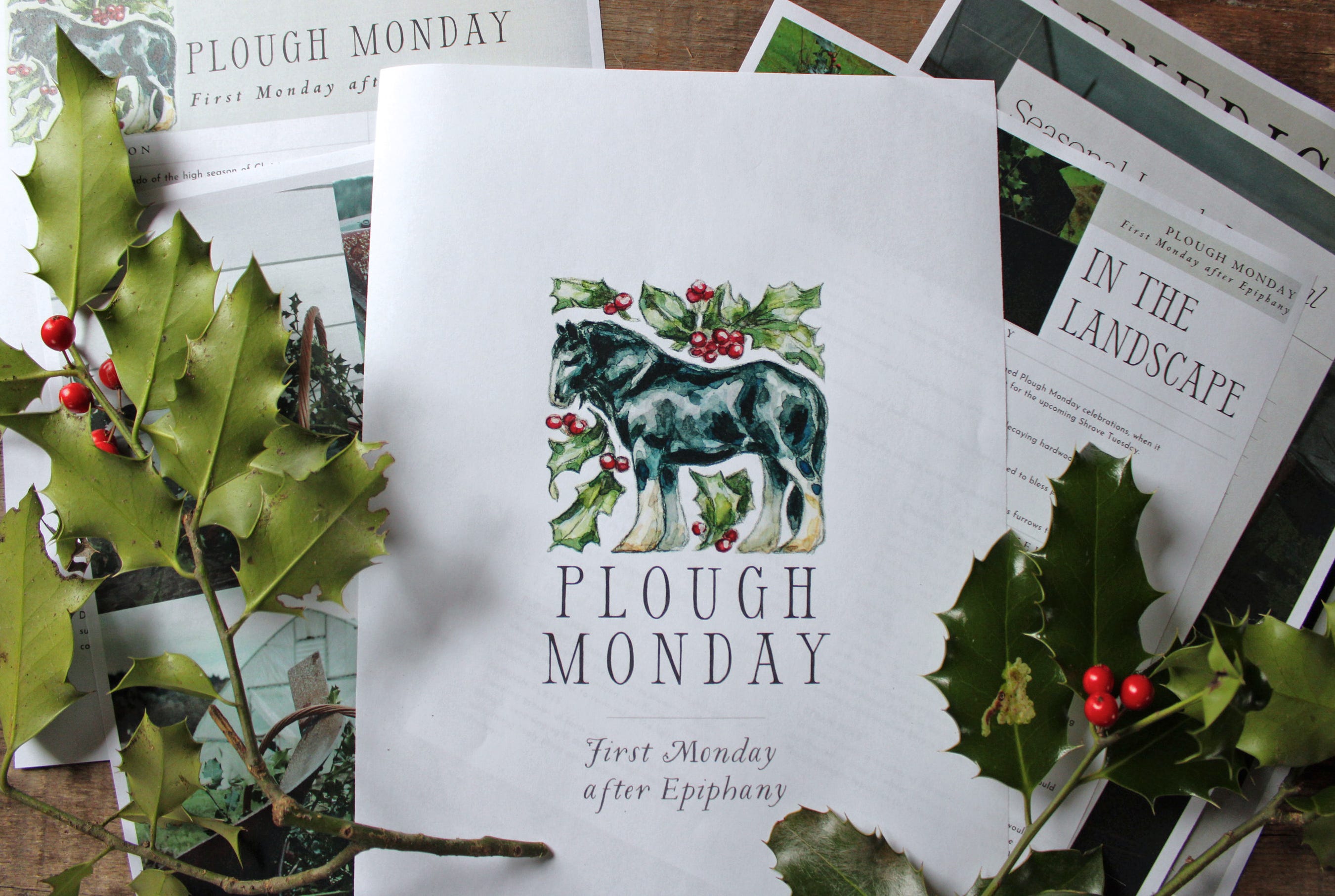
Keeping a liturgical Book of Hours binder helps me to distill all of the inspiration I find, so I can easily look to the elements that have been most nurturing for our family & community.
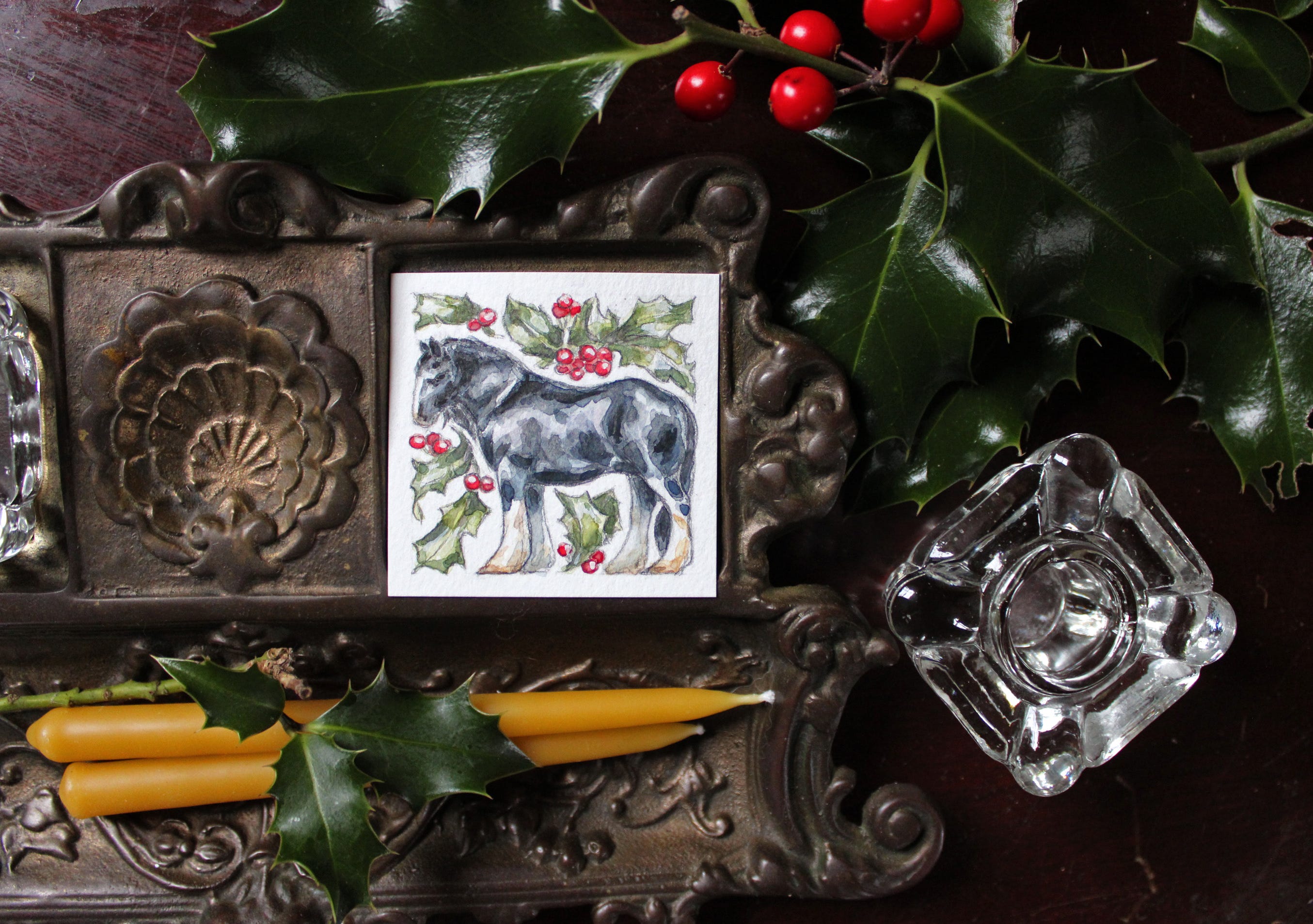
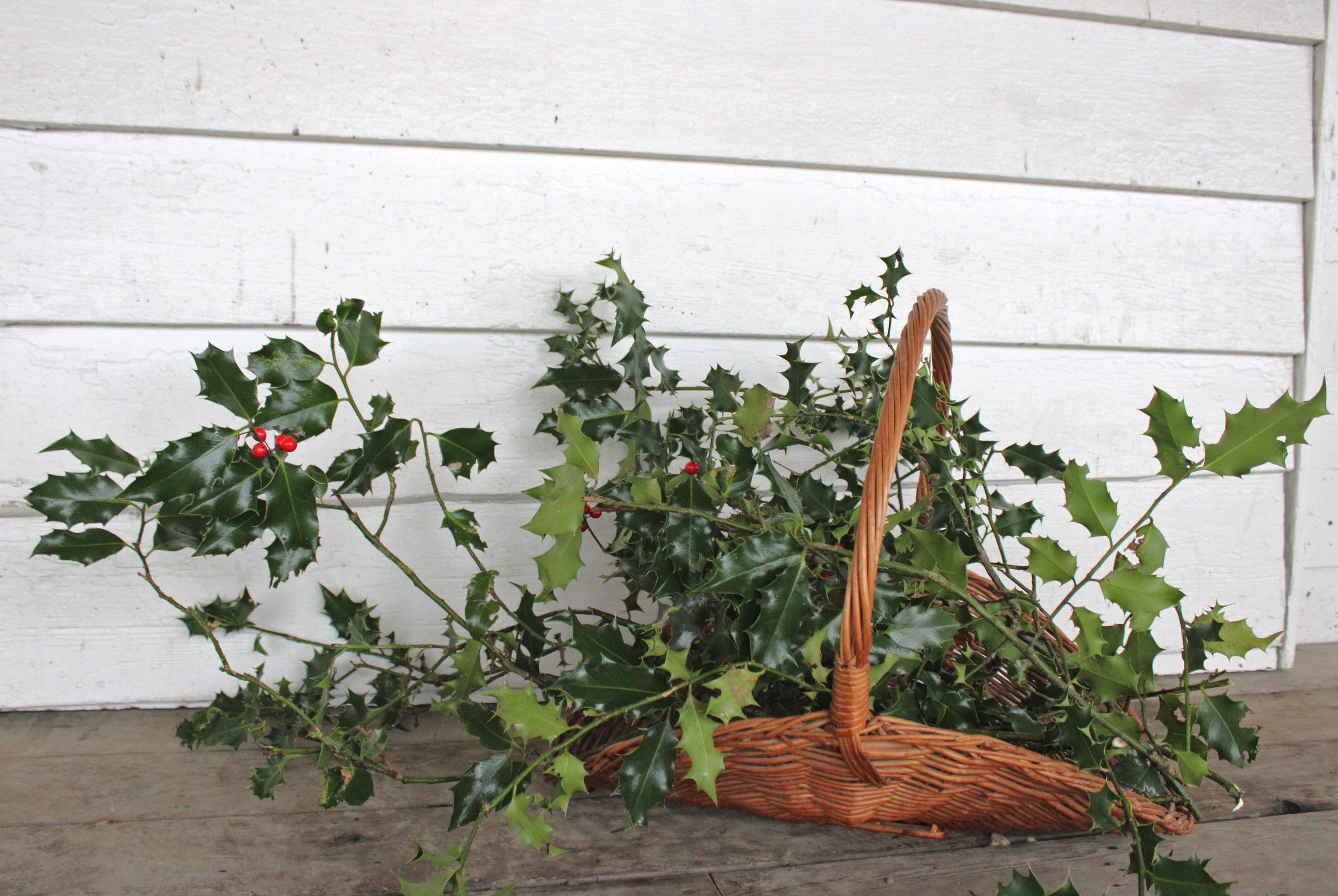
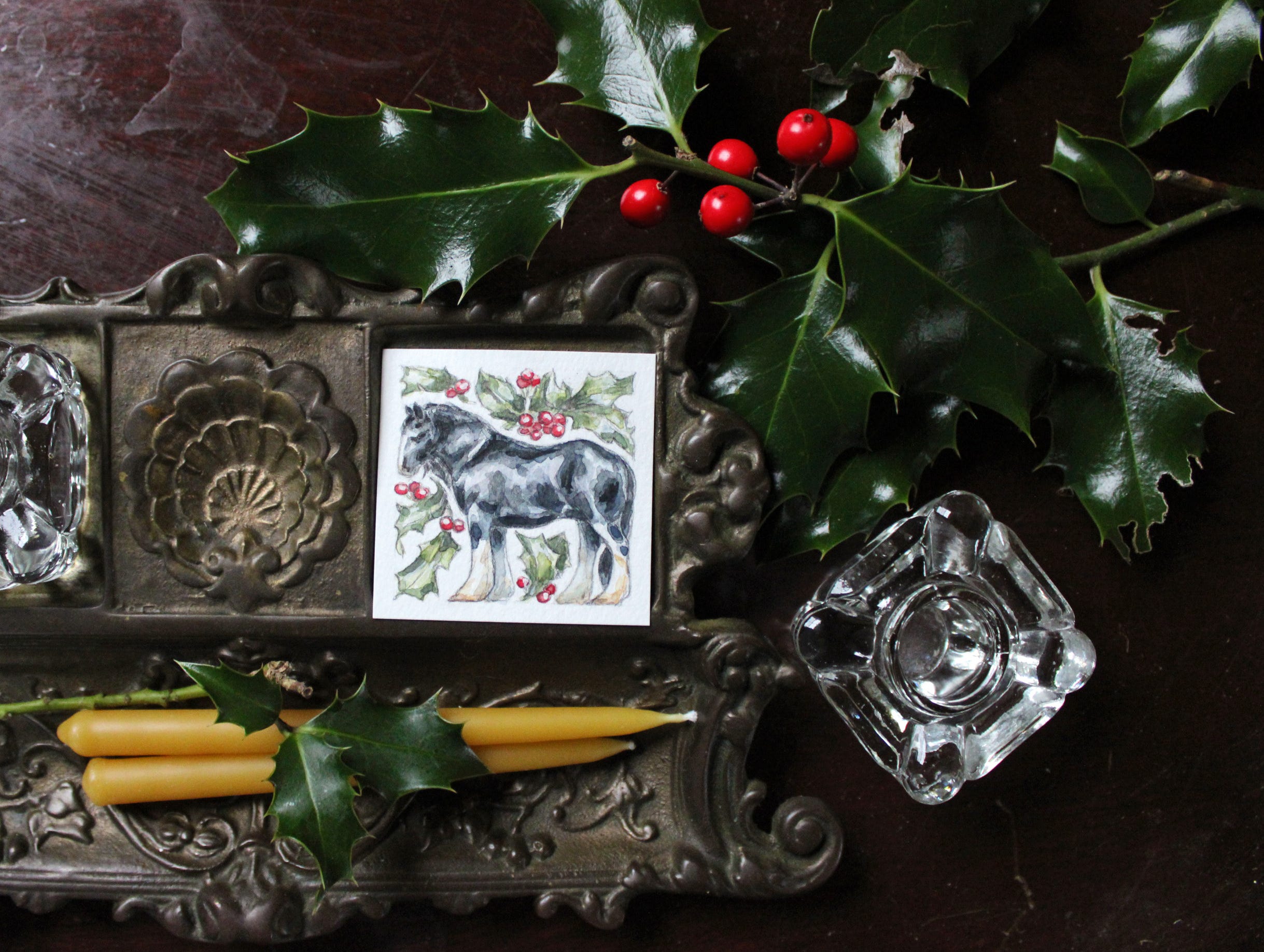
Cover page featuring a draft horse and holly (often used to decorate ploughs, and traditionally kept up until Candlemas)
Five pages of folk tradition, agrarian context, traditional meal ideas, prompts, history, poetry, Scripture, & hymns (with photos) to help you learn about this feast and reflect on how it intersects with your own life and landscape.
Paid members can find these goodies (as well as my whole archive of printables) in the Scriptorium! (Scroll all the way to the bottom of the Scriptorium, to the ‘Movable Feasts’ section, to find your Plough Monday gifts…)
BLESS THE CLEAVING SHARE
I will go with my father a-ploughing
To the green field by the sea,
And the rooks and the crows and the sea-gulls
Will come flocking after me.
I will sing to the patient horses
With the lark in the white of the air,
And my father will sing the plough-song
That blesses the cleaving share.Joseph Campbell, excerpt from the poem “I Will Go With My Father”
Of all the invitations offered to us by the waxing and waning of seasons & holy days throughout the Church year, the call toward a posture of participation increasingly feels to me like the essence distilled from all these sundry traditions.
We’re asked to shift away from our habits as spectators and practice the habits that conform us to participation in the life of Christ. Here, in her annual retelling of sacred time, the wisdom of the Church and the fullness of Scripture intersect with the seemingly mundane, daily lives of people…the everyday moments that inform our domestic piety, our concerns both big and small, are in conversation with the ecclesiastical.
In that ongoing dialogue, we hone our sight to see and experience the blessed permeability between our daily grind and the Kingdom of Heaven. We receive traditions that ask us to rehearse that permeability (ora et labora!1), helping us to recall that our mundane moments and daily tasks are illuminated by the light of Christ.
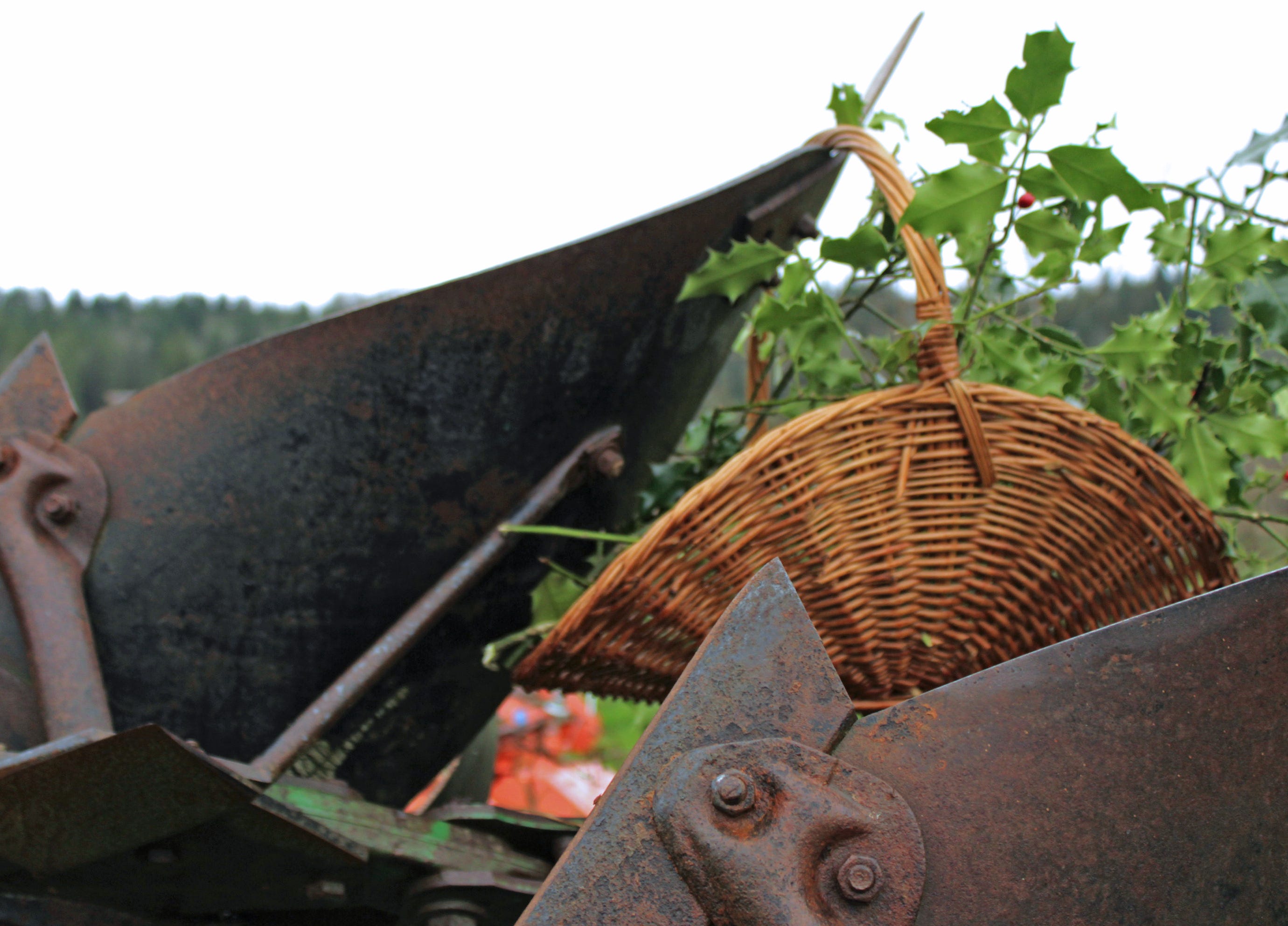
And so, here after the crescendo of the high season of Christmastide, after the pivotal celebration of Epiphany, we greet a new season in the Church…with humble, timeworn Plough Monday - a celebration of work, tethered to the first Monday after Epiphany.
Following the traditional Christmastide break from work-as-usual, Plough Monday celebrated and blessed the ploughshare and the ploughman - the humble tool of daily work, the workers who used it, and the land it would carve.
In many ways, that blessing over breaking the ground of the new year - of these days that are in the wake of the Nativity but outside of its more focused celebration - helped to break ground for all the myriad vocations throughout a community that was so reliant upon agriculture.
One of the grandest strings of celebration in the liturgical year has passed, and our shared lament - whether we dove into all Twelve Days of Christmastide or (like me) sputtered along and did our best to make merry - is this feeling of dislocation after winter’s high holiday season has ended. However lengthy or truncated our Christmas celebrations were, we often find that shifting gears into still-dark, often-gloomy winter days leaves us a bit listless and tired.
But the Church meets us here at the folk holiday of Plough Monday, and I wonder…if we participate in recovering these lively rituals of transition, however antiquated they may seem, might it help to soothe some of the post-Christmas dissonance we feel?
Ye sons of earth prepare the plough,
Break up your fallow ground!William Cowper, excerpt from “The Sower” (1779)
For so many of us, our routines during Advent and Christmas go fallow for a time - the landscape of daily routines to which we’re accustomed is set aside, postponed, resting, waiting (and, often, displaced with the stress that tends to accompany this season). There’s excitement and joy in that time, in breaking from our usual patterns and routines - but the movement out of it can be disorienting.
Though much is made of our modern tendency to glut ourselves - to the point of exhaustion - on Christmas festivities during Advent, I think this sacred time after Christmas is another impactful, potent time to pay attention to. The way we prepare for something momentous affects us: and the way recover from it affects us, too.
And Plough Monday is part of the process of blessing the restoration of our vocations - not a deflated slump back to the ‘same old, same old,’ but a celebration & blessing of the return to our daily grind.
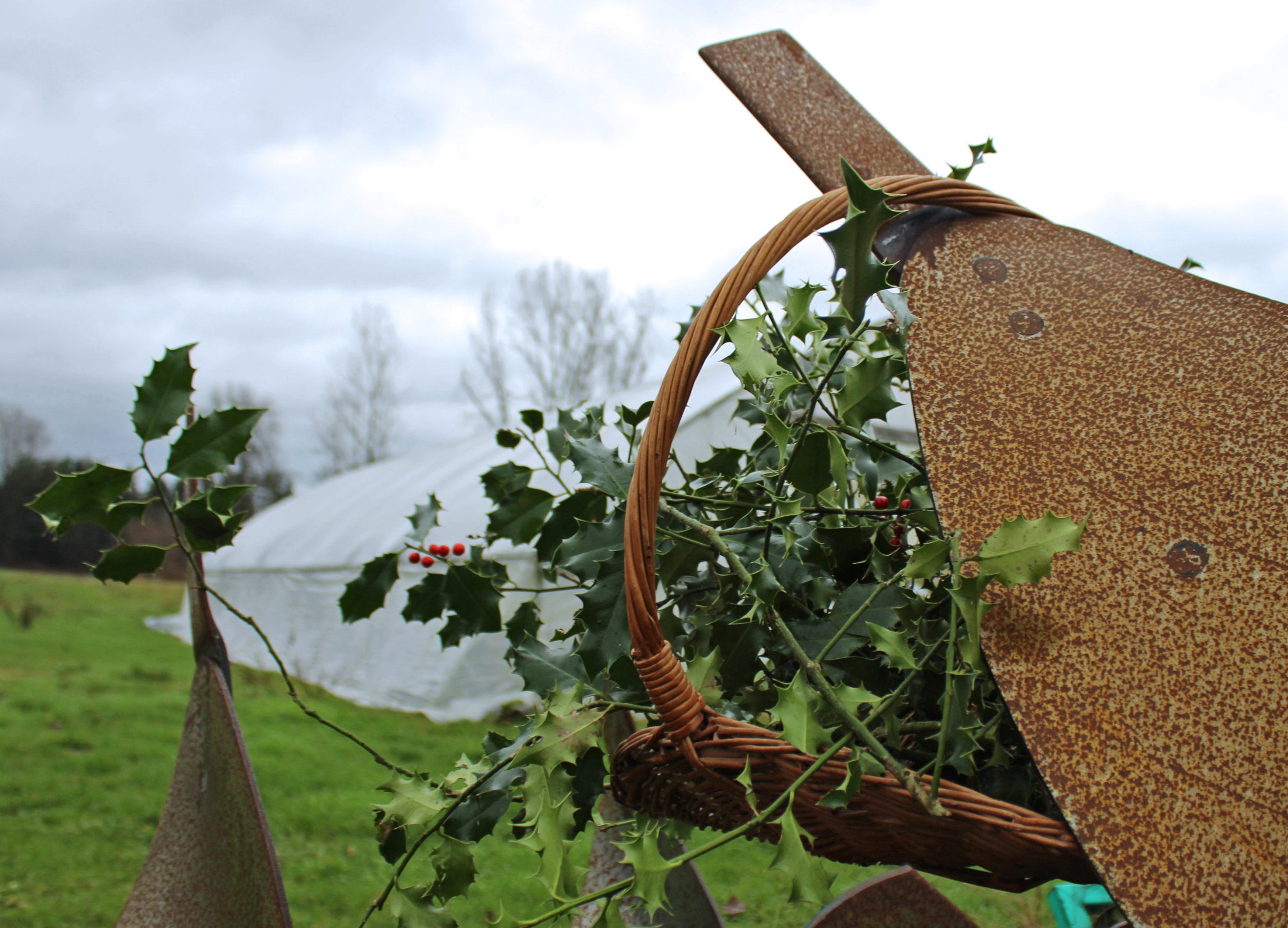
I’m personally not well-practiced at the art of transition: I tend to flinch and tighten through transitions of life, whether joyful or painful. In many ways, it can feel like these shifts happen to me…but, year after year, I’m imperfectly trying to participate in them and actively welcome the changes they bear.
This first Monday after the great feast of Epiphany has, since the Middle Ages,2 been a day that blesses and baptizes the movement from revelry to work.
It helps us to celebrate the transition back to our workaday life - not dread it, not lament it.
“After Christmas (which formerly, during the twelve days, was a time of very little work) every gentleman feasted the farmers, and every farmer their servants and task men. Plough Monday puts them in mind of their business.”
W. Carew Hazlitt, Brand’s Popular Antiquities Of Great Britain (1905)
And Plough Monday also helps us to restore our work to its sacred vocational sense: the work we put our hands to, whatever it is - however grand or humble, however frustrating or rewarding - is part of our sanctification.3
It’s no wonder, then, that we tend to feel like the rug has been pulled out from under us when the Christmas season is over - sure, we might be plenty eager to pack up all the holiday clutter, but when we don’t have a celebratory way of re-orienting our Christmastide selves toward our daily work, we find ourselves deflated and dazed.
Plough Monday, though, creates a margin for us to celebrate & reinvigorate our work: it’s a ritual to help equip us to return to (or discover) our daily grind…now, though, freshly steeped in the miraculous mystery of Christmas.
FORGET NOT THE FEASTS THAT BELONG TO THE PLOUGH
Good huswives, whom God hath enriched ynough,
forget not the feasts that belong to the plough:
The meaning is only to joy and to be glad,
for comfort with labour is fit to be had…Plough Monday, next after that Twelftide is past,
bids out with the plough, the worst husband is last:
If plowman get hatchet, or whip to the skreene,
maids loseth their cocke, if no water be seen.Thomas Tusser, Five Hundred Pointes of Good Husbandrie (16th c.)
Here from our modern vantage, Plough Monday might seem quaint or unattainable, if not totally disconnected from our own lives or work.
But, as we unravel some of its traditions…I think it can be a poignant tool in helping us to re-orient our Christmas-soaked selves toward our vocation and our landscape, whether we’re in a bustling city, on a quiet country road, or somewhere in between.
The focal point of celebration of this holiday was, of course, the plough: a farm implement used to turn soil over, preparing it for planting. This ancient, simple piece of technology - a blade (known as the ploughshare) that cuts the soil, and a moldboard to turn the soil - was revolutionary in agriculture, making it possible to grow food in the nutrient-dense but incredibly hard clay soil in so many regions.
To agrarian societies, this was a fitting emblem of their culture - it was a crucial piece of each year’s new cycle of food production.
And so, in transitioning from Christmastide into a new era of work, the Plough held the story of the farmers in particular and the whole of their community in general - and its new season of work was heralded with blessings.
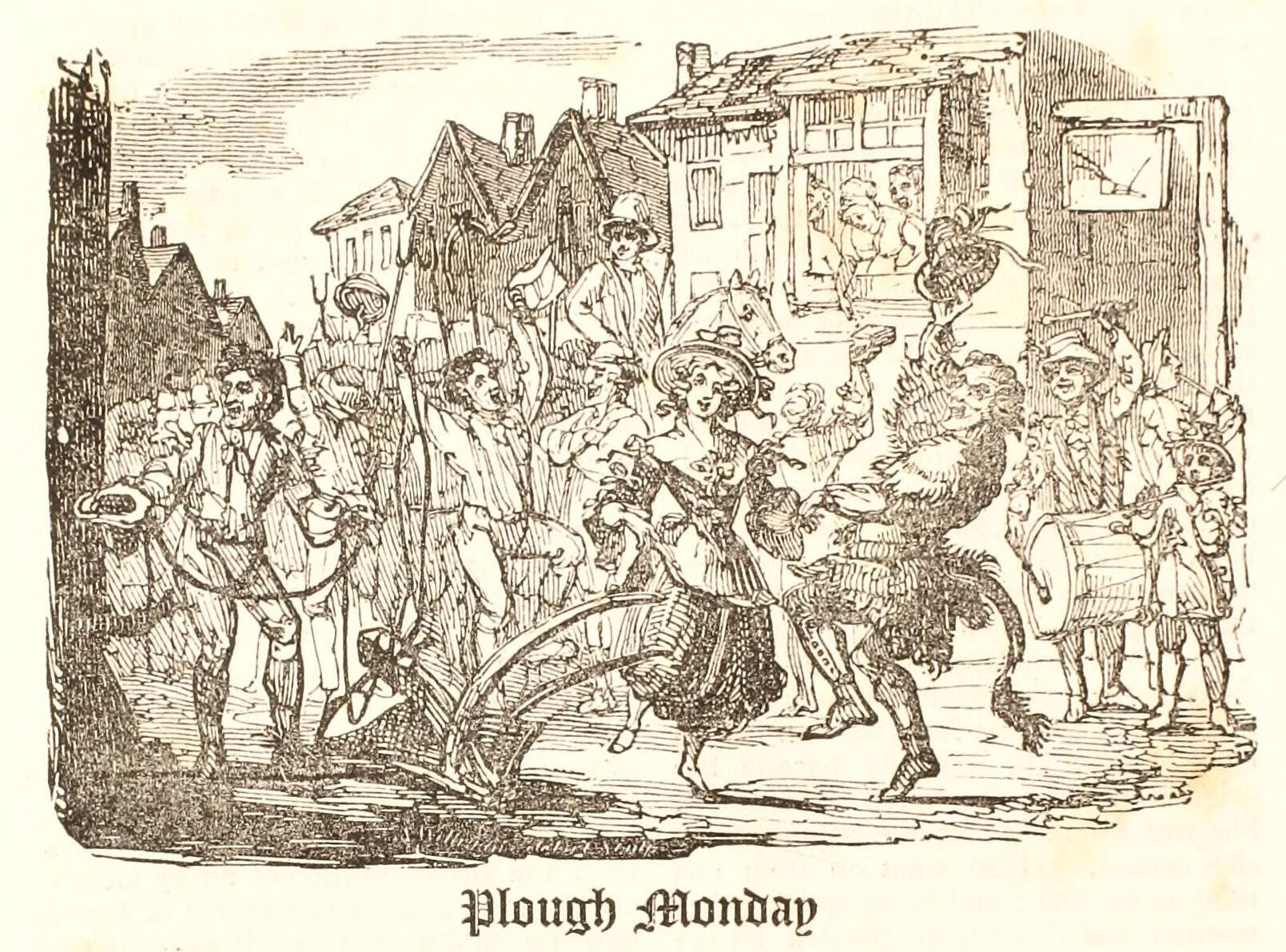
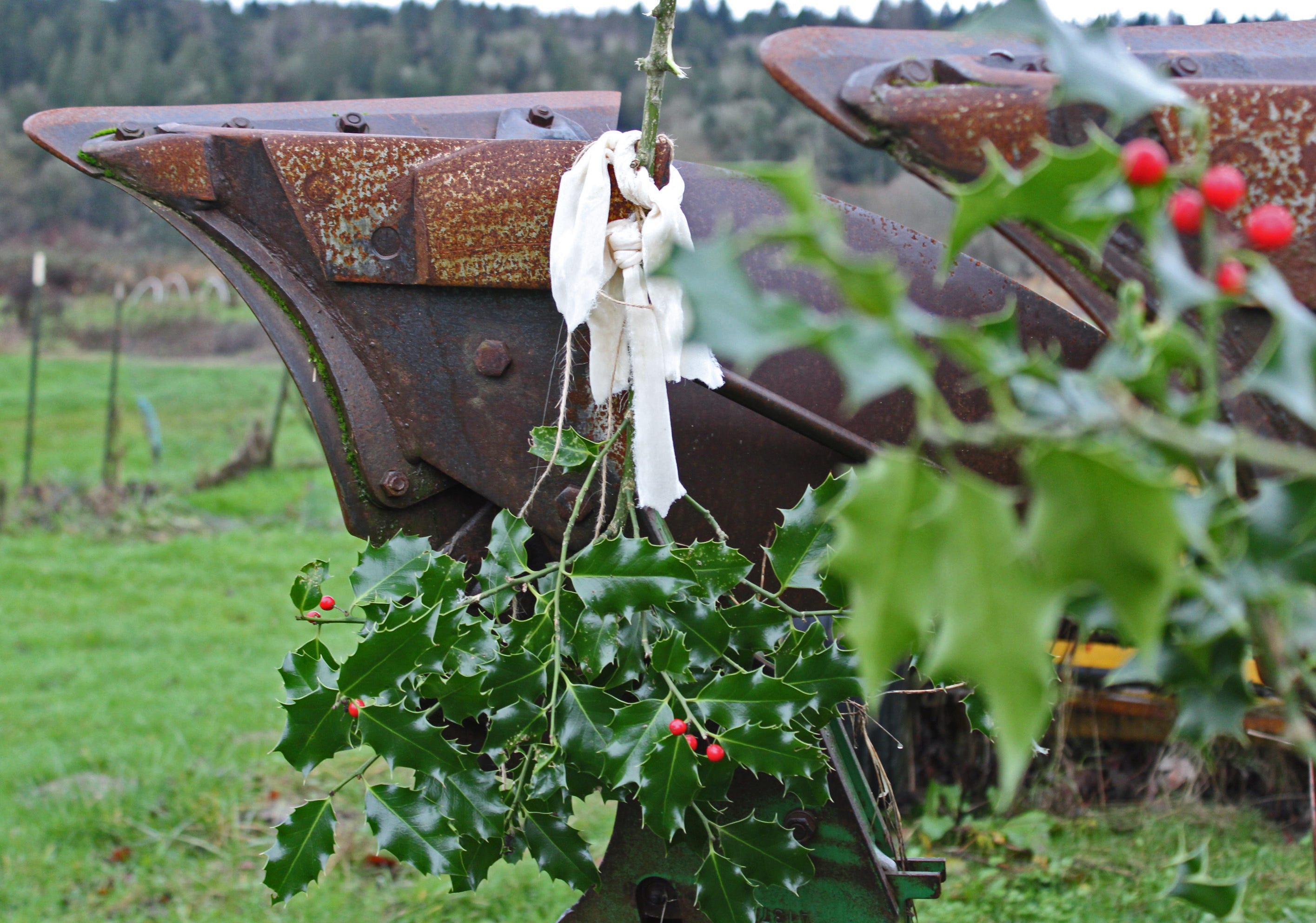
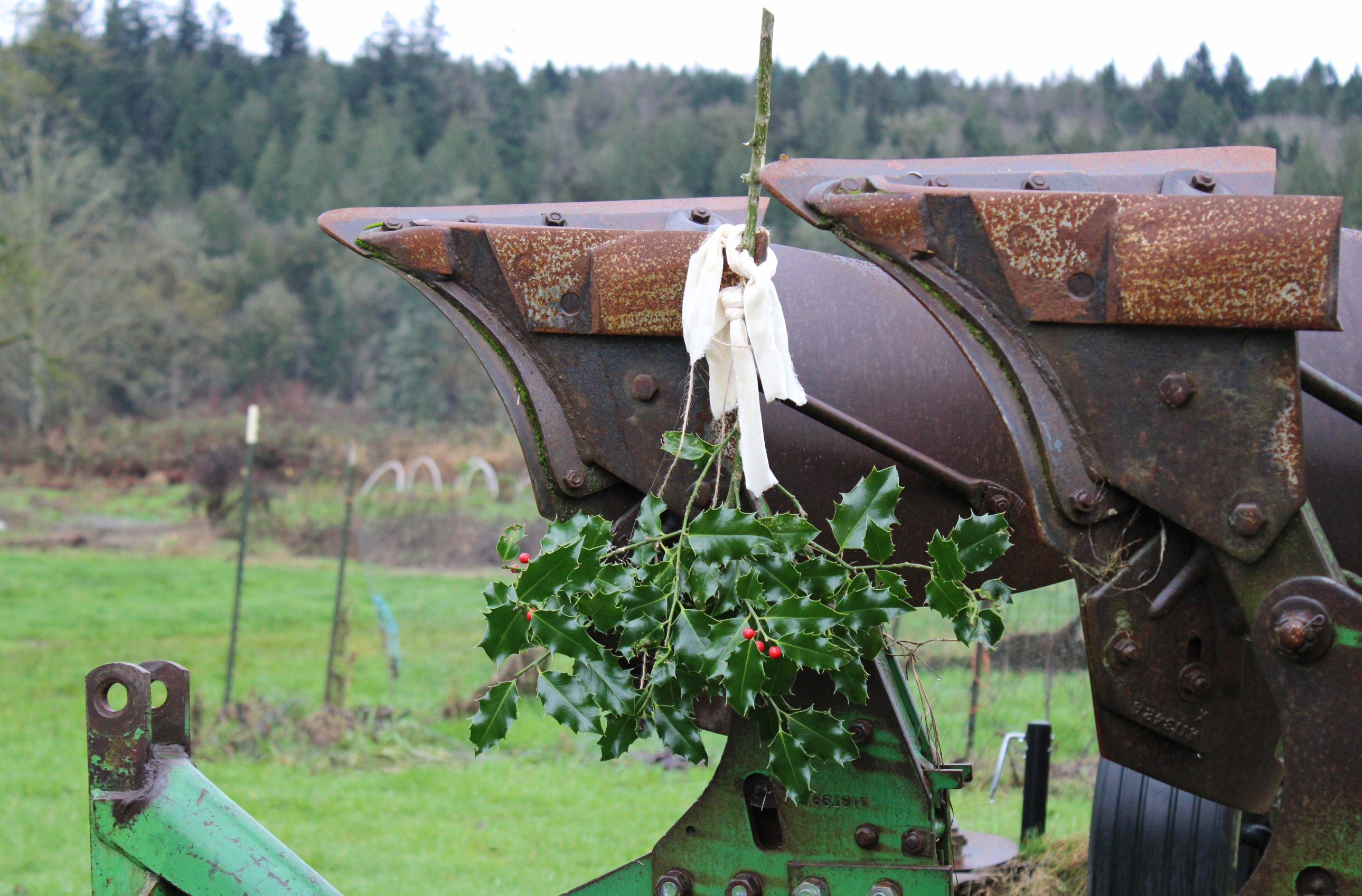
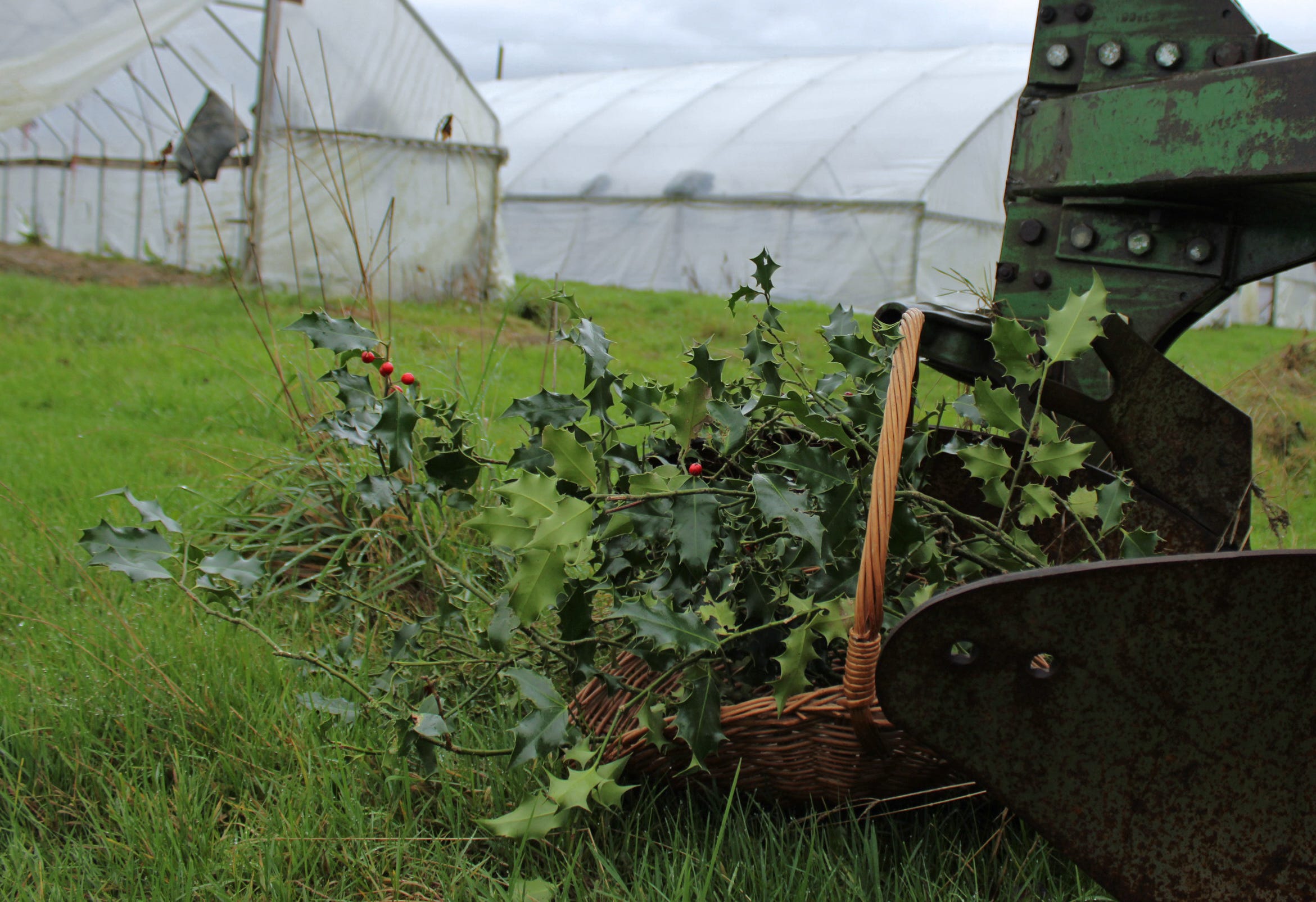
This ritual morphed over time…for the Anglo-Saxons, ploughs were anointed with some familiar Twelvetide elements (like frankincense) and blessed. Over time, as Plough Guilds developed, more elaborate services for blessing the plough were held at the church rather than out in the field. The plough was adorned with greenery and ribbons, and any of the midwinter flowers that may have weathered the frosts.
Often, this would have been the ‘common plough’4: a communal tool, kept at the local church and loaned out to villagers who had no way of affording their own.
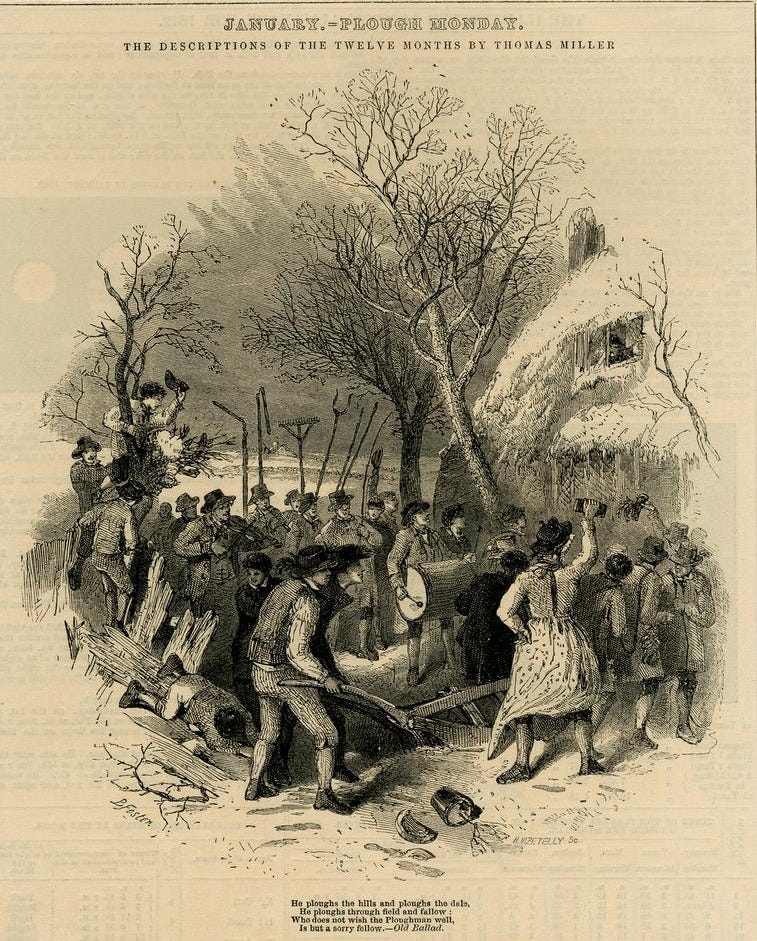
It didn’t stay at the church that night, though - it was paraded through the village in a procession that became more complicated (and often, more rowdy) over the centuries. Plough Plays were performed as they went, with mumming and vibrant characters and songs. The ploughmen gathered donations - “Plough-Alms” - for their supper, guild, parish, and the poor as they went, entertaining their community with plough races and bonfires in exchange for money or bread.
“Rude though it was, the Plough procession threw a life into the dreary scenery of winter, as it came winding along the quiet rutted lanes, on its way from one village to another; for the ploughmen from many a surrounding thorpe, hamlet, and lonely farm-house united in the celebration of Plough Monday. It was nothing unusual for at least a score of the ‘sons of the soil’ to yoke themselves with ropes to the plough, having put on clean smock-frocks in honour of the day.”
Robert Chambers’ account of the memories of a Lincolnshire resident (1864)
Quoted by Bonnie Blackburn & Leofranc Holford-Strevens, The Oxford Companion to the Year
One of the poignant objects of the night’s begging was the Plough Light: a candle funded by the Plough Guild and kept burning in their church, often placed before the sacrament, the rood screen, or an image. The candle burned there as a tangible desire for God’s blessing on farmers and their land, and keeping it burning throughout the year became a crucial tie that held the ploughmen to their church and their work…a visible union of land & liturgy.
Scattered throughout Medieval churchwardens’ accounts, we find glimpses of the importance of Plough-Lights:
“Of Thomas burton for debt of ye plowlyght .............. xxd.”5 (Leverton, Lincolnshire)
When the procession arrived at the local inn, a portion of the light-money that had been raised throughout the night went toward a grand Plough Feast with draughts of barley-wine.
Through the story told by all these traditions, Plough Monday offered - and still can offer - a deep comfort that feels so elusive in our fast-paced lifetime: a participation in holy continuity.
Christmastide was carried forward into the new year, into daily work, into the land. Through holidays like Plough Monday, it wasn’t replaced by the mundane…Christmastide was infused into it, bearing that Nativity blessing forward into the approach of a whole new work cycle and into the ordinary routines of our lives.
“By the fifteenth century this plough was being carried hither and thither as part of Plough Monday rituals - a customary practice that, like plough lights, embedded the community in the earth…”
Nick Groom, The Seasons: An Elegy for the Passing of the Year
That blessing of continuity stretches even further: the holly that had been brought inside during Christmastide had its last hurrah on Plough Monday…and, taken down that evening, was to be saved to fuel the griddle fire for Shrove Tuesday’s pancakes.
One holiday, with a humble farm tool as its emblem, was the fulcrum that helped to usher the beauty of Christmastide into daily, mundane work…even fueling the fire that would, come spring, let the people indulge in one last feast before the great fast of Lent begins the journey back toward the Cross.
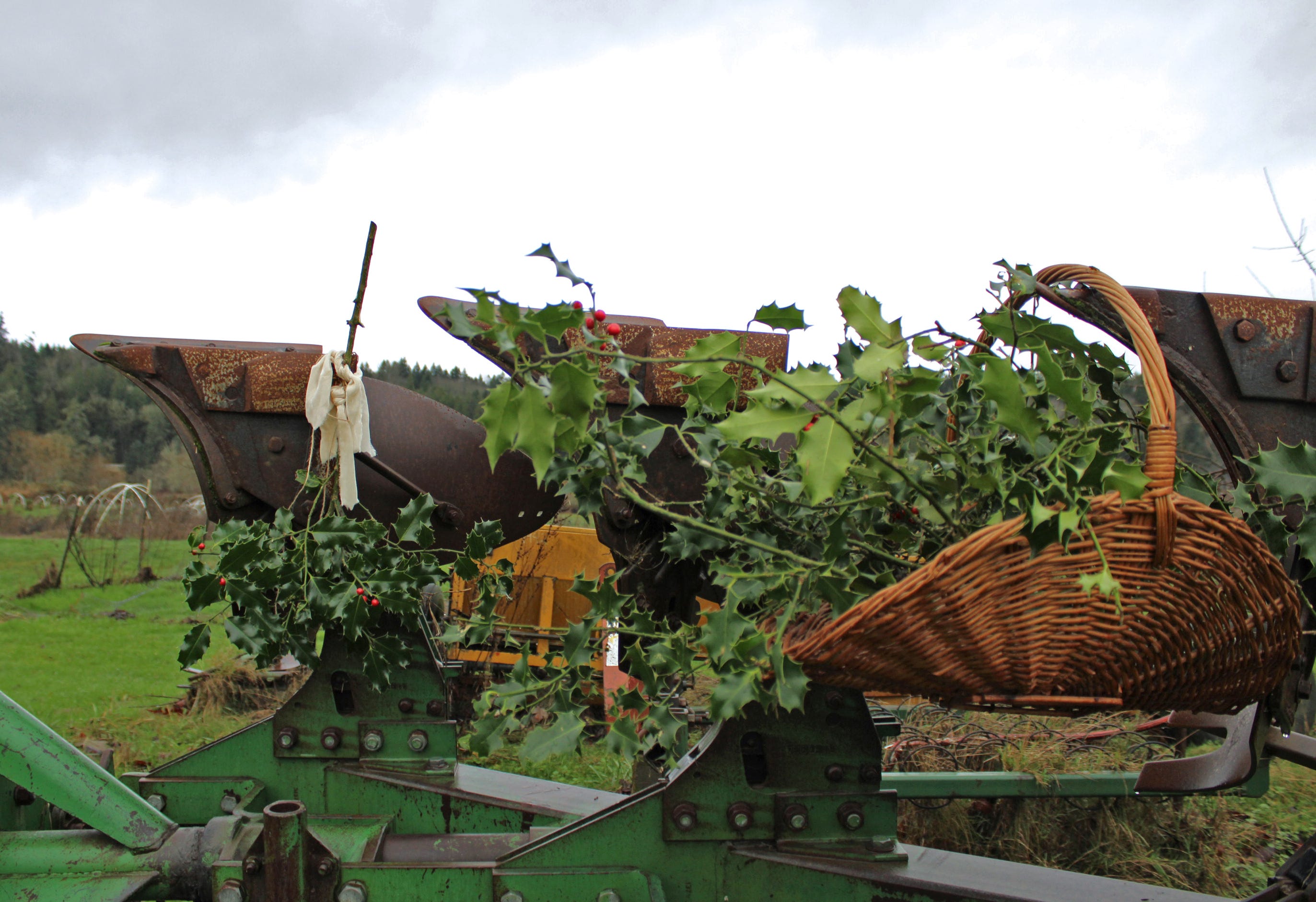
Here on the farm, our heavy plough is one of our greatest workhorses…so this holiday holds a special resonance, and it invites a particular focus on gratitude for the work of agriculture. In agrarian societies, all the villagers - whether farmers or not - would share in that celebration in some way…their world was so dependent upon farming, after all, and a particularly agrarian holiday held significance for them all.
In our post-agrarian world, though, Plough Monday can still reverberate with that same continuity: it’s an invitation to bless our local food system however we can…and it’s also an invitation to bring Christmastide forward into our own daily work, whatever it may be. It’s a call to re-orient ourselves, steeped in Christmastide, toward our daily work (or, perhaps our season of discernment) with purpose.
It’s an opportunity to celebrate with our co-laborers as we reestablish our gloriously mundane, holy days.
READ ON


BENEDICTION
Sow for yourselves righteousness;
reap steadfast love;
break up your fallow ground,
for it is the time to seek the Lord,
that he may come and rain righteousness upon you.Hosea 10:12 (ESV)
Next weekend, our liturgical living group will be gathering for a belated Plough Monday celebration (and a bit of wassailing, too).
It makes me wonder: in your daily work, what would your ‘plough’ be? Would it be your paintbrush, keyboard, hammer, scalpel, spatula - your parenting patience? Or maybe, in your current season, it’s the tool you use as you heal or discern.
Whatever your plough may be right now, may you keep its plough-light lit during these dark winter days.
And remember: Plough Monday doesn’t need to be confined to a day. If you can, find some time this January to celebrate your current vocation in the spirit of Plough Monday!
Pax et bonum,
Kristin
“Pray and work” - from the Rule of St. Benedict
And perhaps earlier, with some evidence of plough-blessing rituals dating back to the Anglo-Saxons.
After all, work is embedded as a gift into the very fabric of our creation:
The Lord God took the man and put him in the Garden of Eden to work it and take care of it.
Genesis 2:15 (NIV)
In the ordering we see in our heritage, work is not a curse - it precedes the fall, precedes our separation from God.
Called a fool plough - where ‘fool’ is possibly a corruption of ‘Yule,’ further connecting this holiday to Christmastide
Quoted by Thomas Davidson, “Plough Rituals in England and Scotland” (from the British Agricultural History Society)
As I sit in my sewing room surrounded by the silence of heavy snow I read this thoroughly and feel blessed. I can't thank you enough for your research and sharing. It is truly encouraging. And a feast for the imagination!
Wow. I never knew about Plough Monday! Thank you for enlightening me. It is exactly what is needed, at least what I need, to transition from one season to the next; like standing in the threshold place , it allows breathing space. A joyful moment to make ready to move forward refreshed and encouraged by the Christmas message. The Plough Monday celebration eases me back into daily life. Its merry focus is on the daily routine restored to normal but it does not have to be drudgery . My work is a gift and a joy in itself is what Plough Monday assists me in seeing.