

'At Home' Days
Carving out time for weekly visiting hours

“Hospitality means primarily the creation of free space where the stranger can enter and become a friend instead of an enemy. Hospitality is not to change people, but to offer them space where change can take place. It is not to bring men and women over to our side, but to offer freedom not disturbed by dividing lines.”
Fr. Henri J.M. Nouwen, Reaching Out: The Three Movements of the Spiritual Life
Welcome! Whether you’re a longtime friend or a new kindred spirit here (I recommend visiting the Village Green to get your bearings), I’m delighted to be a companion to you through the liturgical year.
Pax+bonum, Kristin.
I’m a lifelong introvert who always gravitated more naturally toward solitude. I grew up with loving friends, but introversion was magnetic for me, and solitude was something I prized and favored.
In getting older and sustaining more of the joys and sorrows of life, I realized something, though: the ‘solitude’ that I bent toward was a mirage.
When my grief-based PTSD inflamed again several years ago, my instinct to shrink all of my horizons started to reveal some surprising truths: I had found ways to be alone, but not truly in solitude. With too much time in the absence of community, I was increasingly surrounded by a cacophony of fears, anxieties, and projections…not settled into the comfort of true solitude in the way I had thought.
The true solitude to which we’re called isn’t absence or emptiness: it’s wholeness, generative and fertile…like a season of Advent, always active and interior. Solitude is the container of active listening.
And, funnily enough, when retreating to the extremities of my introverted tendencies, I found myself out of practice in the art of waiting and listening. Communion is our calling, after all: and removing community from that calling just meant that I found my own noisy voices clamoring for attention. In burying my head in the sand, my solitude-loving heart was losing its ability to truly savor quietude and listen deeply.
“But just as often, if not more often, the interruption comes not from another but from the self itself, or some other self within the self, that whistles and pounds upon the door panels and tosses itself, splashing, into the pond of meditation. And what does it have to say? That you must phone the dentist, that you are out of mustard, that your uncle Stanley’s birthday is two weeks hence. You react, of course. Then you return to your work, only to find that the imps of idea have fled back into the mist.”
Mary Oliver, excerpt from her essay “Of Power and Time” in Blue Pastures
Little by little, I started to follow the glimmers that led me back toward embracing community…and, lo and behold, I rediscovered the imaginative, peaceful solitude that I knew as a child.
It took many leaps of faith, and many instances of following through with plans when all I wanted to do was cancel. And sometimes, we do need to cancel: but for myself, I knew that I would just be protecting my anxieties and fears…protecting that loud clamor that kept me from true quiet.
In being with others, I find that I get to practice listening - an art that is so crucial to cultivating true solitude. I overcome my instinct to react, instead learning to respond (it’s a work in progress). I wait (so very Advent-y!), listen, and train my mind toward a quiet that is deep and real…a quiet borne in communion, not in separation.
We’re all so beautifully unique, and we all have different struggles and needs: but I’m sharing this more personal side of my life just to give you the context of introversion from which all of my community-building has grown.
I still value my solitude, and we all need time alone: but now, in cultivating and nourishing community ties, I find that my solitude is actually fruitful again…and, when I am alone, I can find little glimpses of quiet again.
At-Home Days
In trying to rediscover the lost art of community-building, I’ve had to let go of a lot of my own expectations (with three kids, a husky, cats, and a whole farm’s worth of muck, my floors will never stay clean) and practice some true vulnerability.
One of the ways this journey back into true solitude and vibrant community has been through the monthly liturgical living gatherings that we host. These are planned in advance, and though they’re never formal, I do ask for RSVPs and put a lot of energy into them.
In the past year, a new addition to this ecosystem of community growth has become an absolute anchor of my weeks: I host weekly “visiting hours”1 in the form of an ongoing Bible study.
“An ‘AT HOME’ day signifies that a lady is at home to her friends and acquaintances on one particular day in the week. She should intimate this fact by writing on all her visiting-cards beneath her name ‘At home Thursdays’ or any day of the week she thinks proper to name. These cards she should leave in person on those who are not at home when she calls.”
Manners and Rules of Good Society, Or, Solecisms to be Avoided (1888)
On the same day each week, I carve out two hours devoted to receiving friends here at home. I try to protect these hours and treat them as an already spoken-for part of my schedule…sometimes, they need to shift or I have to cancel, but for the most part, they’re steady and predictable.2
Imagine my delight, then, when I stumbled upon the Victorian tradition of the At-Home Day: a weekly chunk of time, often communicated through a calling card, in which a hostess would receive visitors.
“But a visiting card with an ‘at-home’ day written on it…is merely an intimation that if the friends of a certain lady call upon her on a given day, mentioned on the card, they will find her at home. But this does not necessitate a call being made, if convenient, or any excuses offered for non-appearance on the ‘at-home’ day.”
The Standard American Encyclopedia of Arts, Sciences, History, Biography, Geography, Statistics, and General Knowledge (1897)
One of the crucial parts of my At-Home Day has been keeping it easy & light for all of us: no RSVPs are needed. Friends literally just come by when they can.
And I can’t even begin to say what a balm it has been to spend some time sitting across the table with friends each week. I find myself, in the midst of an era otherwise saturated with technology and communication, remembering what it truly is to communicate: and what generative solitude and quiet feels like.
By making informal gatherings a regular thing, we’re also practicing the art of seeing each other wholly: our opinions, our differences, our varied brands of awkwardness don’t define us. We find more nuance, and more compassion, when we regularly sit down with our community.3
» Here’s the run-down of how my At-Home Day looks in practice:
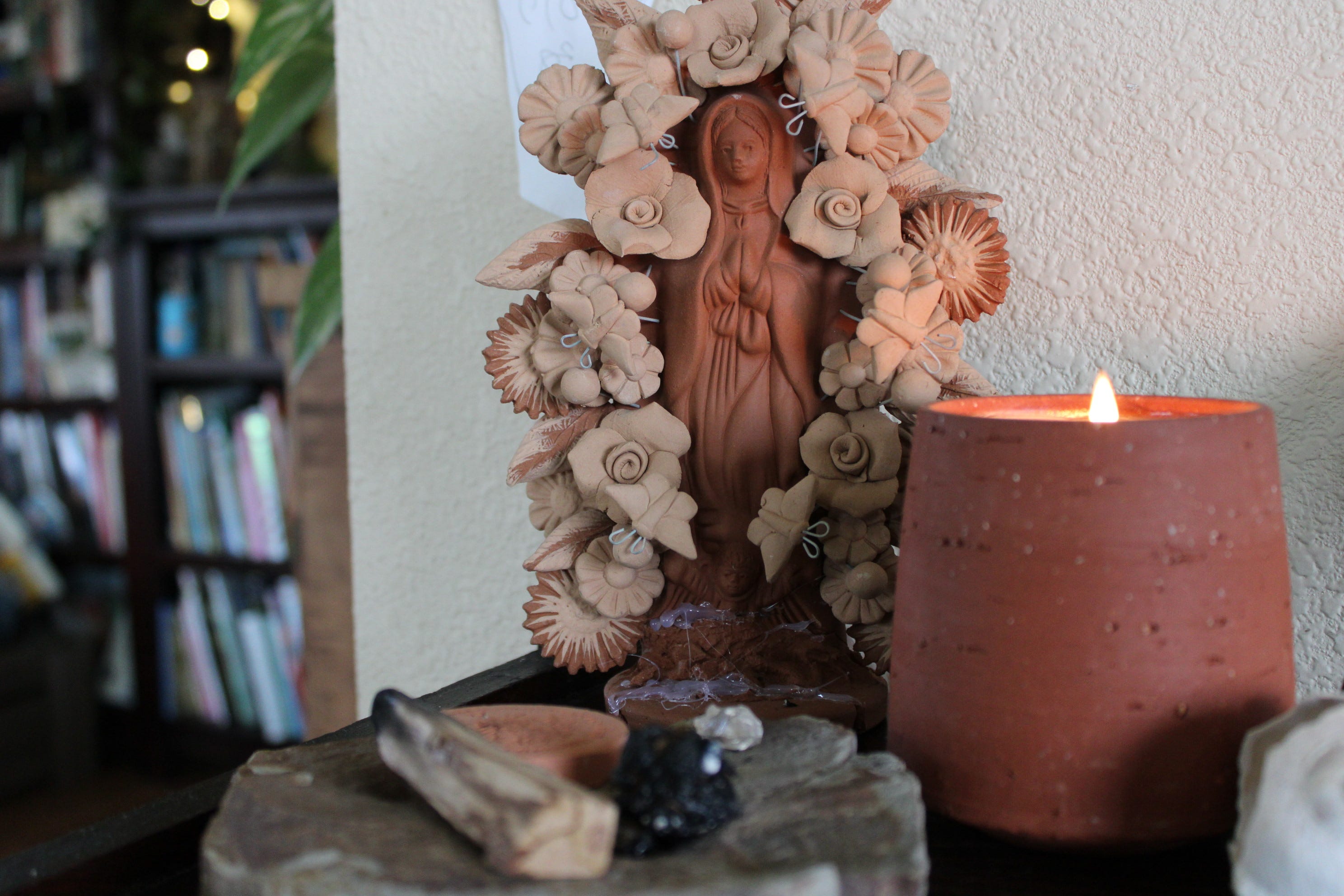
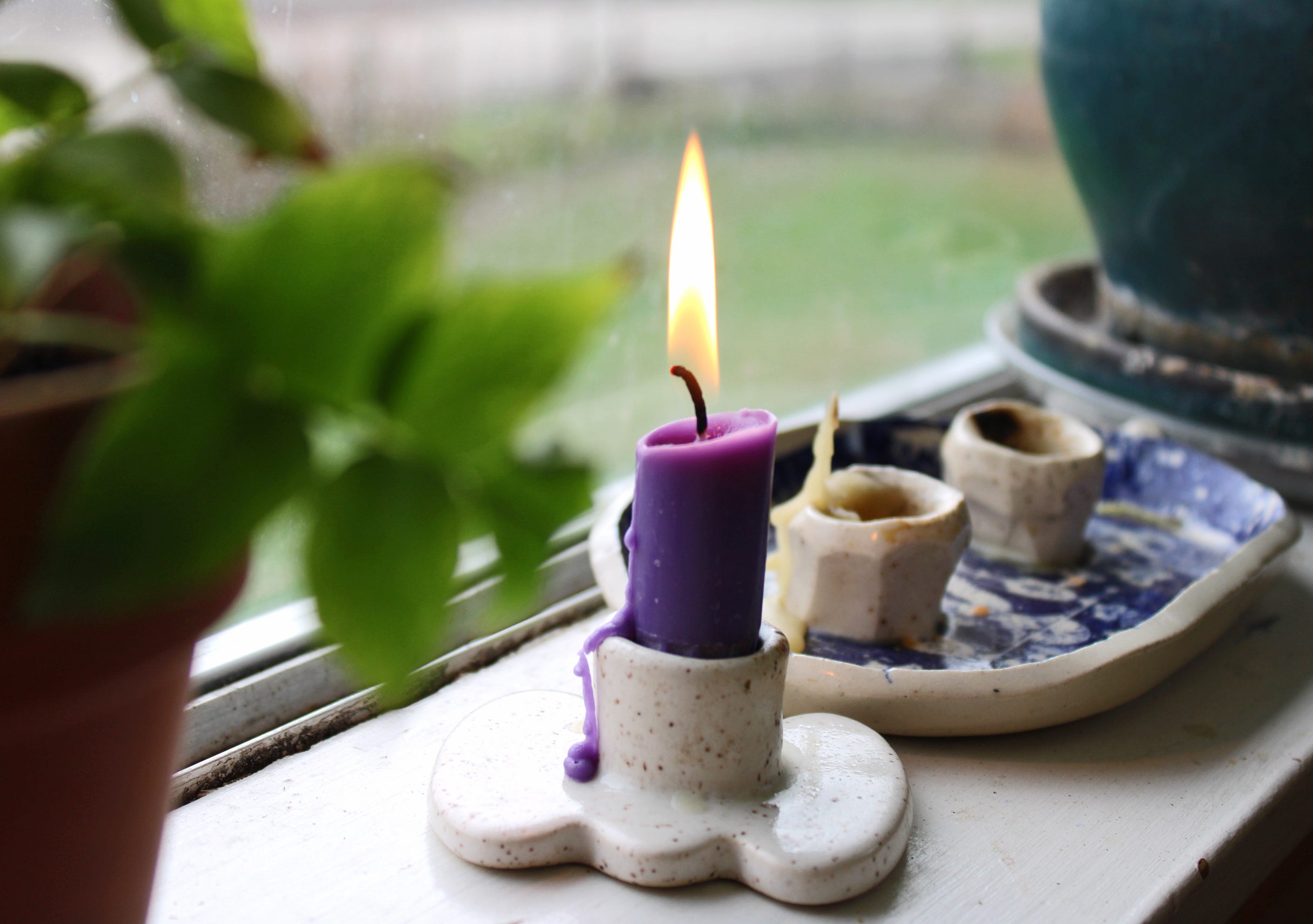
Timing: On the same day each week for two hours, I keep a candle lit in the window and welcome folks to come and go as they please. Sometimes, friends will arrive right at ‘open’ and stay the whole time…other days, they’ll arrive later. Always, it’s a delight. I just keep working - writing, drawing, cleaning, studying, whatever - until visitors arrive.
RSVP: I don’t ask for RSVPs…part of the beauty of the At-Home Day is that it’s more about availability and invitation, and less about strict commitment. I keep a list of emails and phone numbers, and if I’ll be unavailable that week, I send out a note to everyone to let them know.
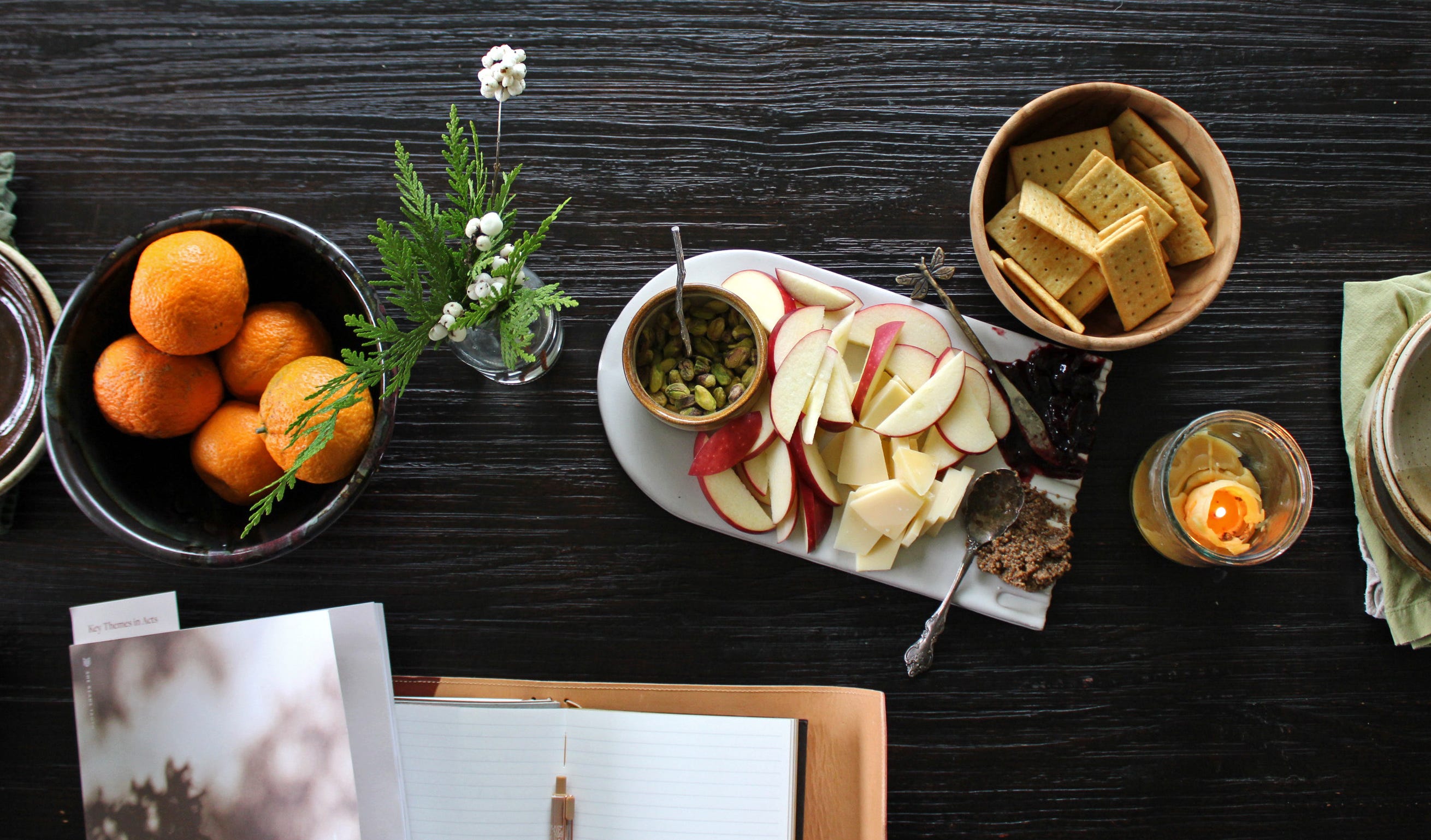
Bible Study: We gather around an ongoing Bible study, following She Reads Truth reading plans. We’re a very ecumenical bunch, including Catholics and a variety of Protestants denominations - and I’ve found SRT to be a really helpful baseline because it focuses on Scripture and leaves our own varied preferences for study Bibles and commentary up to us.
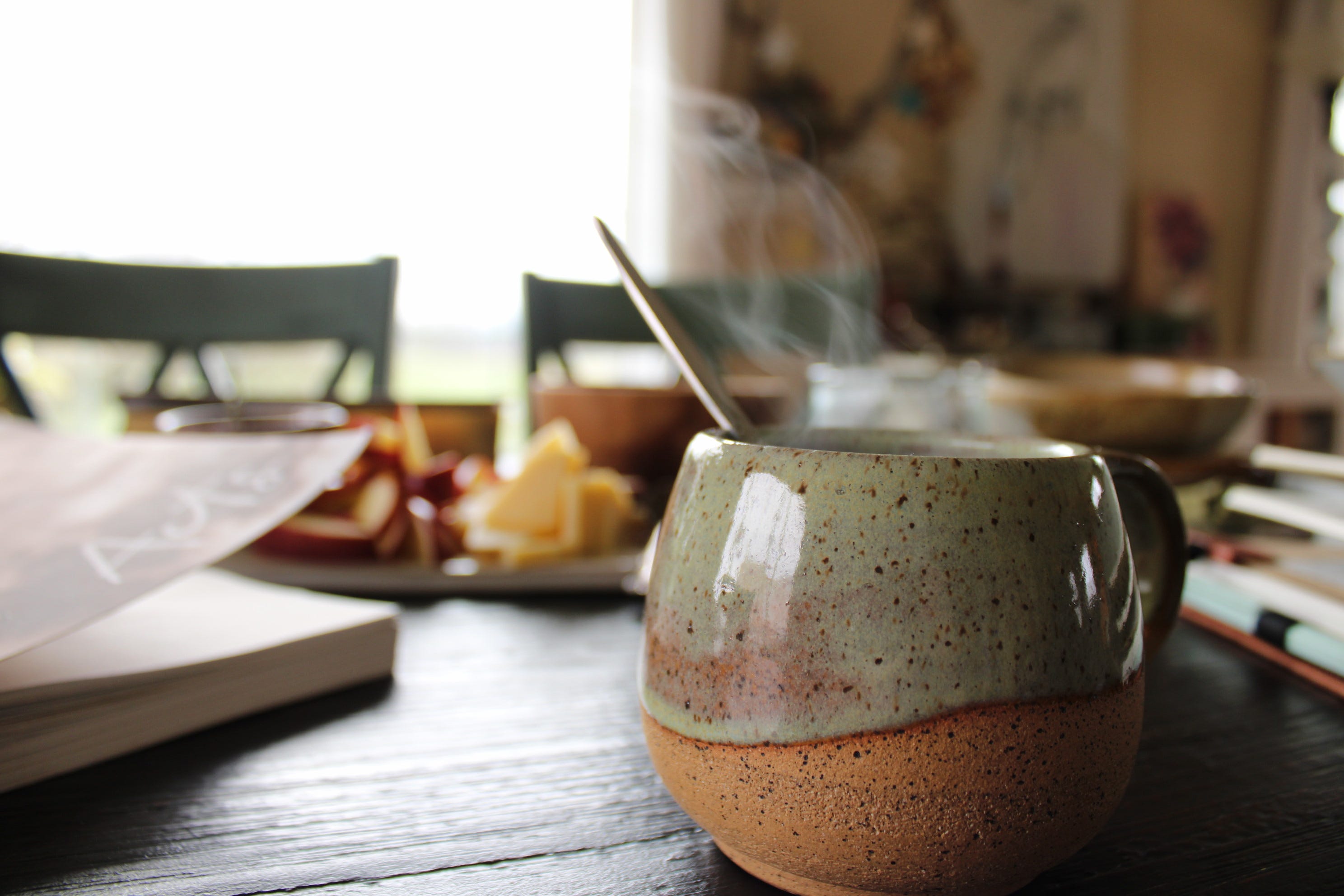
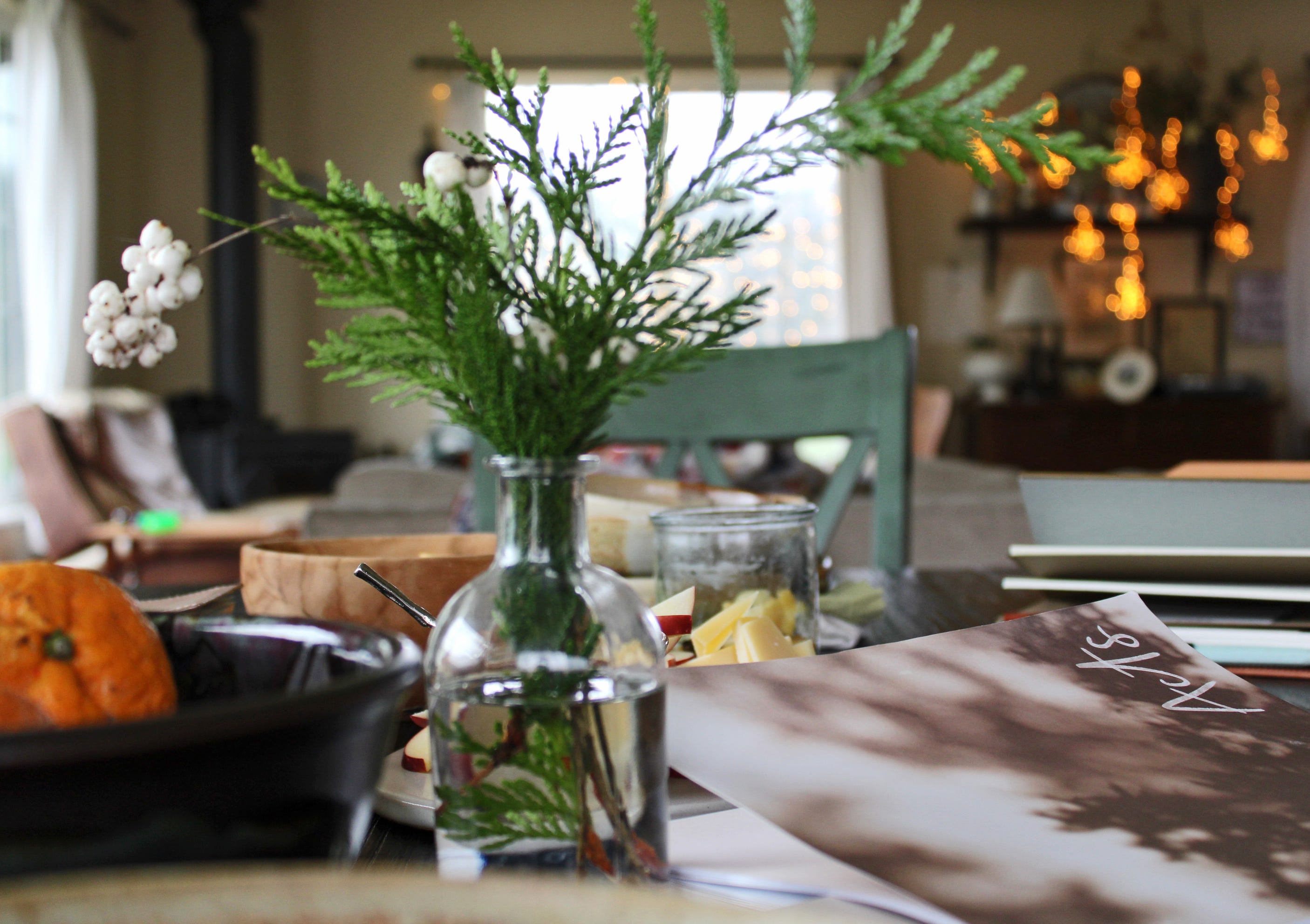
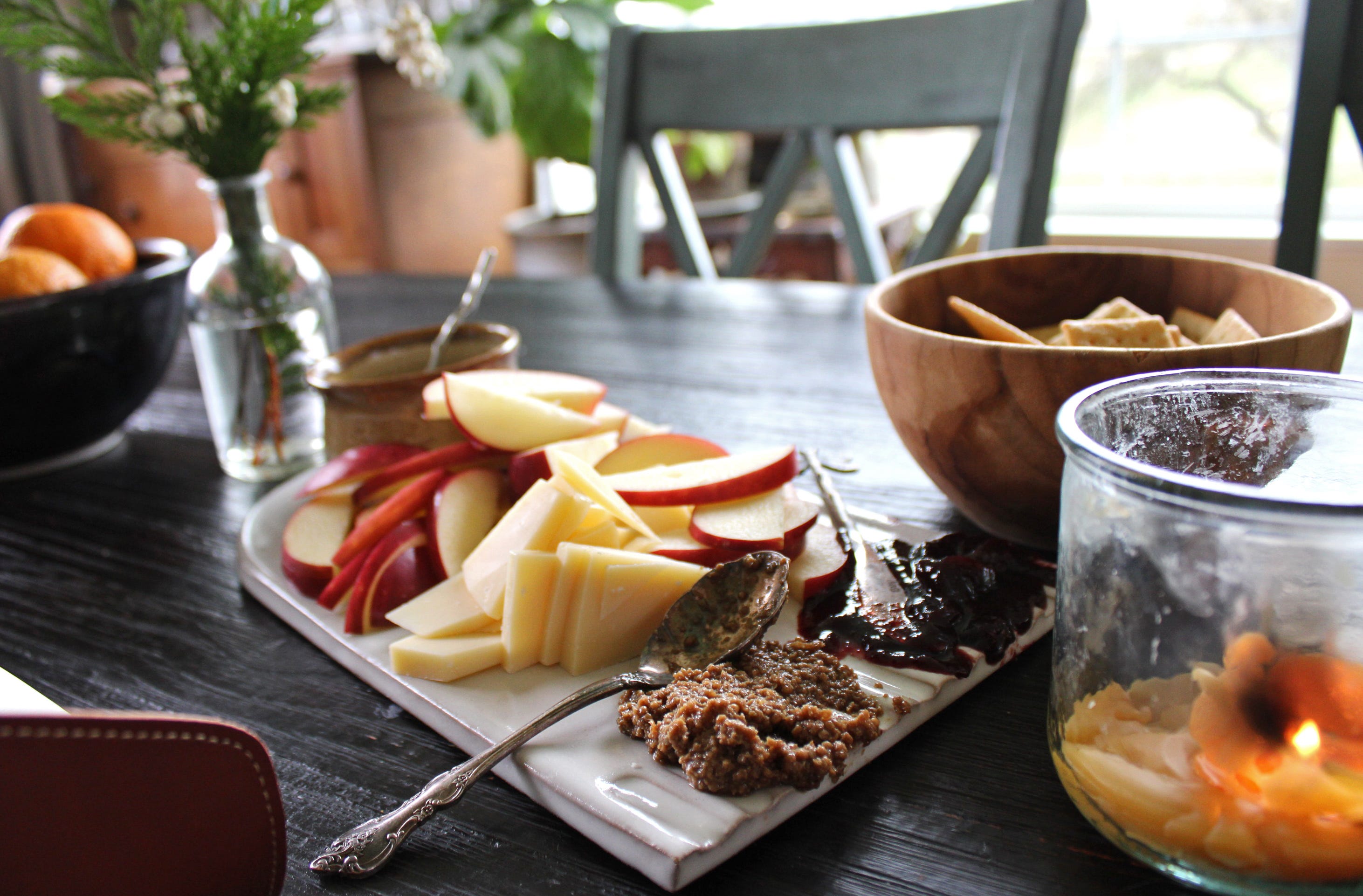
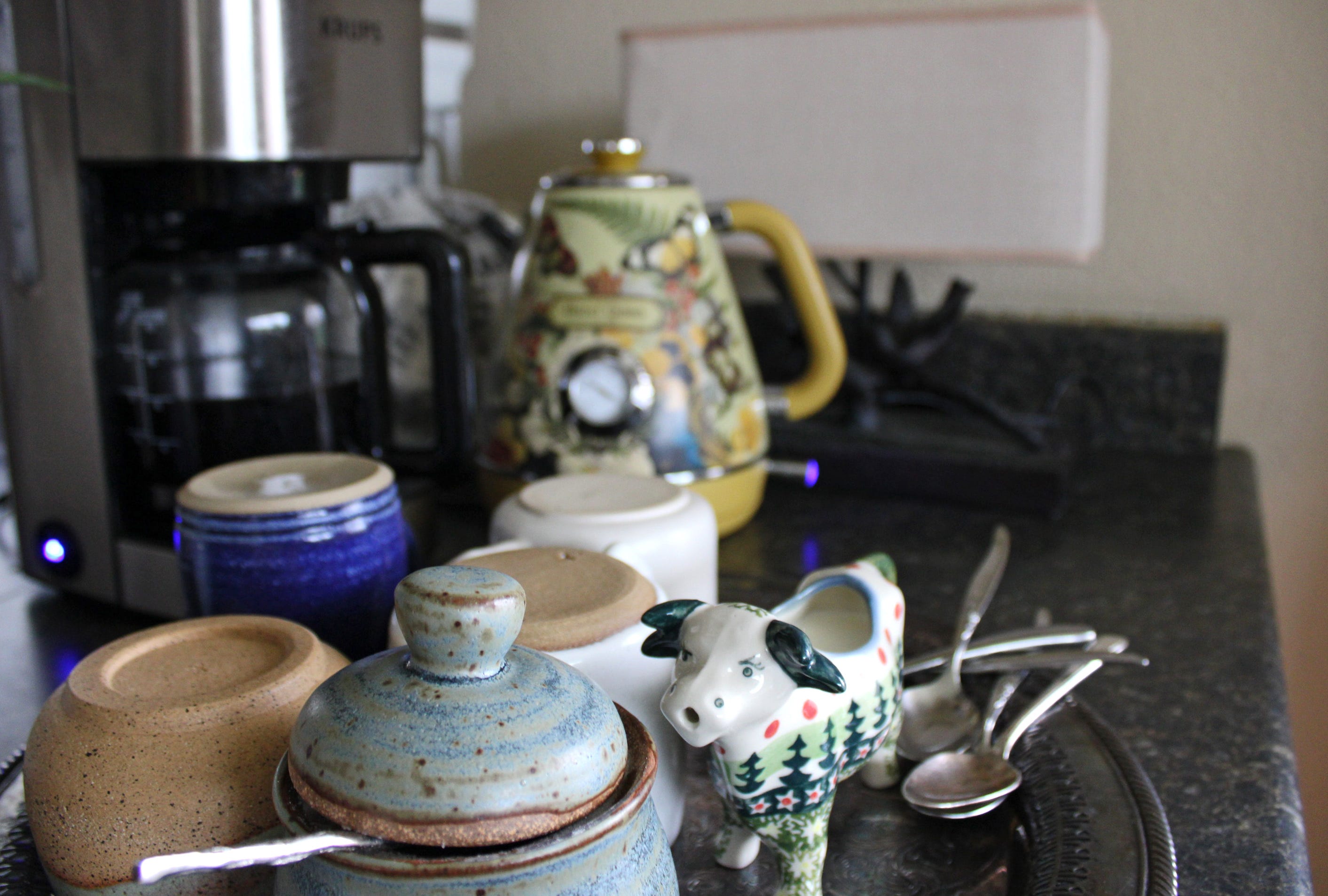
Refreshments: About 10 minutes before ‘open,’ I brew a fresh pot of coffee and set out a tray with mugs, spoons, cream, etc. I heat up the tea kettle and have tea available as well, and depending on how ambitious I’m feeling or what’s easy to grab in the pantry, I’ll put some snacks out on the table. I’ve told friends that there’s no need to bring anything, but many of them will often bring some pastries, fruit, etc. Sometimes, I’ll make something homemade or more ambitious: other times, the best I can do is open a bag of chips.
Prayer: We try to make a habit of opening in prayer, but since folks often arrive at different times, that often happens partway through our gathering. We also record any prayer requests that come up and share those with the ladies who weren’t able to come…this has been such a beautiful way of really deeply knowing one another, week by week.
Our discussions go all over the map: this isn’t a rigorous academic Bible study, but rather a time to intentionally encounter Christ and each other. That has looked like lots of laughing, crying, tangents, and more.
What if nobody shows up? To my amazement, this hasn’t happened yet: but, if it did, it’s actually not a big deal…those two hours are still set aside and would just be an opportunity to chip away at work or sit with a cup of coffee and my own Bible study time.
4 ideas for your own At-Home Day
Pick a focus: Having a theme to gather around can be so helpful. Consider the idea of a book club, Bible study, cookbook club, skillshare, knitting group, etc. Having a common element to focus on can help to tether us a bit, while also still leaving lots of room for us to simply be together.
Provide the basics: Don’t stress yourself out…I used to feel like I couldn’t open my door unless everything was just-so. I also used to feel like I needed to provide some sort of lavish meal or snack in order to host something like this. Once I let go of that and decided to simply aim to brew some coffee and heat up some water, the whole idea of hosting felt less daunting.
Be consistent: Our seasons of life come and go, and we can always be blindsided by the unexpected…we have to be willing to change and shift when that happens. But, in the meantime, keeping some level of consistency is so helpful. For already-busy people, it can be so much easier to just know that a gathering will happen every week at the same time, rather than trying to remember if it’s an on-week or off-week or where the gathering will actually be.
Re-think “Home”: I’m incredibly fortunate to have a flexible schedule…the farm’s demands tend to wax and wane in intensity, but carving out some specific time is doable for me. That’s not the case for everyone: but I would encourage you, whatever your time constraints are, to consider how you could regularly protect a chunk of time…however small…to be open to your community or to visit someone who is hosting. Even if it’s monthly, quarterly, or annually, those reunions are so important.
Home itself also looks very different for everyone, and that can make hosting feel difficult. Hosting doesn’t have to be highfalutin, though: hospitality is a posture of the heart, not rubric of demands. Our family’s house isn’t huge and is packed to the brim with family & critters, and the flotsam and jetsam from winter flooding is still washed up in our yard…but I’m showing up as I am, flood debris and all.
If doing this at your home isn’t possible, imagine other ‘homes’ where you could extend hospitality: a coffee shop, bookstore, a library’s common room…there are so many third-places that can be a proxy and still extend the time and space to your community.
Give it a whirl!
All guests who present themselves are to be welcomed as Christ, for he himself will say: “I was a stranger and you welcomed me” (Matthew 25:35).
The Rule of St. Benedict (Chapter 53)
Here’s a crucial reminder, friends: although I’m in a season to be equipped to host At-Home Days right now, that hasn’t always been the case and won’t always be the case. Other periods of my life have seen me helping to provide hospice care for my mom, racing homeward to see my sister before she died, wrestling with trauma, or in the thick of newborn life. Hosting an At-Home Day is a privilege that I feel fortunate to enjoy right now.
And also: though it looks like a pretty picture, the commitment to host weekly doesn’t mean that I’m doing so purely from a place of ease. I still struggle with PTSD, I still put my foot in my mouth, grief looms in the corners, and I still fall short in so many relationships.
But I’m showing up with the meager offering I can give anyway, and I’m starting to understand a bit more about loaves and fishes along the way.
So, tell me: what ideas are stirring in you? What questions or curiosities do you have?
I’m not an expert, just a pilgrim: but I’d love to chat more with you about all this!
Pax et bonum,
Kristin
A month or so ago, in response to some discussions I’d seen floating around on Substack, I posted a Note about the weekly ‘visiting hours’ that I host. I was honestly shocked to see that this struck a chord, and I realized that I’m not alone in this drive to rediscover the lost art of community-building…hence, this post!
Though folks are welcome to swing by at other times, I can’t guarantee that we’ll be available all the time, after all.
I don’t know about you, but in my own experience, a struggling or damaged relationship often makes me want to retreat…and then tends to fester and become more of a projection and less of a reality. I can easily start to lose the nuance of a person’s story when we’re at odds and in our separate corners: we’re storytelling creatures, after all, and our hurt and bitterness will carve out its own one-sided narrative. There are, of course, dangerous relationships in many lives that are too harmful to bridge and in which it’s not safe to dwell: but, more often than not, we (I) retreat to a silo rather than build a bridge, and only an incomplete part of the story grows there.
Thank you for your vulnerability, Kristin 🤍As a fellow introvert, I’ve really wrestled with the balance between solitude and community and found this entire post to be incredibly hopeful.
Over the past year, my husband and I started opening our home weekly to our life group at church (by accident ) and it has been incredibly stretching and yet truly formational (and I do see God’s providence—and humor in it 🤣). I’m reading Adam McHugh’s The Listening Life right now (also author of Introverts in the Church) and it has been incredibly timely. As introverts, it’s easy to long for a place where our voice is welcomed (and having those spaces is so important!), but part of growth is learning to be hospitable to the voices of others. Not fading into the background, but truly listening as a radical act of hospitality.
I do have a question for you (but first, some context)—
I have been deeply shaped by the contemplative traditions of the Church over the past 5 years. Engaging regularly with contemplative prayer practices in my journey with Christ has helped shape my own solitude in such transformational ways, chief among which has been learning how to be hospitable to the voice of Christ in an interior court that is always full of my own “noisy voices”
There have been so many times I’ve longed to open our home to other ladies, inviting them into those sacred rhythms that have shaped me and built safety and intimacy with Christ. BUT—I don’t belong to a contemplative tradition or a liturgical tradition and I’m so fearful that the ladies wouldn’t be open to that or would be uncomfortable. We feel called to practice stability in our church community—at least in this season—and yet it deeply grieves me that these practices would probably not go over well within the church walls we belong to. That’s a hard place to be. Opening my home feels safer and yet I wonder how that would go over.
My question for you—Did you belong to a liturgical church community and/or the people in your community open to that when you first started opening your home for the liturgical gatherings? Did you ever have any pushback?
So encouraged by your journey and your obedience, Kristin!
P.S— your open sign in the window is so delightful 🕯️ I would totally come for visiting hours if I lived nearby!
Absolutely love this idea!