



St. Mathee shut up the bee
St. Mattho, take thy hopper and sow
St. Matthy all the year goes by
St. Matthie sends sap into the treeEnglish proverb
Welcome! Whether you’re a longtime friend or a new kindred spirit here (I recommend visiting the Village Green to get your bearings), I’m delighted to be a companion to you through the liturgical year.
Please enjoy this month’s focus: a practice of attention that encourages us to deeply explore one holiday within the context of the season.
For more to supplement the rest of your February days, flip through the February Almanac.
Pax+bonum, Kristin.

» Printable Resources
Book of Hours Pages
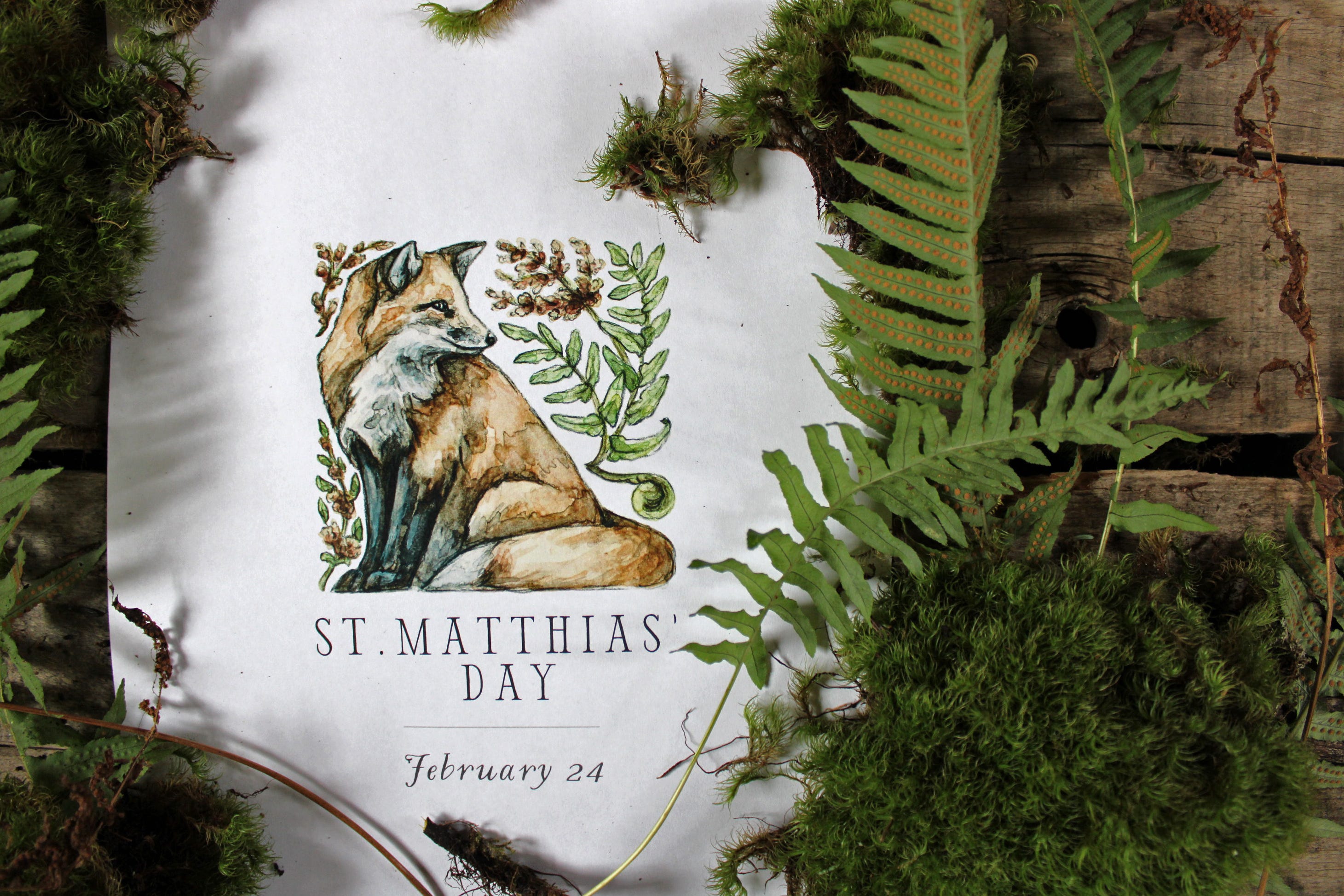
Keeping a liturgical Book of Hours binder helps me to distill all of the inspiration I find, so I can easily look to the elements that have been most nurturing for our family & community.
Cover page featuring a Fox and Royal Fern (both associated with St. Matthias - more details about their symbolism are in the printable!)
Five pages of folk tradition, agrarian context, traditional meal ideas, prompts, history, poetry, Scripture, & hymns (with photos) to help you learn about this feast and reflect on how it intersects with your own life and landscape.
Two versions of this printable are available: one for the years when St. Matthias’ Day falls in Lent, and another for the years when it falls in Ordinary Time I.
Paid members can find these goodies (as well as my whole archive of printables) in the Scriptorium!
GOD’S GIFT SHOOK HIM AWAKE
Matthias, chosen as a saint -
a warrior through victory -
yet not before the Lamb’s bloodshed
was he chosen,
but late to conscience came,
as starts the man who did not keep
the watch full wakefully.
God’s gift shook him awake, and then
for joy he leapt,
a giant in his strength,
for God foresaw this man
just like that Man whom once from mud
he formed when first the angel fell
who God denied.Excerpt from Mathias Sanctus by St. Hildegard von Bingen (12th c.); trans. Nathaniel M. Campbell
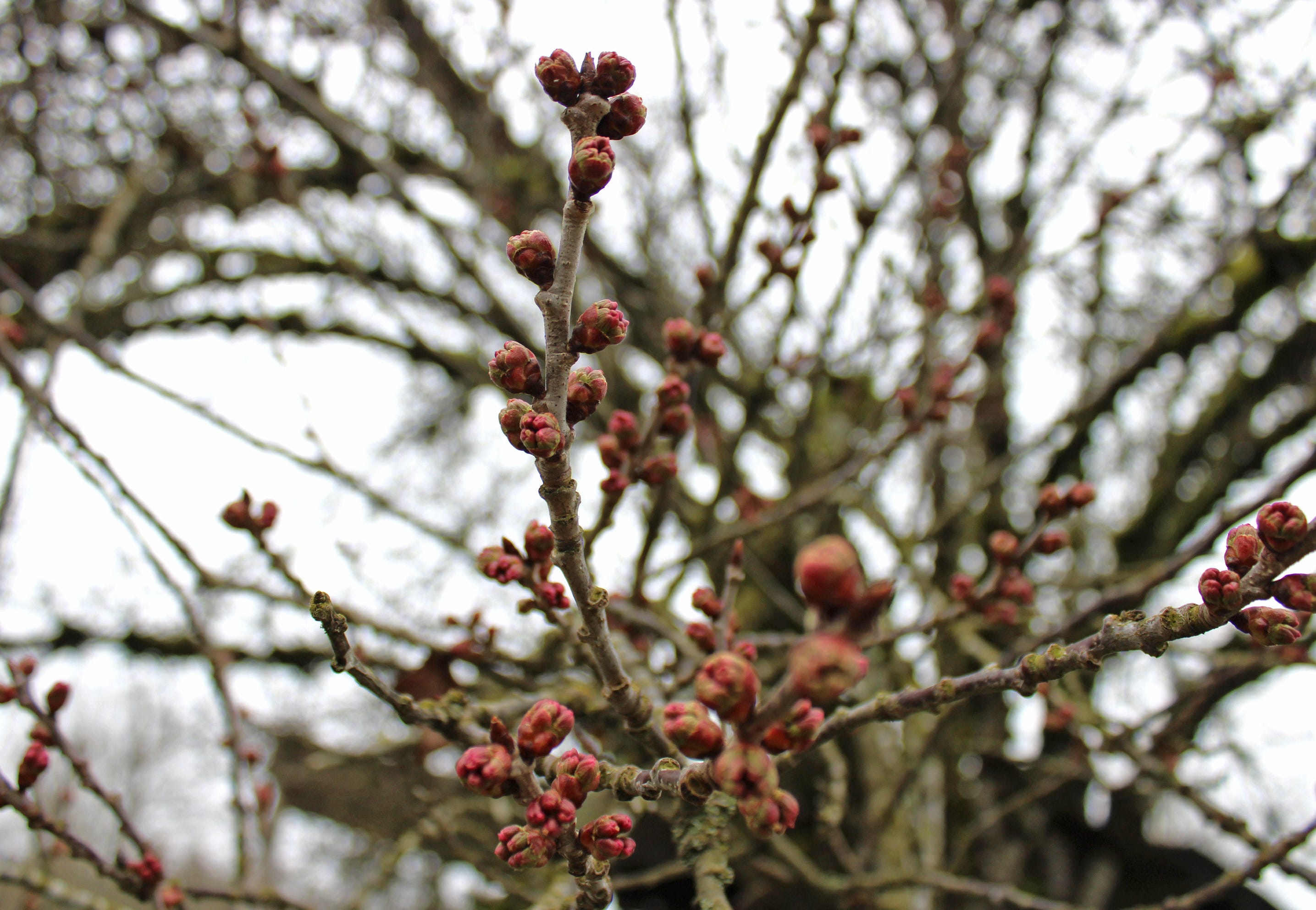
Spring, ever-persistent, is breaking through the lingering cold weather here: bulbs are pushing through the cold dirt, and primroses have been shaking off a nightly frost. The frogs tend to be a bit slow and lethargic in the morning before they warm up, but, little by little, that inevitable springtime energy is upon us.
That being said, I’m arriving in this Lenten springtime without my own cache of energy to match the season: but, mercifully, the Church has given us a companion for this transitional time.
Even though we may find ourselves already depleted as we begin Lent, St. Matthias - popularly thought of as the “13th Apostle” - is here alongside us, reimagining and reinvigorating our whole Lenten journey.
We know almost nothing with certainty about St. Matthias: he was born sometime in the 1st century AD and was likely martyred around 80 AD. Scripture only mentions him in one story, when the fledgling church - after the Ascension of Jesus - receives St. Matthias into the Apostleship role previously held by Judas Iscariot.
St. Peter guides this process:
“For it is written in the Book of Psalms:
‘Let his encampment become desolate,
and may no one dwell in it.’“And:
‘May another take his office.’“‘Therefore, it is necessary that one of the men who accompanied us the whole time the Lord Jesus came and went among us, beginning from the baptism of John until the day on which he was taken up from us, become with us a witness to his resurrection.’ So they proposed two, Joseph called Barsabbas, who was also known as Justus, and Matthias. Then they prayed, ‘You, Lord, who know the hearts of all, show which one of these two you have chosen to take the place in this apostolic ministry from which Judas turned away to go to his own place.’ Then they gave lots to them, and the lot fell upon Matthias, and he was counted with the eleven apostles.”
Acts 1:20-26 (NABRE)
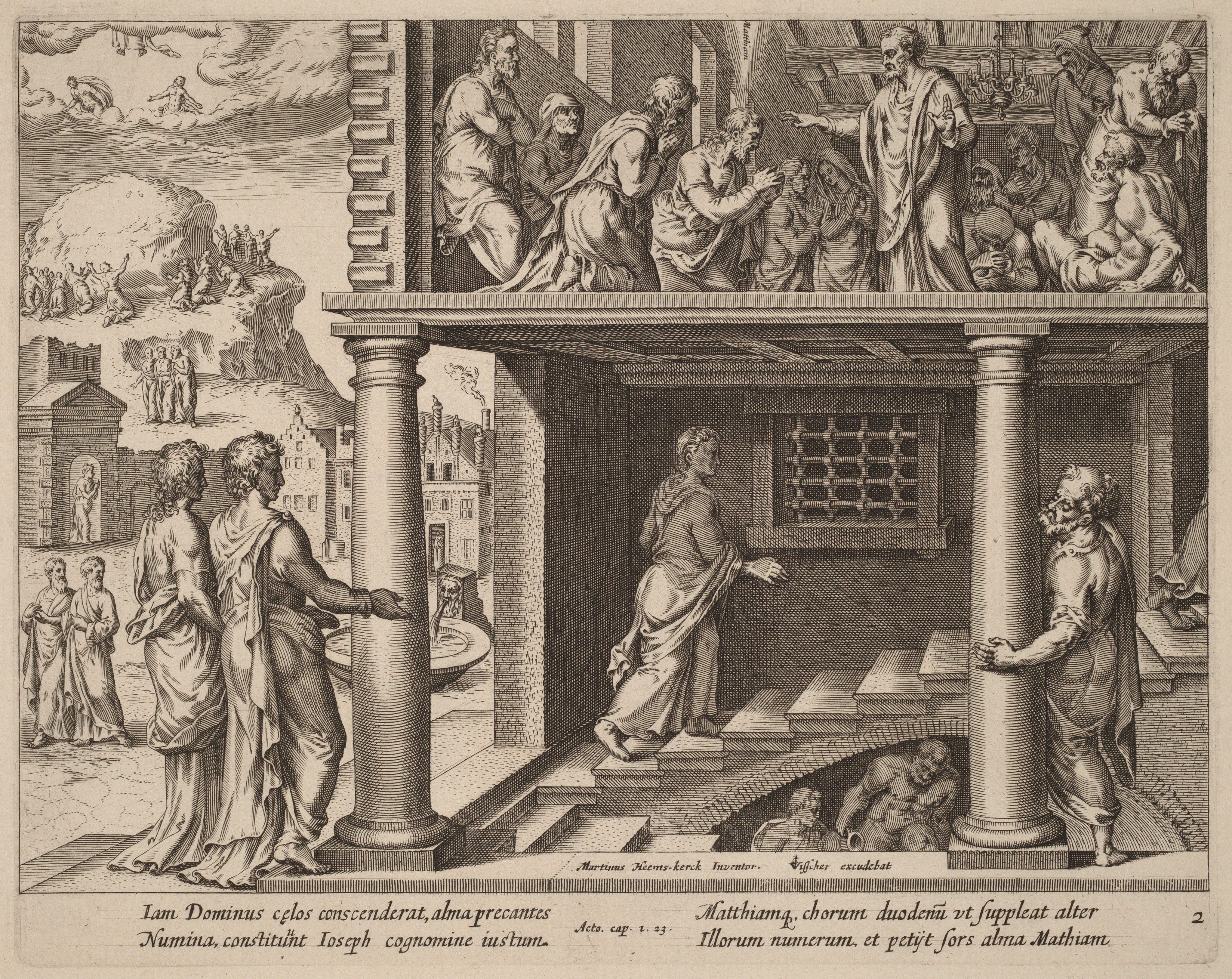
Most everything we learn about St. Matthias comes from this brief passage, and even then, his story is one of inference: because of the conditions described by St. Peter, we know that Matthias must have been a disciple throughout all of Jesus’ ministry, a witness to both his resurrection and ascension.
Of all the Apostles, St. Matthias was the only one not chosen directly by Jesus…and though he had accompanied Jesus throughout his entire ministry, through the whole arc of Jesus’ salvific work, Matthias was received into the college of Apostles after the resurrected Christ had ascended.
Scripture nonetheless emphasizes God’s movement in his election: Matthias was chosen by lot…a practice we find in the Old Testament, and a way of removing bias from the process of election. To our modern eyes, it may read as randomness; to the ancient audience, though, the emphasis on God’s direction in the building of his Church would have saturated this moment.1
“Luminous already, and like the sun shining in the exercise of beneficence, he speeds by righteous knowledge through the love of God to the sacred abode, like as the apostles. Not that they became apostles through being chosen for some distinguished peculiarity of nature, since also Judas was chosen along with them. But they were capable of becoming apostles on being chosen by Him who foresees even ultimate issues. Matthias, accordingly, who was not chosen along with them, on showing himself worthy of becoming an apostle, is substituted for Judas.”
Clement of Alexandria, excerpt from The Stromata (Miscellanies) (VI.13), 2nd c. AD
Woven into this briefest record of early Church events is a lavishly kind, startlingly redemptive story: the very same office vacated in deception & despair is not cast aside…it’s redeemed. Not left empty, but, by God’s grace, filled & flourishing.

After his entry into the office previously held by Judas, St. Matthias recedes into mystery. Legendary accounts of his life & missionary work didn’t take hold until the Middle Ages, and they’re full of conflicting timelines and geography. Some stories maintain that he was martyred in Jerusalem, while others tell us that he brought the gospel to Aethiopia - not the modern country of Ethiopia, but rather the region east of the Black Sea.2 There, in ancient Colchis (modern Georgia), he is thought to have been martyred.
For over a thousand years3, St. Matthias’ feast has been celebrated in late February4, marking the date of his martyrdom…situating him in the ascent toward the Spring Equinox, and, many years, in the deepening of Lent. Although his feast was transferred to May in 1969 (part of an effort to remove feast days from Lent & emphasize the penitential nature of this season), its historic placement in the growing intensity of both Spring & Lent tells the story of an otherwise lesser-known Apostle.
And it’s here, in his seasonal context, where we can sense the shape of St. Matthias more clearly.
CALLING TO THE TREES
I call, I call St. Matthias,
wherever my voice goes,
may there be plenty of fruit
everywhere.Zdechovice (Czech Republic) Matthias carol
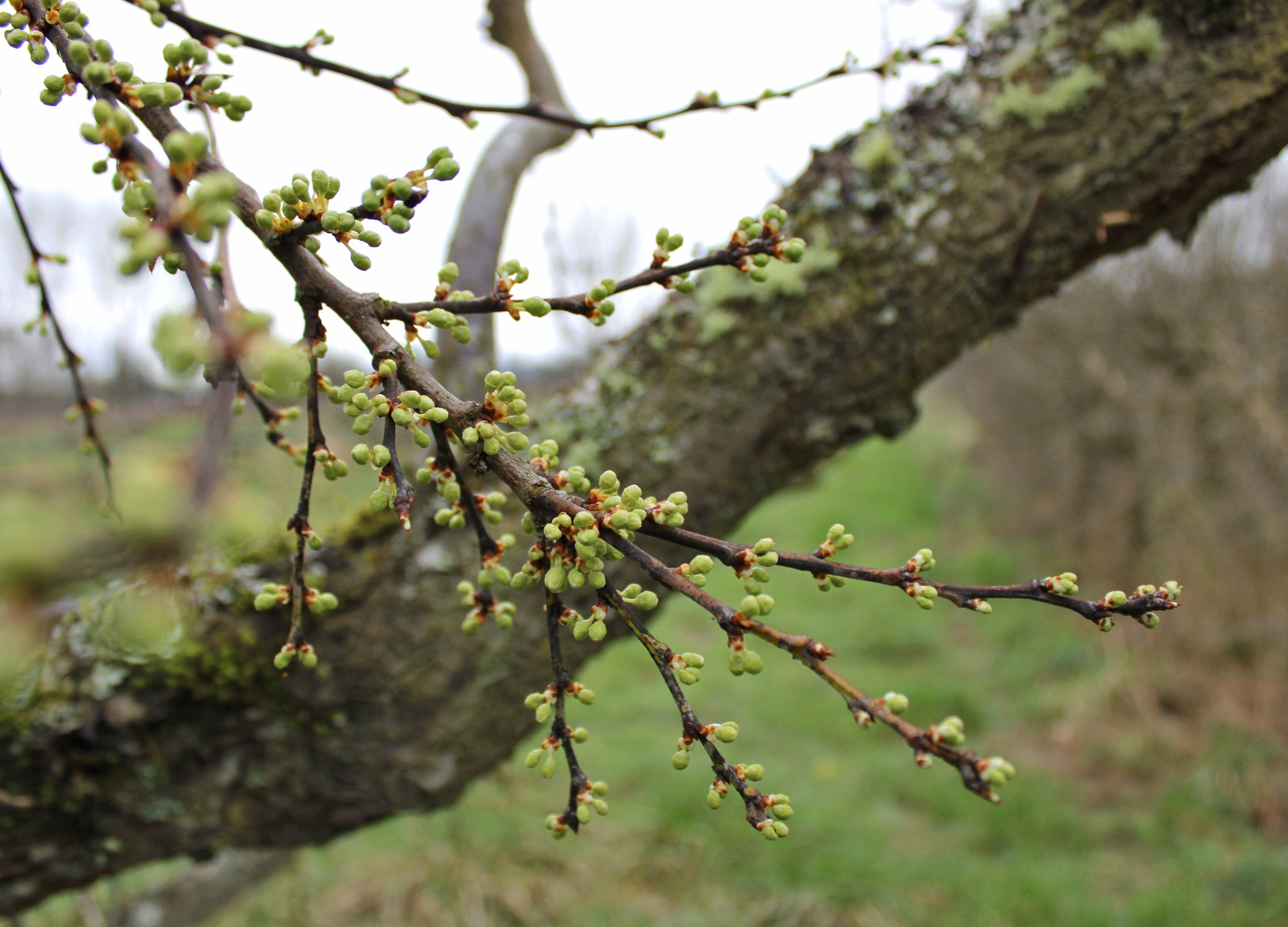
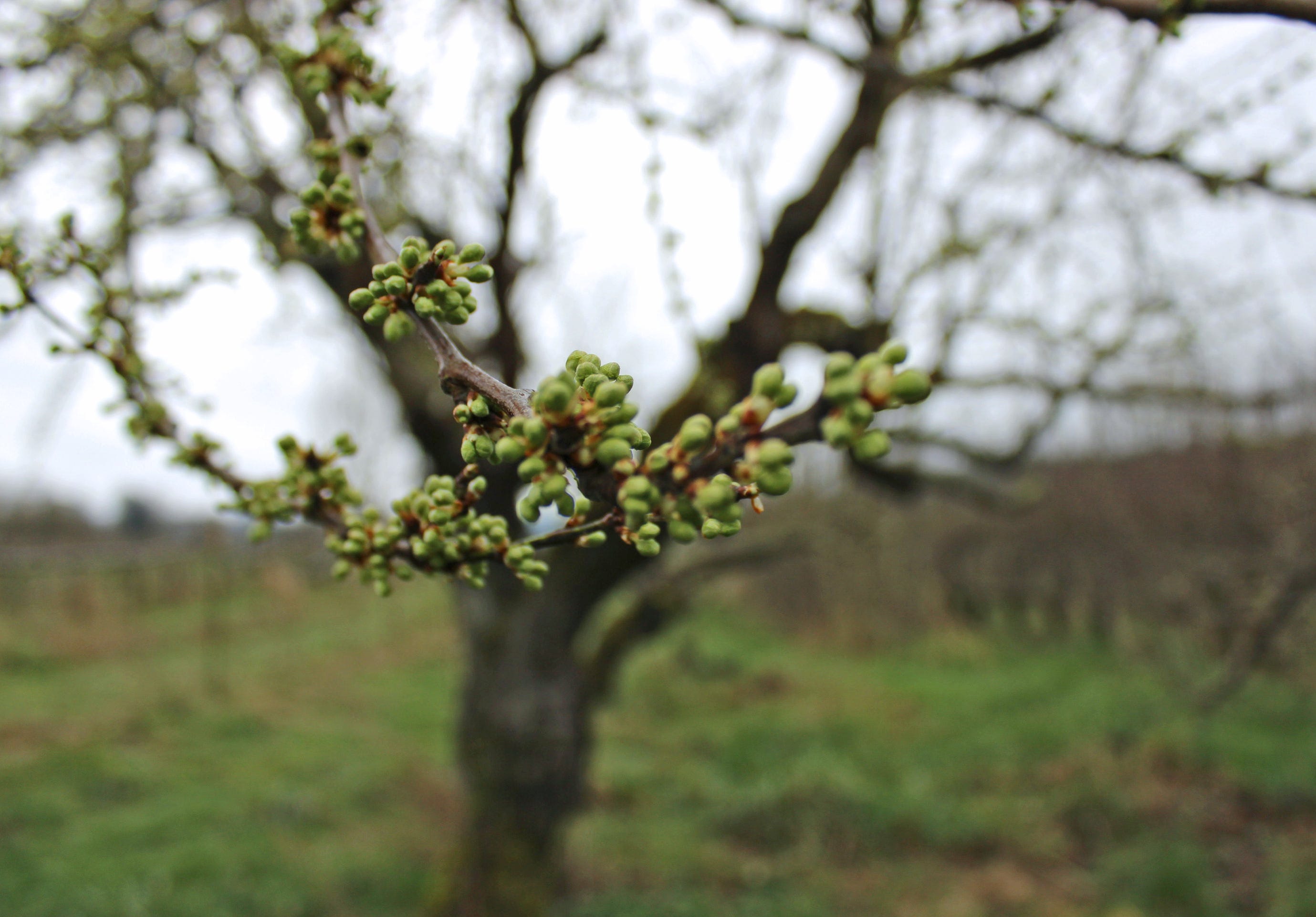
As his popularity spread & grew during the Middle Ages, St. Matthias was adopted by farmers as the awakener of their new growing season: he was the breaker of ice, the emissary of flowing sap in the tree, the sower of grass, the shelter of bees.
Especially in Eastern Europe, his intercession was seen as accompanying the planting season and the coming harvest. “Matthias carols” were sung throughout the orchards…children were bedecked in garlands woven from last year’s dried orchard leaves, and they ran through the trees shaking & knocking at trees to ‘wake’ them up from their wintry slumber.
Afterward, they were rewarded with a gift from the orchard: dried fruit, preserved from last season’s harvest.
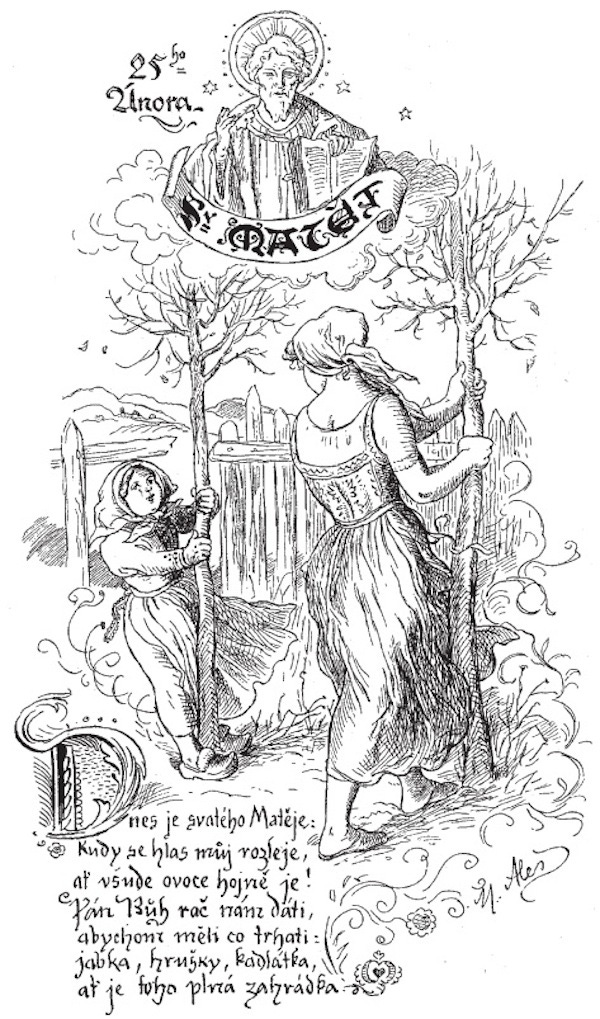
Through these lively traditions, people linked themselves with St. Matthias in banishing winter. In him, they found a ritual way to fill the vacancy of wintry privation - just as St. Matthias’ reception in the early Church returned a wholeness to the Apostolic college.
St. Matthias, after all, occupied a barren place. His Apostolic mission bloomed in an office that had previously been held by the most tragic of betrayers, and the folk traditions from centuries of worship grasp this dynamic so tangibly…inviting us to accompany St. Matthias in filling our wintry landscape with growth.
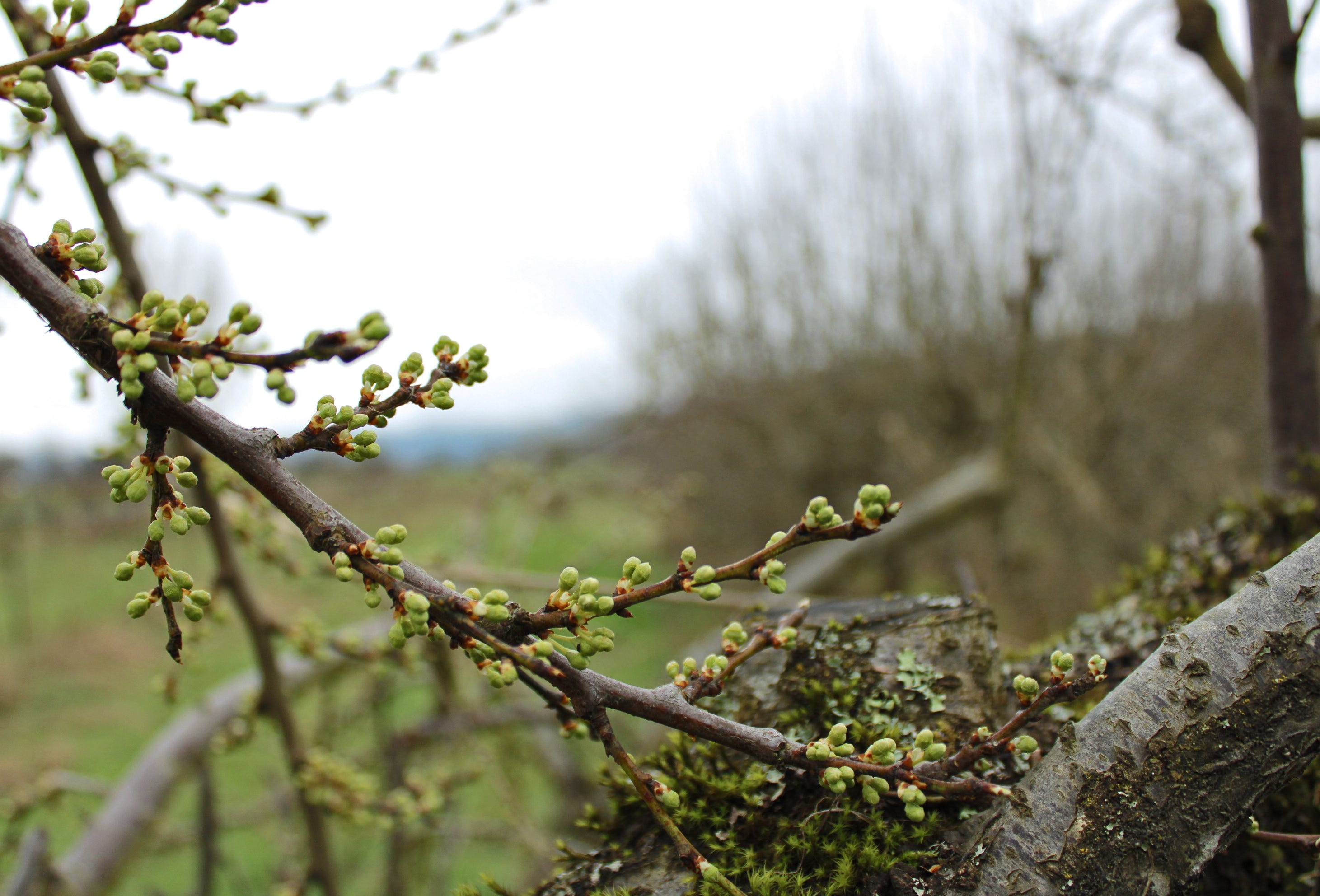
I can’t help but think of the landscapes of our own hearts here in Lent, whether we’re shaking up trees to wake them or shaking up our habits to shiver back to abundant life.
It’s easy to look at those barren places in our lives as if they’re forever defined by pain, neglect, or sorrow, after all. Sometimes, we stop trying to cultivate the damaged places in our history, sequestering them off as hopeless. Trying to approach them and imagine anything fruitful in them feels impossible at times.
St. Matthias, though, comes alongside us with the reminder that God breathes into even those barren places. Not even the office held by the betrayer of Jesus Christ was left fallow & empty.
And so, in that deeply painful void left by Judas, God placed St. Matthias’ apostolic mission…placed seeds of evangelization & miracles that would transcend cultural boundaries and spread the Gospel further and deeper.
We may not know the details of St. Matthias’ life, but honestly…it doesn’t really matter: in him, we see the Apostles’ faithful attention to desolation, as well as God’s redemptive, flowering, generative character made present and carried forth through places that seemed infertile.
So, here from my somewhat depleted vantage at the start of Lent, I’m reminded by St. Matthias that God can make the sap run in any tired, wintered tree.
READ ON


BENEDICTION
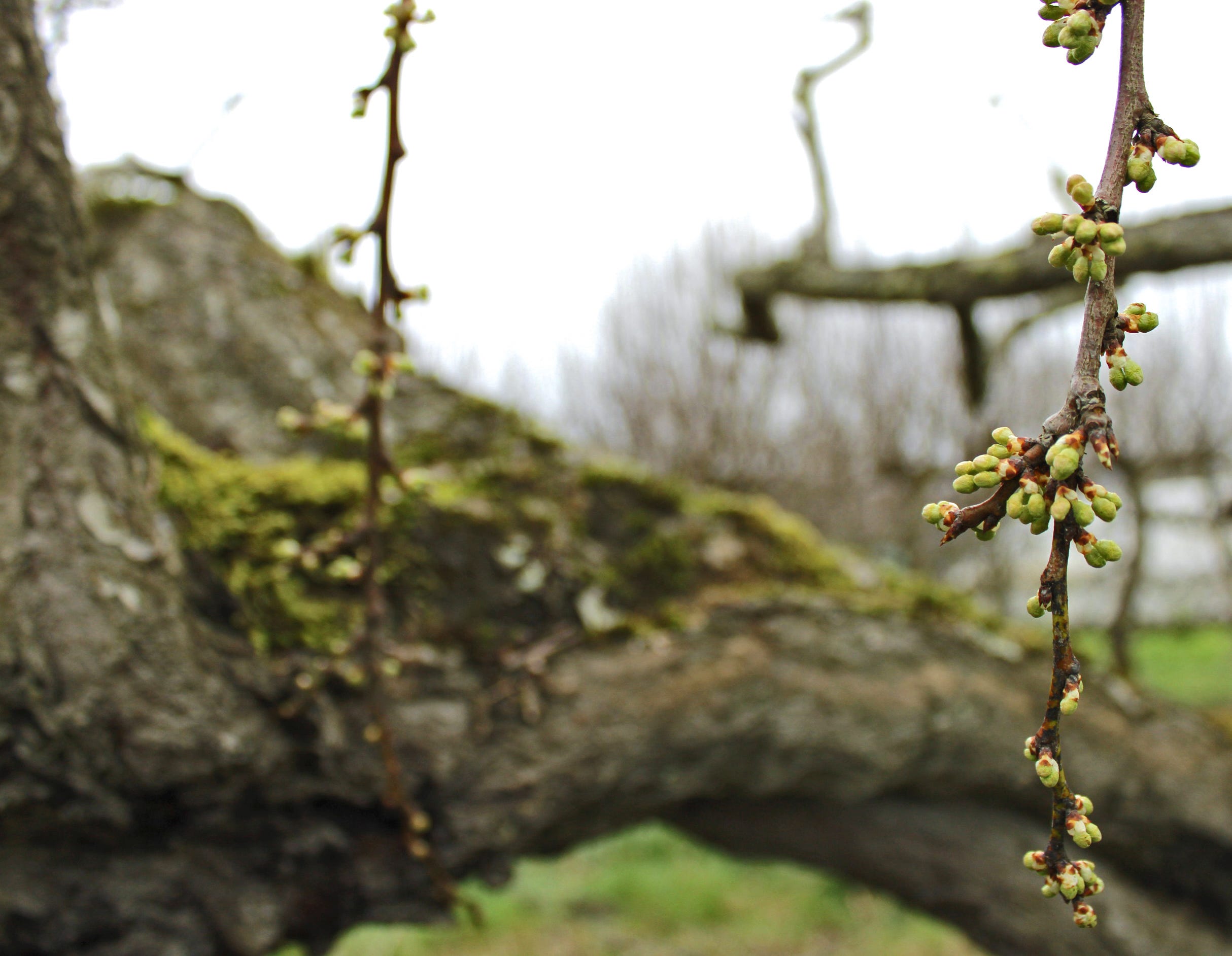
O Blessed Matthias! thou, O spiritual Eden, didst flow like a full river, from the divine fountain; thou didst water the earth with thy mystic rivulets, and make it fruitful. Do thou, therefore, beseech the Lord that He grant peace and much mercy to our souls.
Matthia beate, Eden spiritualis - excerpt from the Greek Menæa, as quoted by Dom Prosper Guéranger, O.S.B.
This past weekend, we celebrated St. Matthias’ Day in community…kids & adults alike running through the farm with flashlights, bells, and streamers to wake up the land. Incredibly…my tired soul felt a bit woken up, too.
Is there a place in your life that feels barren? Through St. Matthias, let’s try inviting God into that space…every day, we start again.
Pax et bonum,
Kristin
From the Ecclesiastical Hierarchy (5.iii) by Pseudo-Dionysius the Areopagite: “…the Scriptures used the term ‘lot’ to describe a certain divine gift which showed the apostolic group that Matthias was accepted by divine election.”
Thank you to Laura Meyers for helping to confirm this ancient geography with her professor!
Although the Gelasian Sacramentary (one of our oldest liturgical books, and a precursor of the Missal, dating at least to the 7th c.) includes St. Matthias’ name in the Canon of the Mass, his feast isn’t widely introduced until 1000 AD.
Though his feast was generally on February 24, calculations with leap years made the dating a bit awkward at times - some years, it was celebrated on February 25.
I love this! I was reading of the calling of the disciples today and my thoughts lingered on Judas and it evoked such sadness in me. What a blessing to look at my inbox many hours later and find this!
It is so interesting that his feast is at this time of year, when winter seems to pass and spring begins. I planted my onions and broad beans last week!