

Slushy Anders, frosty Christmas
November 30: Andermas

Slushy Anders, frosty Christmas
Swedish proverb
Welcome! Whether you’re a longtime friend or a new kindred spirit here (I recommend visiting the Village Green to get your bearings), I’m delighted to be a companion to you through the liturgical year.
Please enjoy this month’s focus: a practice of attention that encourages us to deeply explore one holiday within the context of the season.
For more to supplement the rest of your November days, flip through the November Almanac. We’ll be turning to December (and Advent!) soon!
Pax+bonum, Kristin.
» Printable Resources
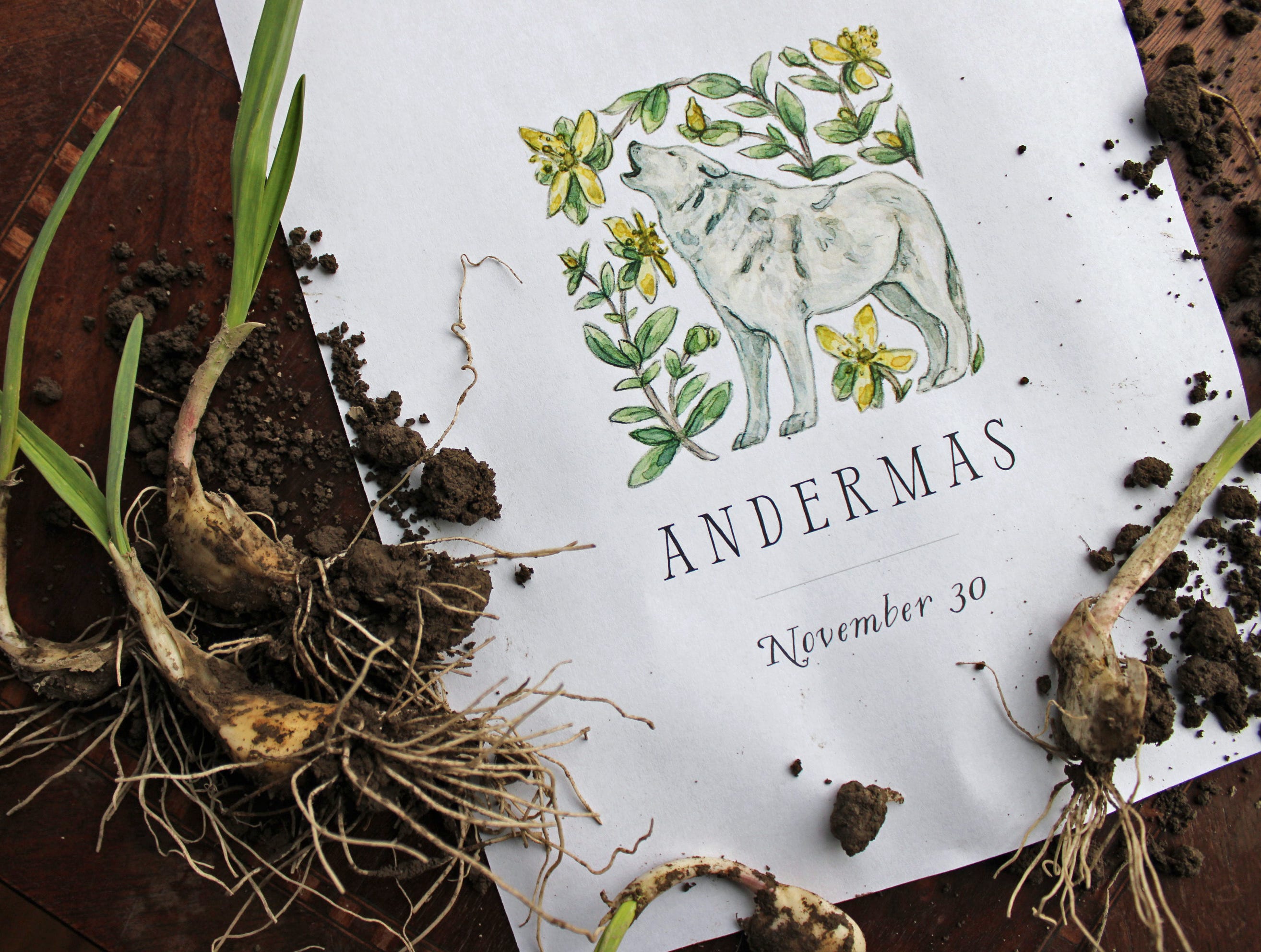
Keeping a liturgical Book of Hours binder helps me to distill all of the inspiration I find, so I can easily look to the elements that have been most nurturing for our family & community.
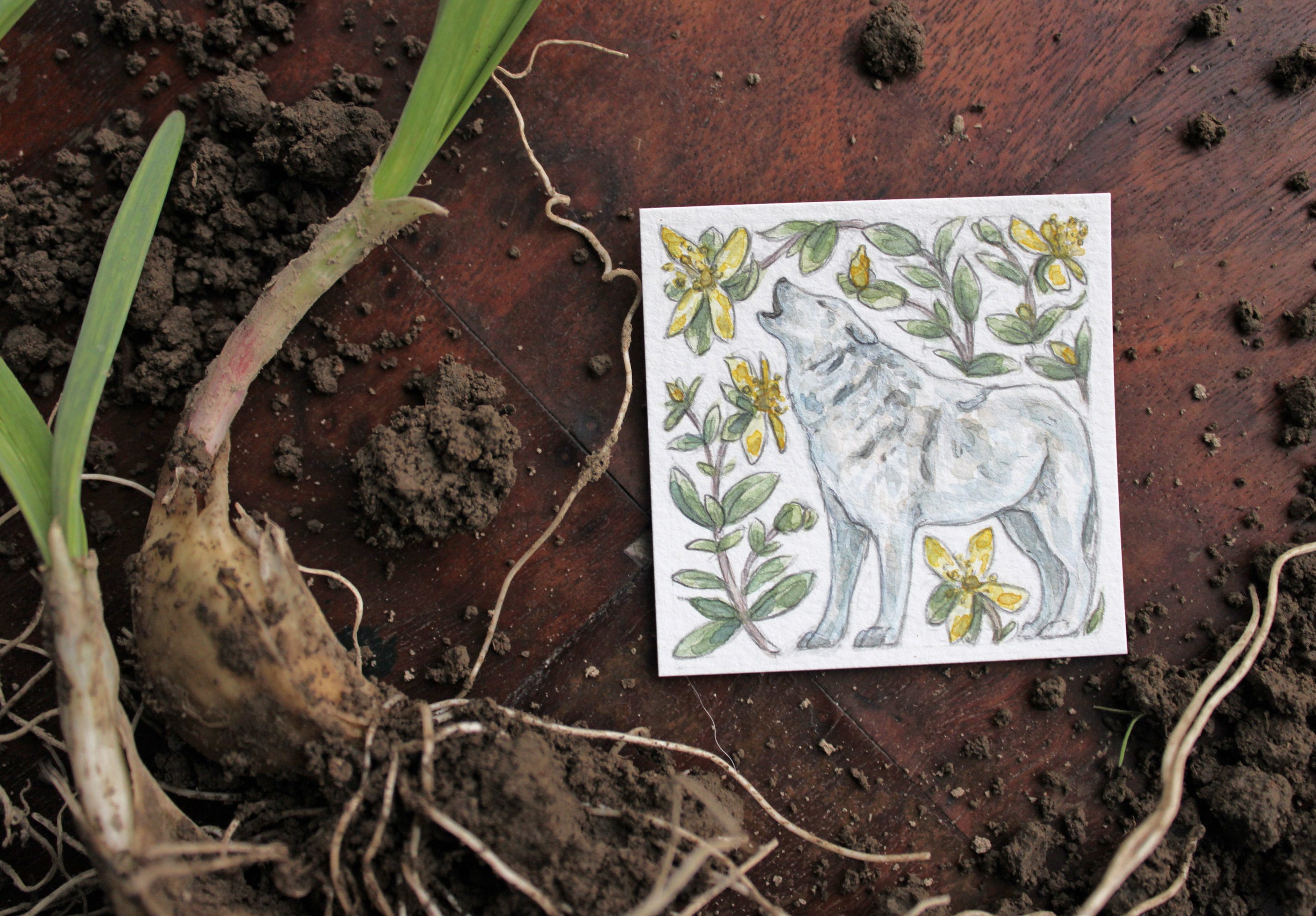
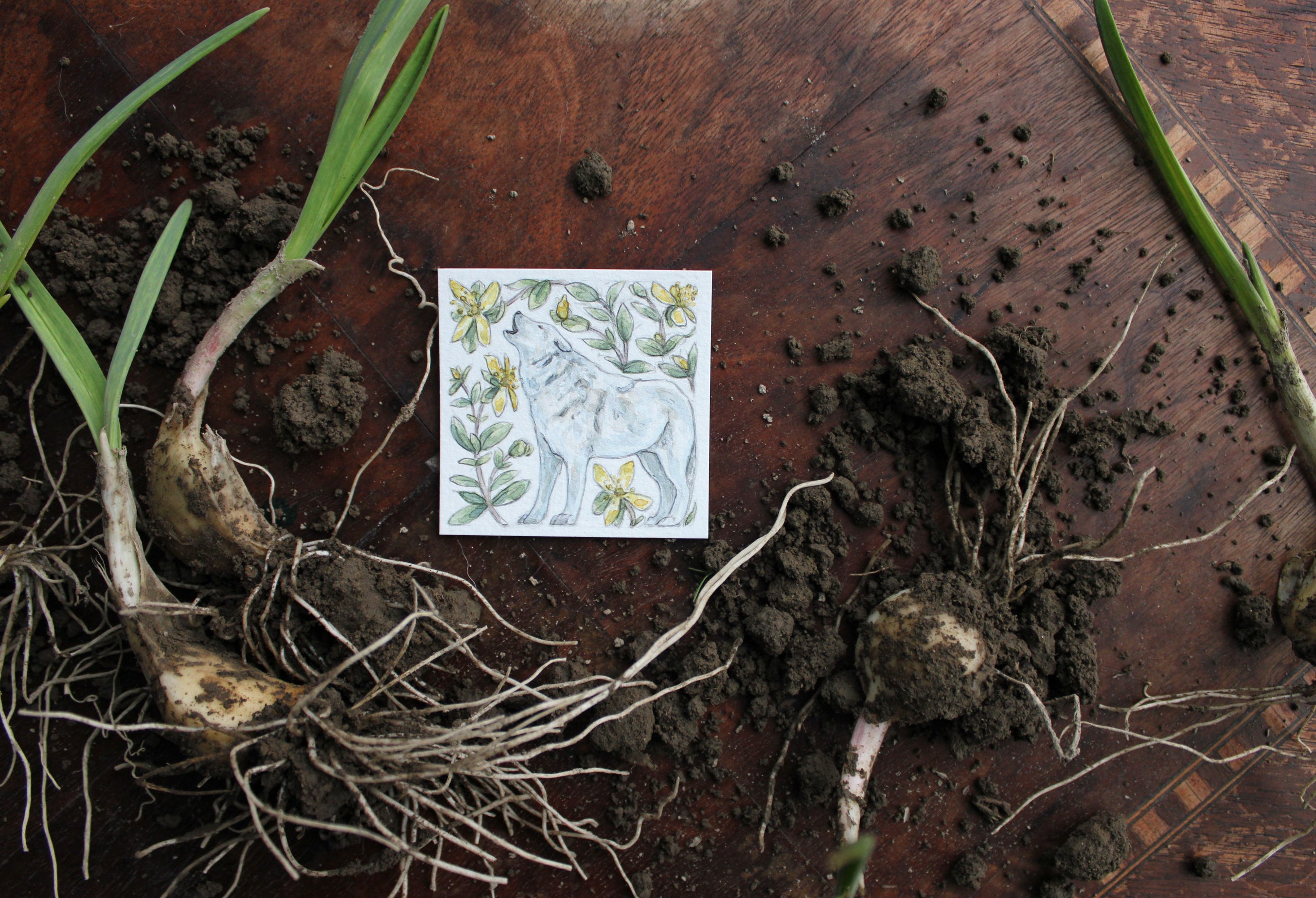
Cover page featuring an Arctic wolf (St. Andrew is known as the “Master of Wolves”), garlanded by St. Andrew’s Cross (a cousin of St. John’s Wort…so fitting, since St. Andrew was once a disciple of St. John the Baptist!)
Five pages of folk tradition, agrarian context, traditional meal ideas, prompts, history, poetry, Scripture, & hymns (with photos) to help you learn about this feast and reflect on how it intersects with your own life and landscape.
Paid members can find this (as well as my whole archive of printables) in the Scriptorium:
ADVENT EVER NEAR
All praise, O Lord, for Andrew,
the first to welcome you,
whose witness to his brother
named you Messiah true.
May we, with hearts kept open
to you throughout the year
proclaim to friend and neighbor
your advent ever near.Excerpt from From all Thy Saints by Horatio Nelson (19th c.)
Here, at the end of November, the trees have blown bare and we find ourselves in between places in sacred time: at the threshold of a new liturgical year, we’ll soon step from Ordinary Time and into Advent.
And, of course, Advent itself is emblematic of our in-between existence in time: in it, we offer up our imperfect, holy patience. We pause in order to practice: holding our breath, here in our daily lives, before celebrating what has already been accomplished through Christ…and, in doing so, practicing the incline of our posture toward the lasting, eternal peace and consummation of all things. We rehearse our role as creatures of waiting - despite how difficult, how counterintuitive, how trying it can be to wait with hope for wholeness in a world infused with suffering and sorrow.
We have a guide as we cross this Advent threshold, though: St. Andrew, the Protokletos - “first-called”- greets us here to bear us into discipleship.
“…St. Andrew ‘was the first that found the Messiah (John i. 38), and the first that brought others to Him (John i. 42), so the Church, for his greater honour, commemorates him first in her anniversary course of holydays, and places his festival at the beginning of Advent, as the most proper to bring the news of our Saviour’s coming.’”
Charles Wheatly, A Rational Illustration of the Book of Common Prayer, 18th c. (as quoted by Alexander Grant in The Church Seasons: Historically and Poetically Illustrated, 19th c.)
The Church calendar isn’t a linear succession of feasts and fasts - it tells the story of the living God, and in doing so, the calendar defies our tendency to parse it into something predictable and mechanical.
Instead, it embodies relationship: St. Andrew reminds us of how dynamic this measure of sacred time truly is. Advent, our faith’s foundational season, is bound to the mystery of the Incarnation celebrated at Christmas…and also it remains tethered to St. Andrew: the first Apostle, first Evangelist.
The disciple who, here on the edge of Advent, brings us to Jesus, just as he once brought Peter to the Christ.
“The commencement of the ecclesiastical year is regulated by the feast of St. Andrew, the nearest Sunday to which, whether before or after, constitutes the first Sunday in Advent, or the period of four weeks which heralds the approach of Christmas. St. Andrew’s Day is thus sometimes the first and sometimes the last festival of the Christian Year.”
Robert Chambers, Book of Days
We first meet Andrew as a disciple of St. John the Baptist: and it’s the Baptist himself who points his disciple Andrew (and another unnamed disciple - perhaps, the Apostle John) toward Jesus.
The next day again John was standing with two of his disciples, and he looked at Jesus as he walked by and said, “Behold, the Lamb of God!” The two disciples heard him say this, and they followed Jesus. Jesus turned and saw them following and said to them, “What are you seeking?” And they said to him, “Rabbi” (which means Teacher), “where are you staying?” He said to them, “Come and you will see.” So they came and saw where he was staying, and they stayed with him that day, for it was about the tenth hour. One of the two who heard John speak and followed Jesus was Andrew, Simon Peter’s brother. He first found his own brother Simon and said to him, “We have found the Messiah” (which means Christ). He brought him to Jesus. Jesus looked at him and said, “You are Simon the son of John. You shall be called Cephas” (which means Peter).
John 1:35-42 (ESV)
Following John’s arc toward Jesus, St. Andrew seems to have been uniquely equipped to receive the enduring wholeness of the Gospel: of Jewish heritage and born in Galilee, he was unusually given the Greek name of fortitude…ἀνδρεία. Already, he was a bridge of culture and discipleship.
“The earlier religious life of this Apostle affords a proof of the perfect adaptation of the preaching of John the Baptist to the task of training his Disciples to the recognition of Jesus as ‘The Lamb of God’…”
Alexander Grant, The Church Seasons: Historically and Poetically Illustrated, 19th c.
Alongside his brother - Simon Peter - St. Andrew was a fisherman on the Sea of Galilee. And it’s in his vocation that Andrew’s relationship with Jesus, first introduced in a recognition & deep knowing at their introduction, further deepens and flourishes.
As Andrew and his brother cast their fishing nets into the sea, Jesus called them from knowledge into discipleship: from awareness to participation.
Entering Advent, St. Andrew invites us to mirror his movement toward holy participation. This might seem counterintuitive… “waiting,” after all, tends to feel passive to us today.
Andrew calls us toward active, Adventide waiting, though…a waiting embodied in the practice of discipleship. In this path of formation as student-disciples, we don’t just passively receive teachings, but, instead, actively engage with them.
And so, we rehearse our waiting: inclining toward Bethlehem, not drowsily settling into our passive habits of idol-building and acedia (my daily battle!)
Most of what we receive about St. Andrew’s life after the Ascension of Jesus comes from mythic storytelling - and in it, we see Andrew’s enduring discipleship, his patient hope amidst suffering, continuing to point toward the Incarnation and its salvific ripples.
Even at his crucifixion (in Patras, Greece circa 70 AD), St. Andrew’s active waiting was so robust that he sang to his cross:
“Long have I desired and sought thee; now thou art found by me, and art made ready for my longing soul.”
As quoted by Alexander Grant, The Church Seasons: Historically and Poetically Illustrated, 19th c.
What a paradoxically joyful and painful song: and in it, we see glimmers of our own Adventide longing. Not a wistful, untethered longing…but an assured hope, rebelling against the dark, held without the sure completion in our own earthly lives.
It’s a cruciform hope that reaches beyond the boundaries of our lifespans, transcending the limits drawn by pain and suffering
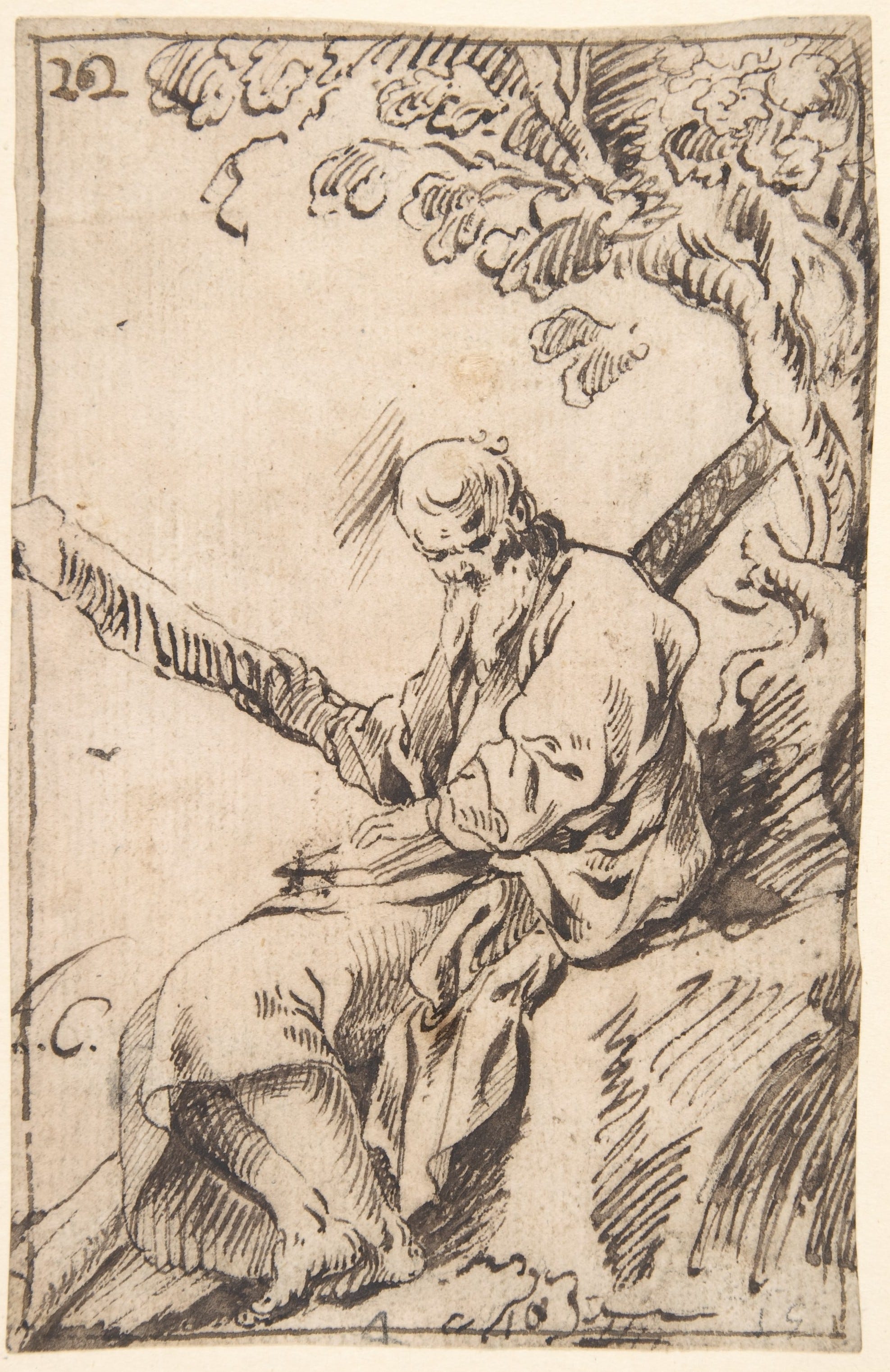
Tied to an X-shaped cross - intended to prolong his suffering - St. Andrew continued to preach from his crucified vantage, drawing crowds with his patient devotion to the Gospel.
And still, here he is at Advent: triumphantly carrying that X, joyfully greeting us and inviting us -yet again - to realign our hearts toward discipleship…where we practice the arrival of Immanuel, actively leaning into discipleship even in the waiting-time that we inhabit.
Budding with eternal bloom
Sickening once with hope delayed,
Paling all our hearts with gloom,
Then a Tree of Life displayed,
Budding with eternal bloom.1
As we turn toward Advent with St. Andrew, we get to renew our cycle of counting sacred time: a new liturgical year is upon us, and we have so many tangible ways of marking our passage through Advent…from chocolate calendars to candle-lighting of Advent wreaths.
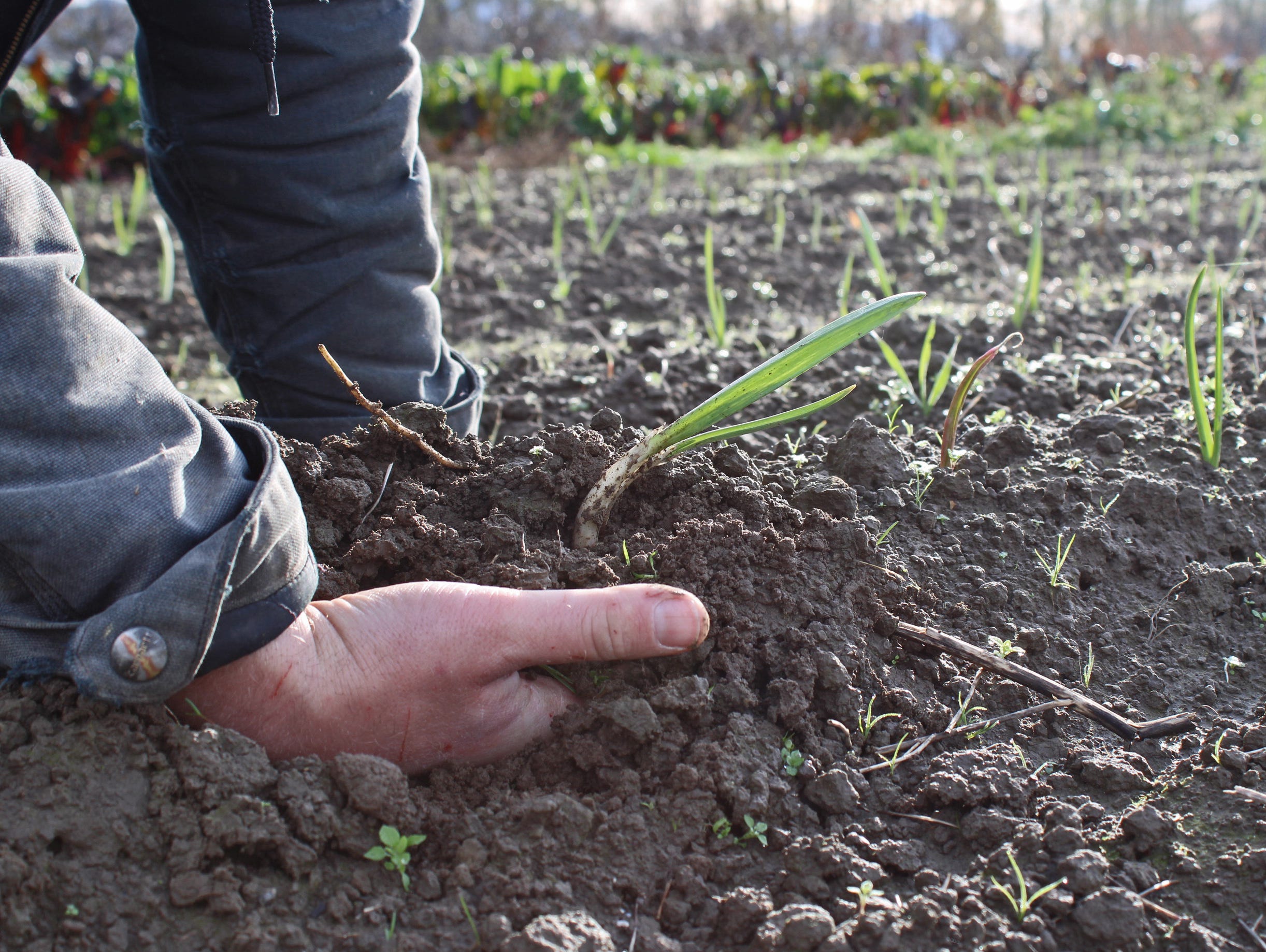
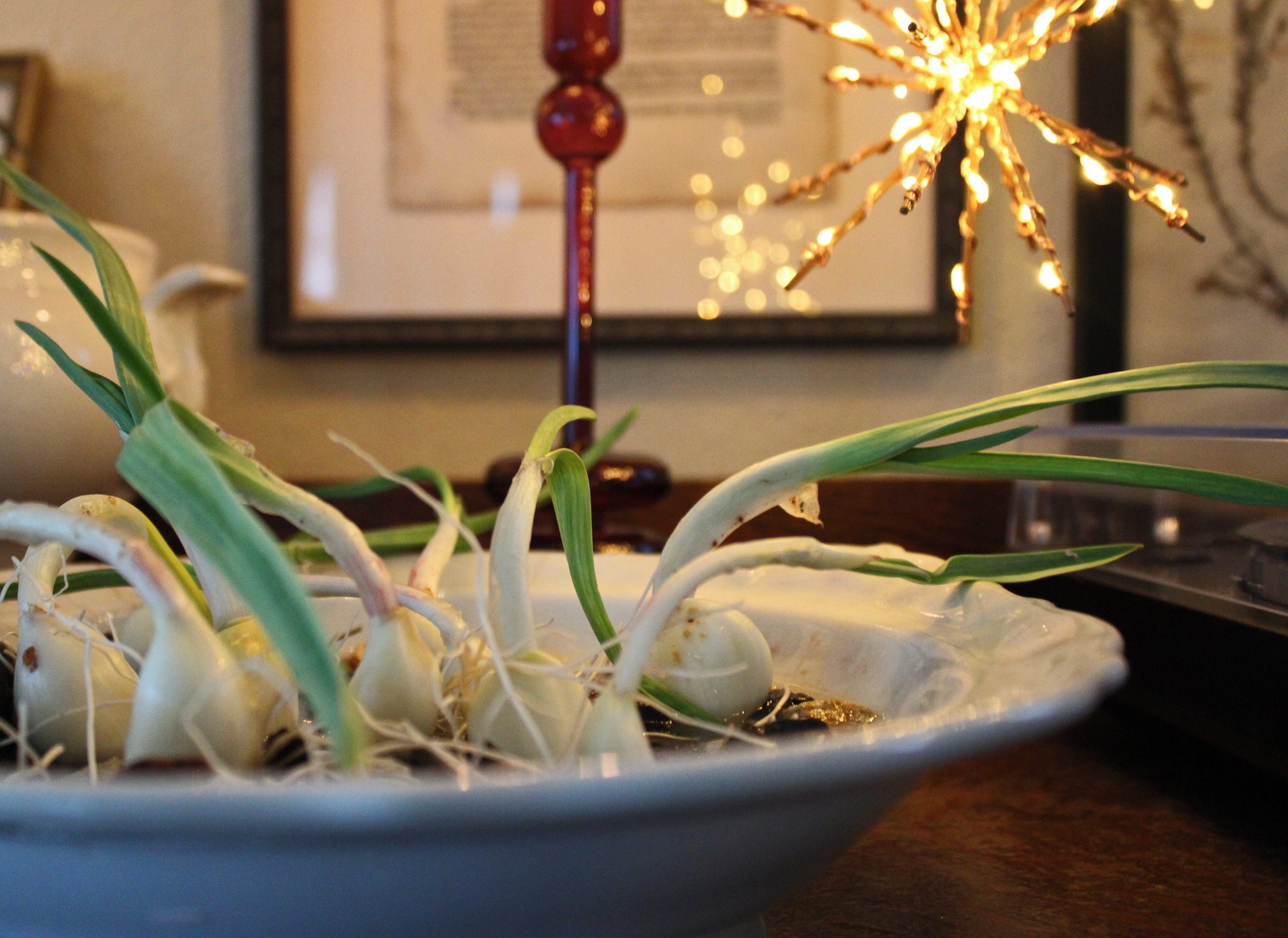
Nature, too, is biding sacred time. The farm fields still have some harvest left in them, but for the most part, they lay quietly when Advent comes. Patient work is happening underground, and we’ve even started to see evidence of it - perhaps like opening the first door of our Advent calendar? - in the green leaves of garlic beginning to emerge from the soil.
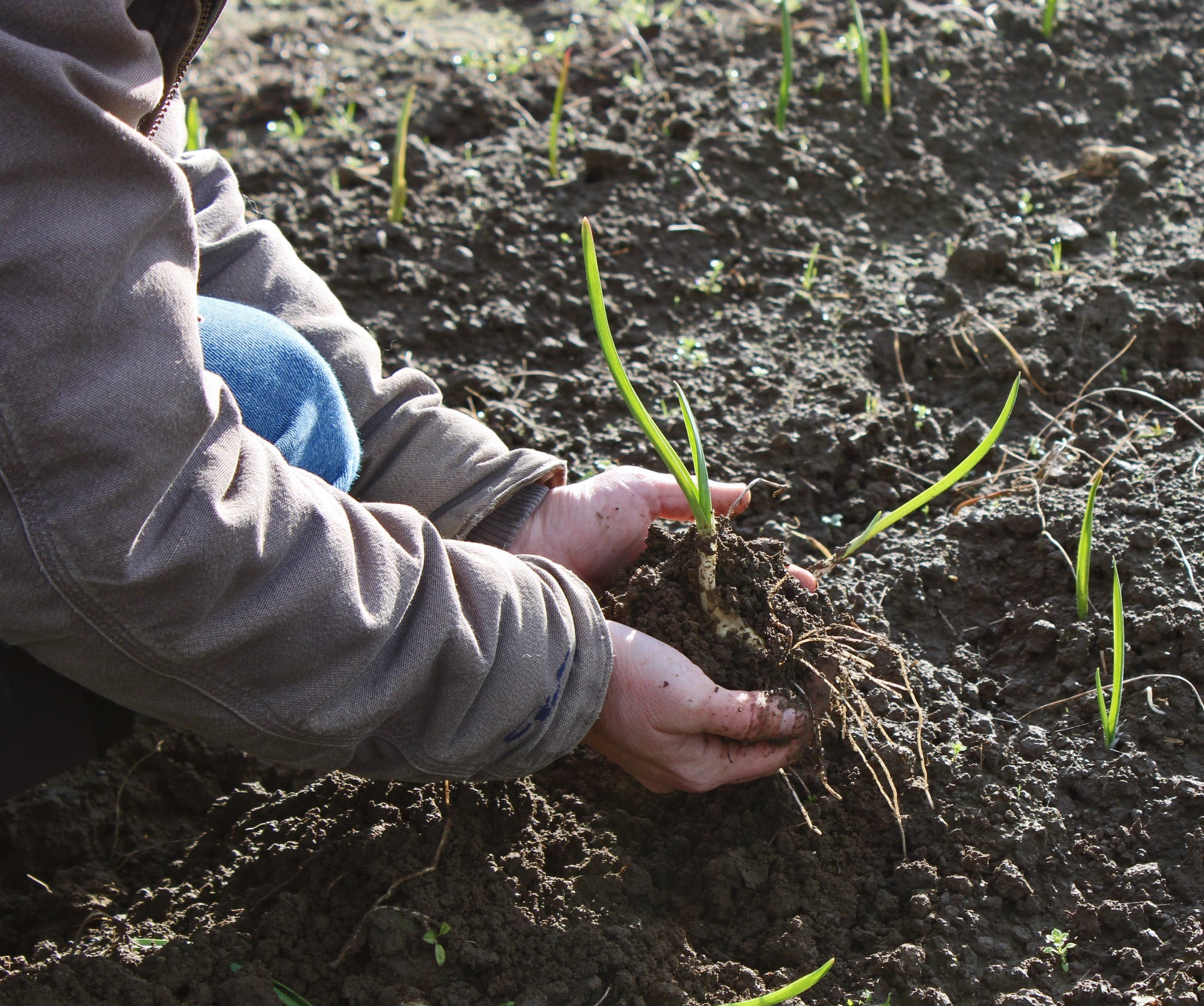
It’s almost as if nature’s Advent wreath is being lit, sign by sign, during these dark days when dinnertime feels like midnight.
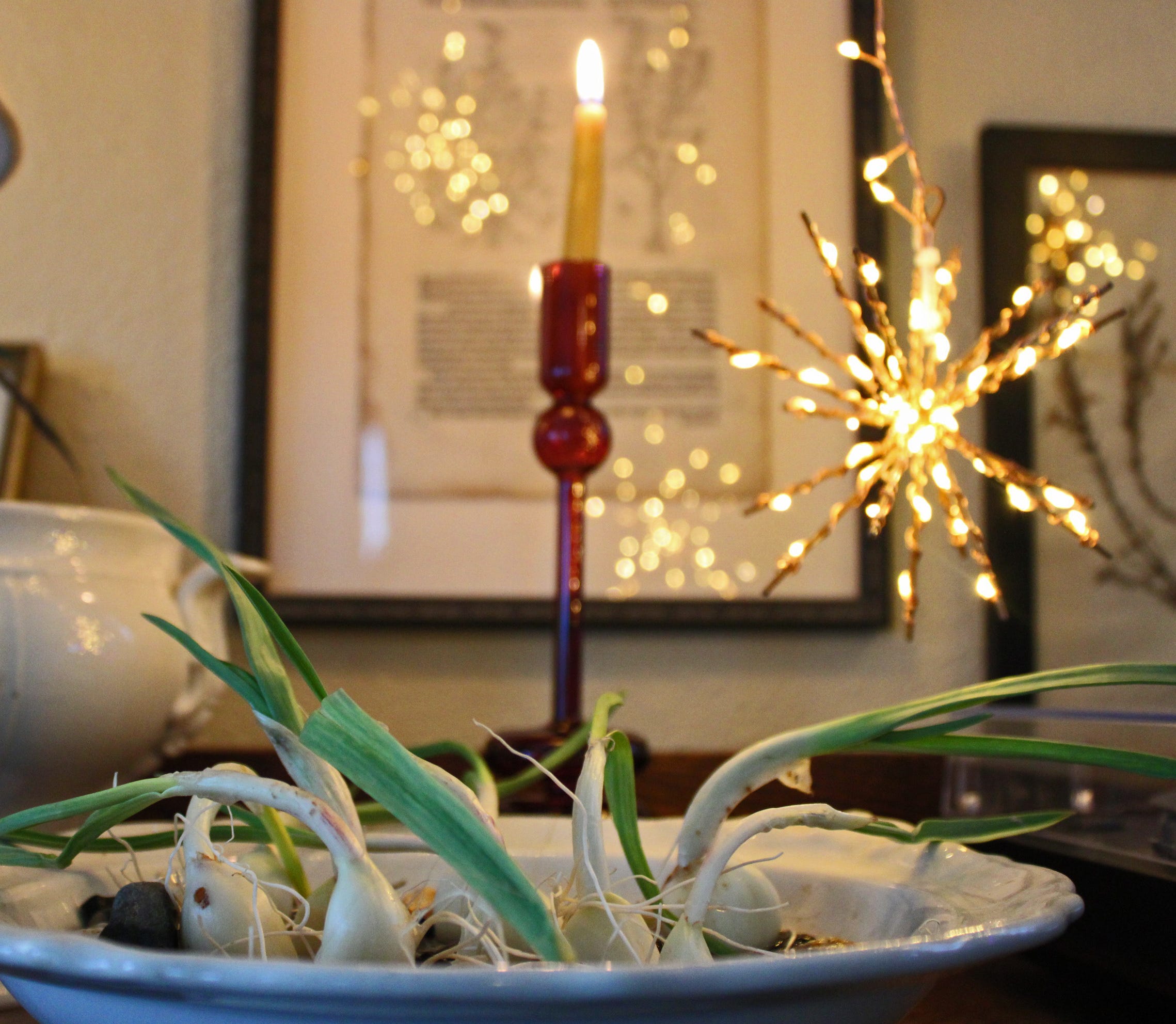
Garlic, a longtime emblem of protection, was once a popular element of Andermas (St. Andrew’s Day) celebrations. Being a threshold between seasons, this day also brought with it some inherent fear…changes and shifts are frightening, after all, and have long been seen as times of sensitivity.2 So, in aligning with hope in God’s protection, folk traditions arose: garlic bulbs would be dug up and brought indoors, placed in a bowl and guarded by a matriarch as Andermas feast-goers ate and danced and sang.
Then, its aroma having infused the Andermas celebrations, the garlic bulbs were brought to homes, placed near icons or crucifixes…fragrant Advent reminders of God’s provision and protection, those realities to which we cling amidst our circumstances.
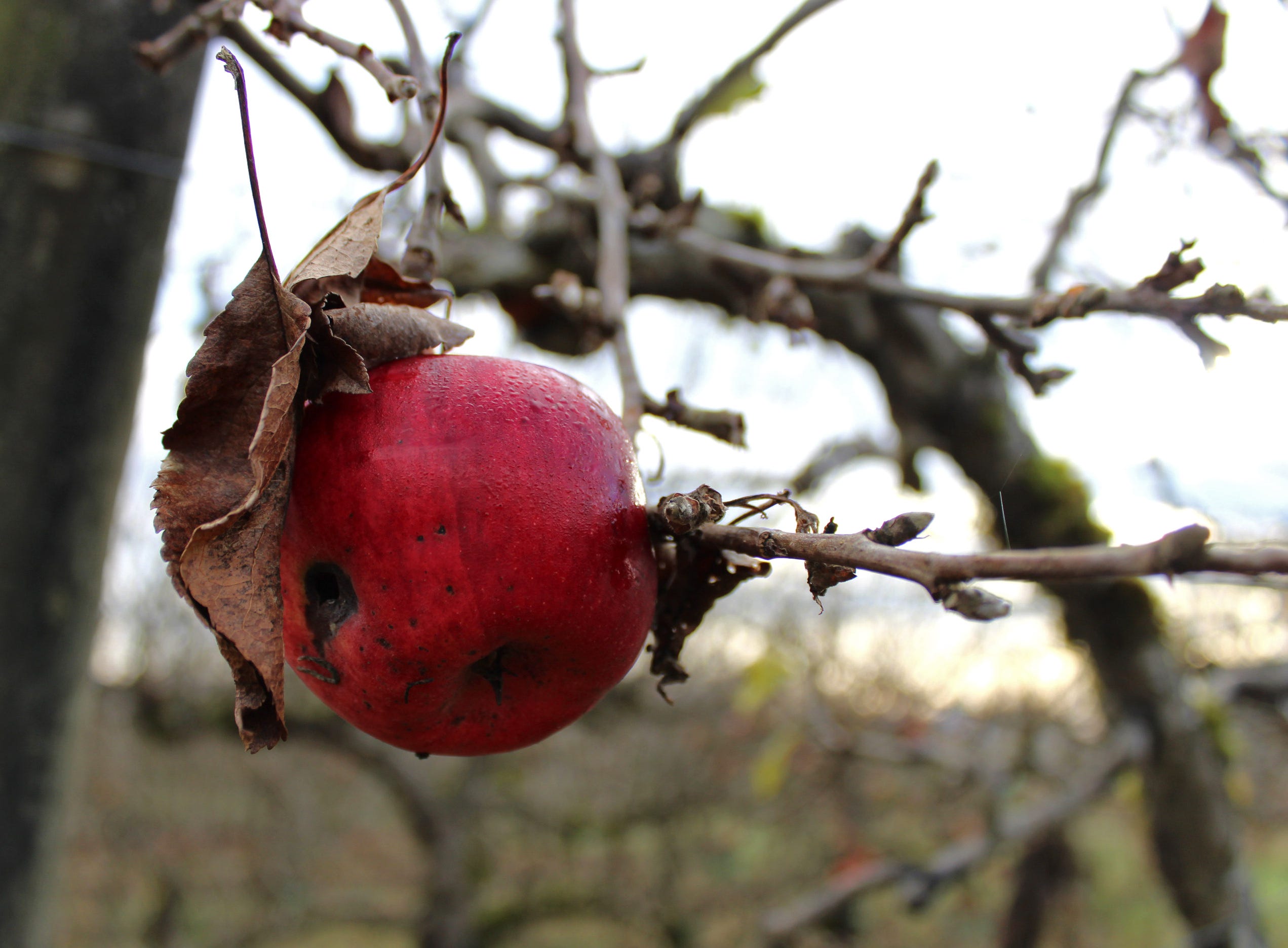
…and nature lights yet another Advent candle, though it’s so subtle as to be easily missed. The apple trees, still with a few remaining, yellowed leaves…still with some lingering, rotten apples hanging as bird-food from the branches…have been through enough cold snaps to trigger the most gossamer of buds.
The trees look passively dormant…but they, too, are actively waiting.
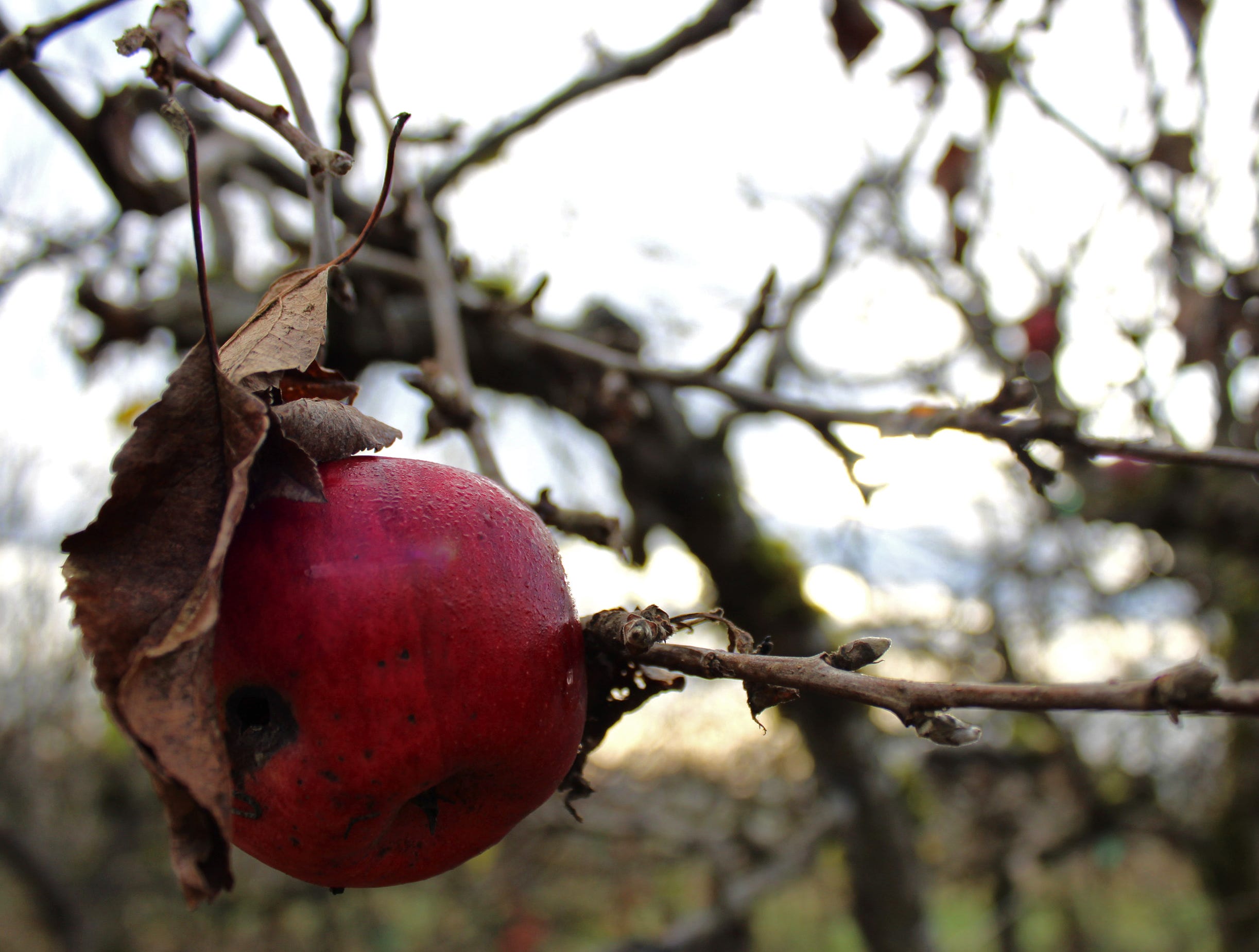
Without experiencing bouts of winter chill, the trees’ fruiting in the coming season will languish. The fancy word for this is vernalization: a process of patience and endurance, where the trees must experience coldness in order to bloom abundantly and at the proper time.
Now, having experienced some chill already, the tiniest hints of buds are appearing on apple branches: it’s almost startling, noticing those dormant, waiting buds so secretly sharing branches with fall leaves and old fruit. And it feels so counterintuitive to think that these trees, so susceptible to frost damage if their timing of dormancy and growth is off-kilter, need the cold spells to be fruitful.
The cold, though, is what triggers the trees’ eventual transformation into fruit-bearers for another season.
(We’re not so different, are we?)
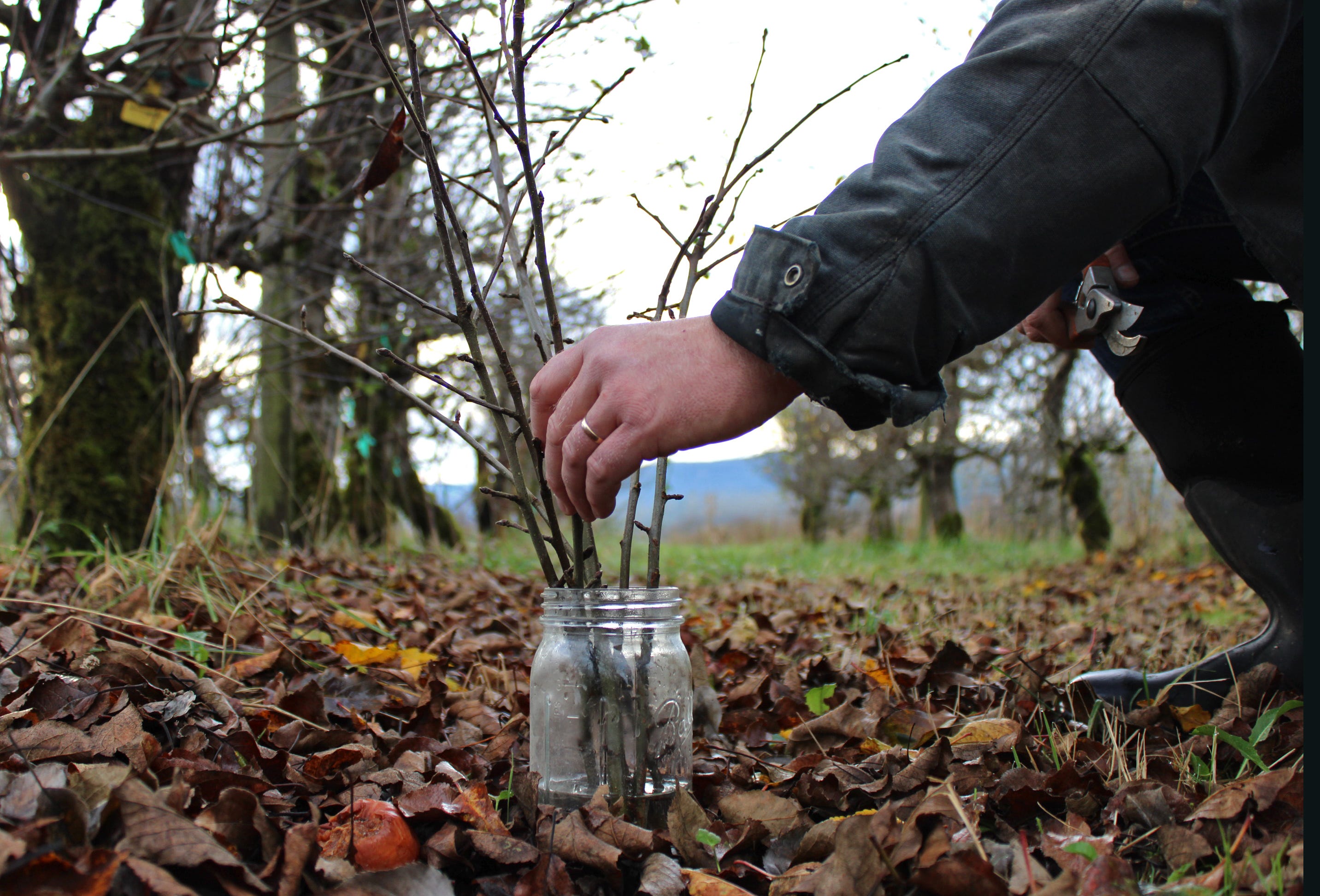
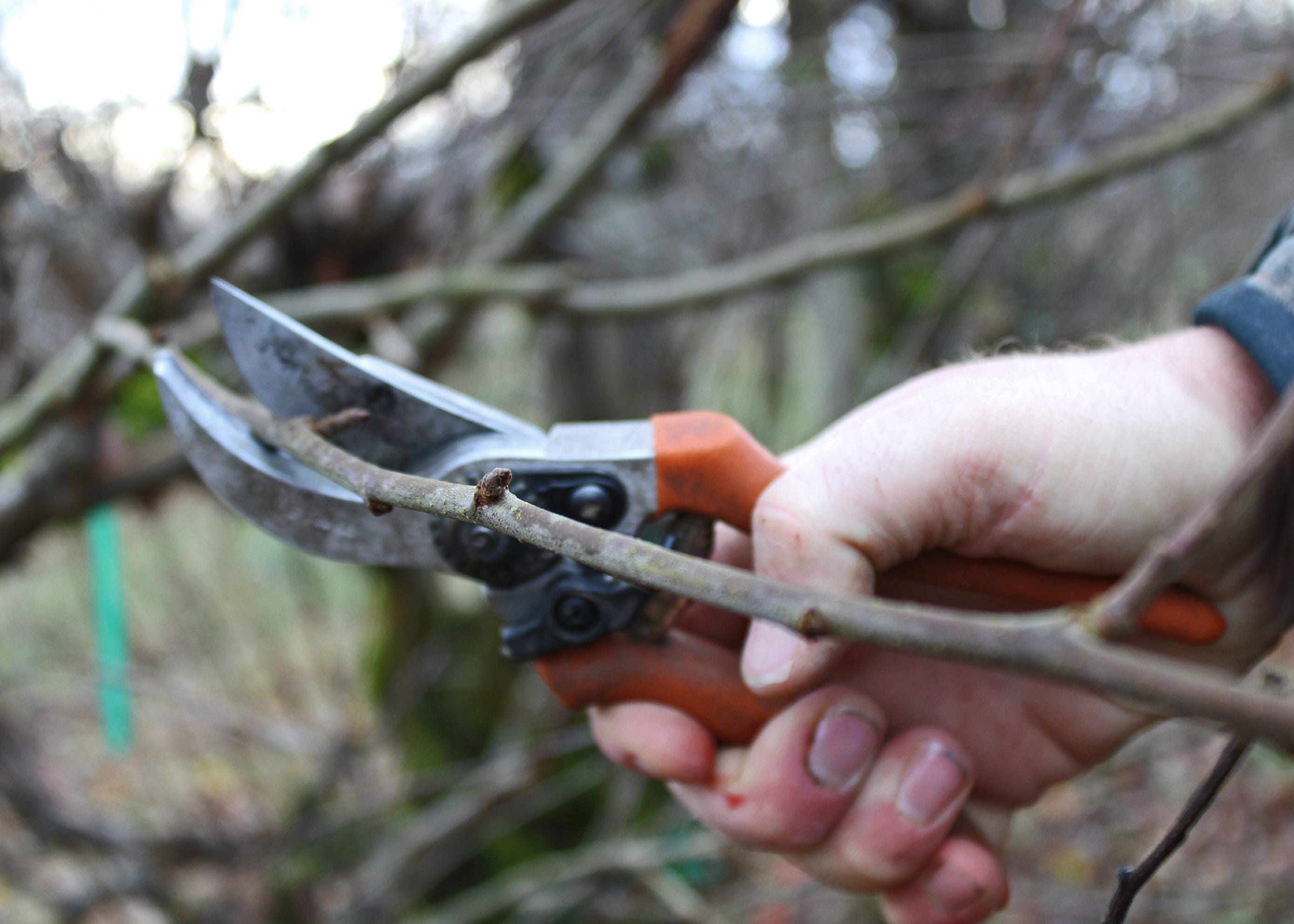
In Romania, this agricultural way of marking Advent-time is an old tradition: on Andermas, apple branches would be cut, brought indoors and bundled for each guest. At home, their water freshened and branches re-cut, the slow changes in these bouquets of apple branches would mark time through Advent…with the hope that, by Christmas, the first buds would bloom.

So, this Andermas, our Advent timekeeping is going to look a little different…with cloves of garlic and dormant (yet active) - apple branches to mark our days through a season of re-orientation.
READ ON


BENEDICTION
Jesus calls us; o’er the tumult
of our life’s wild, restless sea,
day by day his clear voice soundeth,
saying, “Christian, follow me”;as, of old, Saint Andrew heard it
by the Galilean lake,
turned from home and toil and kindred,
leaving all for his dear sake.
…
Jesus calls us! By thy mercies,
Savior, may we hear thy call,
give our hearts to thine obedience,
serve and love thee best of all.Cecile Frances Alexander, excerpt from “Jesus Calls Us O’er the Tumult” (19th c.)
I know this season can easily be filled to the brim with busy-ness, and that we (well…I) often have the proclivity to turn the quiet and rest of Advent into a checklist of to-do’s. This year, I’m preparing to rest from that tendency, though (and you’re invited to join me…more details on that will appear on the first Sunday of Advent!)
Wherever this season finds you - in whatever complex mixture of sorrow and joy - I pray that we’ll find, in St. Andrew, a helpful companion to guide our hearts back to the reality of Christ, back to discipleship, back to an active receptivity.
…and that, like the dormant apple trees, the frosts of life would work a greater fruitfulness in us.
Advent blessings, dear ones.
Pax et bonum,
Kristin
Venerable Bede’s paraphrase of “St. Andrew to his Cross”, translated by Dr. Kynaston, as quoted by Alexander Grant, The Church Seasons: Historically and Poetically Illustrated, 19th c.
This dynamic also associates St. Andrew with wolves - the mythic “Great White Wolf” in particular. Known as the Master of Wolves, colorful, mythic legends show St. Andrew as a companion in the winter nights that saw the packing up of wolves for winter hunts - a fearful time for farmers. These great wolves, though, were seen to be tempered by St. Andrew, who befriended them in order to protect livestock.
Thank you! Thank you! There’s so much “meat” in this essay.
Lovely, thanks. My garlic is also up and today I noticed the hazel catkins on the branches, all ready for spring.